
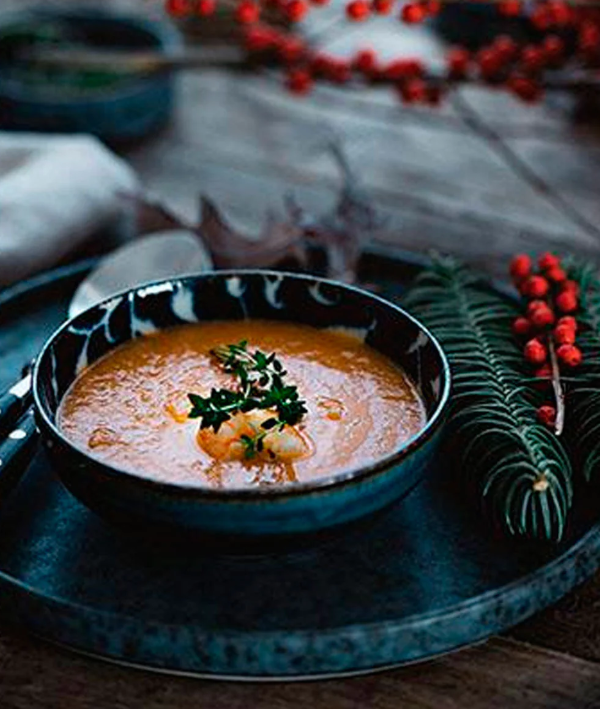
Seafood cream is a wonderful recipe to enjoy at Christmas celebrations, as well as on Sundays and other holidays. This recipe comes to us from Luisa, author of Cocinando con mi Carmela, and I’m sure you’ll love it.
As these dates approach, we all spend many moments with family or friends, and without a doubt the place we enjoy these days most is around a good table. We also enjoy the kitchen, preparing more classic or original recipes for our loved ones, or those that have always been a tradition at home.
Today’s recipe is a true classic in northern Spain, and since I come from those lands with good genes, what better way to do them honor than with a delicious seafood cream?!
The important thing about this recipe, so it turns out well, smooth, and full of flavor, is the quality of the ingredients and, of course, the slow simmer: making it patiently and letting it take its time. That said, the recipe is simple.
Now I hope you’ll go to your nearest market and buy these wonderful ingredients and get to work.

Black Cocotte 24cm Le Creuset, Tokyo Design fleur de ligne bowls and Nezumi plates
Ingredients
- 500gr mussels
- 300gr hake
- Hake or monkfish head and bones
- 300gr prawns
- 80gr extra virgin olive oil
- 50gr brandy
- 300ml water
- 1 onion
- 1 leek
- 250gr natural crushed tomato
- Salt and pepper

Black Cocotte 24cm Le Creuset, Tokyo Design fleur de ligne bowls and Nezumi plates and bowls
Preparation
- First, we start by peeling the prawns, setting aside the bodies and about 10 heads.
- Now we’re going to make the stock. To do that, in a casserole we put the hake head, prawn shells, and mussels, cover with water, add salt, and let it cook for about 15 minutes. Strain and set the stock aside.
- Separate the mussels from the shells and set aside.
- Now we prepare a prawn reduction. To do that, in a pan add oil and the reserved heads, sauté them while stirring with a spatula and squeeze them so they release their juices.
- Add brandy and a little stock and let it simmer for a few minutes.
- Strain and set aside the stock we’ve obtained.
- Sauté the chopped onion and leek in a casserole with the remaining oil. When they are well softened, add the crushed tomato, season with salt and pepper, and cook for about 15-20 minutes. Once the tomato has finished cooking, add the reserved stock and let it simmer for a few minutes so all the flavors come together. Finally, add the hake and prawns, and set some aside for garnish.
- After about 10 minutes, remove some stock and set aside; add it later if the cream is too thick.
- Blend everything with a food processor or blender.
- Season again if needed and add stock if it has turned out too thick.
- To garnish, place a couple of griddle-cooked or boiled shrimp, a few basil or mint leaves, and it's ready to serve.
Tips
- We can use the type of seafood and fish we like best.
- Blend more or less, depending on how you like the texture.
- If you want to cook the mussels separately, you can, but don’t throw away that stock because it will also be used to add to the sauté.
- You can serve the soup in some beautiful bowls or in soup tureens; the red ones from Le Creuset will make any cream soup look great.
Well, I hope you like the recipe.
Luisa.


Comments
Manuel said:
Hola, quisiera preparar la crema de marisco y tengo una duda al leer la receta: ¿cuando añado los mejillones que reservamos al principio y que supongo hemos cocido al hacer el fumet? ¿en el punto 7, junto con la merluza y las gambas? Soy principiante.
Gracias.
Claudia said:
Hola Isabel, me alegro mucho que hayas triunfado con ella!! Un saludo, y mis mejores deseos para ti también!
Claudia said:
Hola Isabel, espero que resulte estupenda la receta! En cuanto a tu duda, con unos 400gr estaría bien. Saludos!
Isabel said:
Me ha encantado esta receta por su sencillez. Y lo mejor, es que ha gustado ucho en casa.
Feliz año nuevo!!!
Isabel said:
Me encanta esta receta y quiero hacerla para nochevieja, pero voy a utilizar mejillones ya cocidos sin concha. Qué cantidad de mejillones tengo que añadir si uso sin concha? Gracias.