
This Easter, I invite you to join us to prepare a recipe that brings the spirit of spring straight to our table: the French recipe for Pâté de Pâques (Easter pâté). This dish, with roots in the heart of the Loire Valley in France, is more than just a meal; it is a symbol of celebration, uniting the delicacy of pâté and the tradition of Easter eggs in a perfect harmony of flavors and textures.
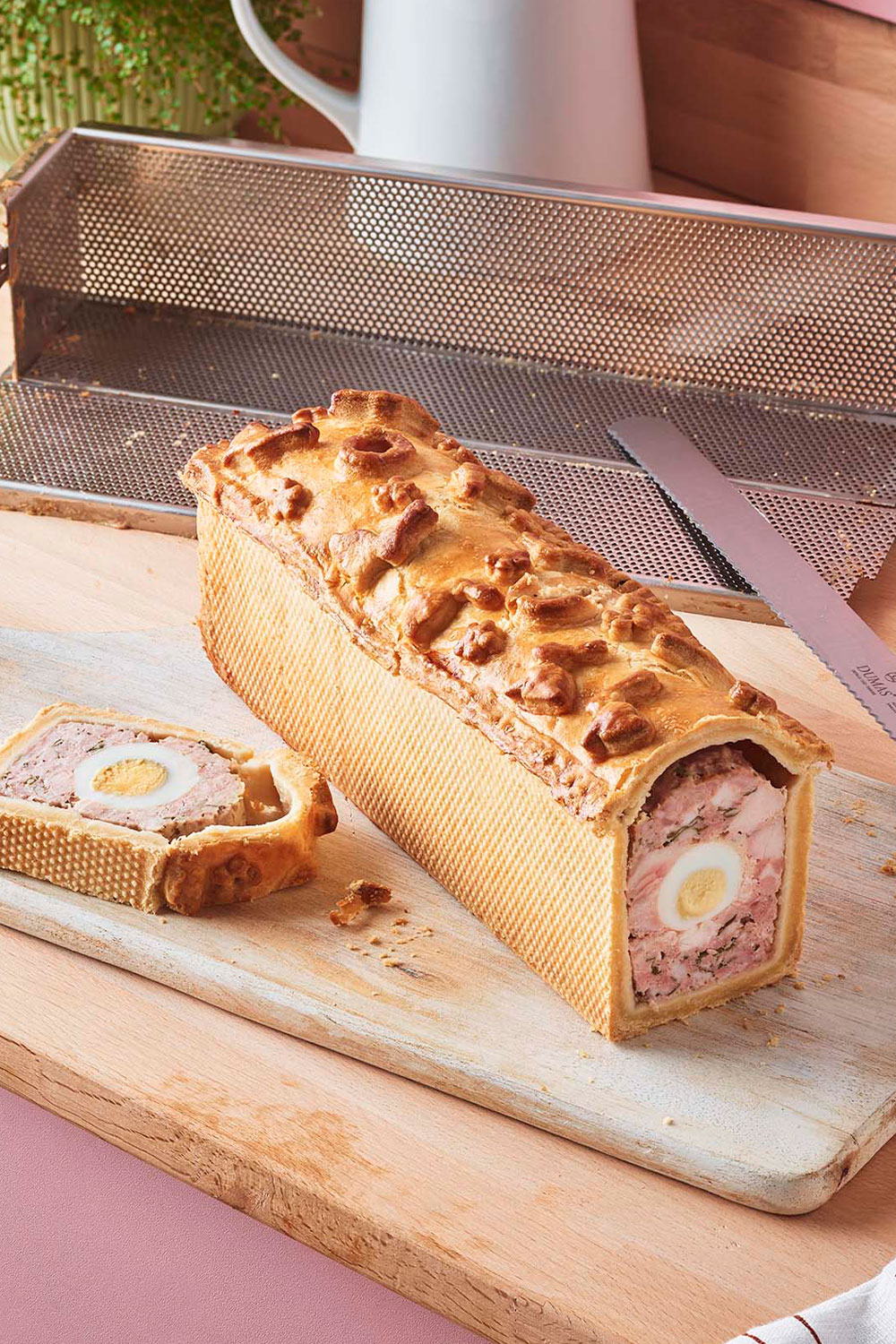
Pâté de Pâques is a crusted pâté. It is a traditional dish, characterized by its rich and flavorful filling of meat and hard-boiled eggs, all of it wrapped in a golden, crispy crust. The crust not only adds texture to the dish, but it also helps retain the juices and flavors of the filling, creating a delicious contrast with the smoothness of the pâté inside. Una special culinary delight, perfect for celebrating the Easter season with the family! From the tender meat filling to the hard-boiled eggs hidden at its center, this dish is a promise of renewal and joy, encapsulating the true spirit of the season.

De Buyer stainless steel springform pan
What is Easter Pâté
Pâté de Pâques is a culinary tradition specifically associated with the Loire Valley region in France, though it is enjoyed in various parts of the country during the Easter season. This dish combines elements of French charcuterie with the celebration of spring and the Easter holiday.
Literally translated as "Easter pâté," this dish consists of a kind of baked meat pie, traditionally made with two types of filling: ground meat (usually a mix of pork and veal or lamb, alluding to spring) and whole hard-boiled eggs in the center. The filling is wrapped in puff pastry or pâté dough, creating a surprise effect when sliced, as the hard-boiled eggs are revealed in cross-section, symbolizing the life and renewal of Easter.
The Pâté de Pâques can be served hot or cold and is often accompanied by fresh salads or spring vegetables. It represents a union of flavors and traditions, being both a culinary delight and an integral part of Easter celebrations in France, reflecting the joy and spirit of the season.
So, put on your apron, get ready to experience the magic of transforming simple ingredients into an exquisite Easter feast, and let yourself be carried away by the joy this season brings. Together, we’ll make this Pâté de Pâques the centerpiece of our celebration, filling our homes with aromas that invite reflection on the wonders of spring.
Ingredients
For the Dough:
- 560 g of all-purpose wheat flour
- 4 egg yolks (from L eggs)
- 65 g of very cold water
- 160 g of very cold butter
- 140 g of lard, also very cold
- 1 tsp of salt
- 2 cl of white vinegar
For the Filling:
- 350 g of pork belly
- 120 g of pork loin
- 100 g of chicken breast
- 6 eggs
- 50 ml of white wine
- 100 ml of crème fraîche (or cooking cream)
- 10 g of salt
- Pepper to taste
- Parsley, tarragon and chervil
Preparation
The first day:
Prepare the filling:
- Place the chicken cut into strips in a blender, add the crème fraîche and a pinch of salt. Blend until the mixture has a smooth, homogeneous texture.
- Finely chop the bacon and cut the pork loin into very small cubes.
- Strip the leaves from the herbs and chop them.
- In a bowl, mix the bacon, the diced loin, the filling you prepared in the blender, add the white wine and the herbs. Combine all the ingredients well and refrigerate until the next day.
To make the dough:
- Pour the flour into a large bowl, make a well in the center, and add the butter cut into cubes and the lard (especially very cold), the egg yolks, and a pinch of salt.
- Knead, gradually adding the water and vinegar mixture, until you have a uniform dough that doesn’t stick to your fingers. Shape it into a ball and gently flatten it with the palm of your hand.
- Wrap the dough in plastic wrap and refrigerate it for 8 hours.
The next day:
- Cook the eggs in boiling water for 8 minutes. Leave them immediately in ice water to cool them, then peel them.
- Preheat the oven to 220 °C.
- Take the dough out of the fridge and roll it out until you get a rectangular griddle about 4 mm thick. Line the De Buyer perforated stainless steel pâté en croûte mold.
- Set aside one strip for the top and a little for the decorations (use the cookie cutters of your choice).
- Fill with the stuffing halfway, arranging the 6 peeled eggs upright at mid-height.
- Finish filling with the remaining filling.
- Cover with a strip of dough and seal the top edges, pinching the dough with your fingers.
- Make three holes (they will serve as chimneys so the internal steam can escape and the dough doesn't break).
- With the reserved dough, make the decorations of your choice.
- Brush the dough with beaten egg and bake for 30 minutes.
- Lower the oven temperature to 150 °C. Insert a thermometer and cook until the internal temperature reaches 65 °C (approximately 20 more minutes).
- Let it cool down at room temperature and, once cooled, you can keep it chilled in the mold until the next day.



Comments
Annie said:
Muchas gracias Claudia&Julia.
Lo pensaré 🤔😘 un cordial saludo.
Claudia&Julia said:
Hola Annie, ese molde es fantástico para una correcta cocción de la masa, pues el aire caliente del horno entra por los agujeros, cociendo exquisita y perfectamente la masa en cröute. Dicho esto, hay otros moldes que puedes usar, siendo otros materiales y variando los tiempos de cocción: uno muy recomendable es el molde para patés de Le Creuset (https://claudiaandjulia.com/products/terrina-rectangular-ceramica-le-creuset), y sino ya serían moldes rectangulares altos (podrías probar con este: https://claudiaandjulia.com/products/molde-antiadherente-para-plum-cakes-le-creuset ). Saludos!
Annie said:
Que otra opción tenemos si no tenemos ese molde para el paté? Muchas gracias!!!!