

The Le Creuset Skillet is one of the skillets we sell the most in the shop. As you know, at Claudia&Julia we have historically been great specialists in cast-iron utensils, and we want to answer the most common questions about one of Le Creuset’s most iconic pieces, the skillet. In addition, we hope to convey why we are great lovers of this skillet, which is as versatile as it is beautiful and durable.
In this post you'll see:
- What is a skillet
- Benefits of the skillet
- What you can cook in a skillet
- How to cook with the skillet
- How to clean the skillet and how to maintain it
- Skillet recipes
1. What is a skillet
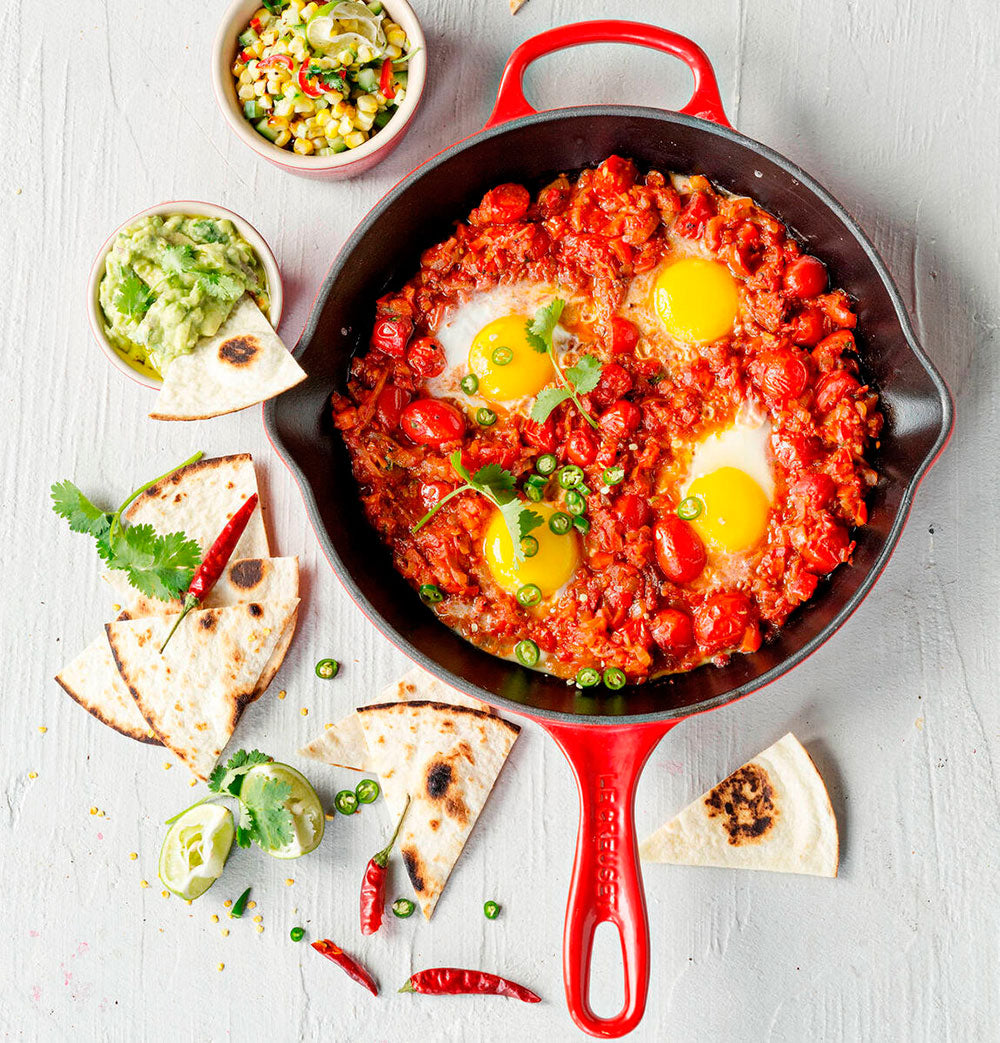
The Le Creuset skillet is a cast iron skillet, manufactured in a single piece and vitrified. Thus, it is a purely iron pan, it is a pan without non-stick coating and 100% natural.
Its most distinctive feature, its shape: is not completely round; its sides form pouring spouts that make it very characteristic (and help you pour sauces or liquids when you need to).
Another fundamental characteristic, and something you can't say about other pans, is that it has a lifetime warranty -yes, a skillet will last you a lifetime in the kitchen.
Since it's made of cast iron, it's suitable for both the stovetop and the oven (in fact, you can even put it on the barbecue or in the fireplace if you want), which makes it a piece extremely versatile.
Its interior vitrification (thousands of glass particles injected into the cast iron) gives the skillet two major benefits:
- It protects it from rusting (unlike other cast-iron pans, the skillet does not rust).
- Helps prevent food from sticking as happens with an iron or steel pan without vitrification, without the need for seasoning.
The skillet, a unique piece
This is a skillet made of cast iron. What does that mean? The iron in liquid form and with the precise amount of iron, is poured into a unique sand mold that has the shape we want to give the pan, and it is left to cool. Once cold, the mold is destroyed, thus obtaining the skillet.
It is a process that requires working in a foundry, at temperatures that reach over 1000 ºC, and truly delicate handling. A skillet is a piece resulting from a unique mold—whoever owns a skillet owns a one-of-a-kind piece, which makes skillets a special and highly valuable utensil.
The traditional skillet and the tall skillet
After the success and spread of the traditional skillet, Le Creuset launched the tall skillet. The only difference between the standard skillet (the classic one) and the tall skillet is the height of the sides. Nothing else changes (and the weight, since for the same skillet diameter, the tall one is somewhat heavier), and some of the uses you can give it: in a tall skillet you can also make sponge cakes (in a shallow one, only brownies), since you will have the height for it, or it is more advisable for risottos and rice dishes, since you will appreciate the height to add the stock or water.
2. Benefits of the skillet
By its nature, purely vitrified iron, and thanks to its shape and thickness, the skillet offers us great benefits, both for cooking and for our wallet and our health:
- It is a 100% natural pan, without non-stick coatings.
- Being pure iron, the cooking result is 100% natural; you achieve the most authentic and pure flavors in all your recipes.
- You roast, you don't boil: iron reaches such a high temperature that it evaporates the juices released by foods, and you can truly roast (in a non-stick pan, due to its materials, you will never reach the temperature iron attains, and the juices stay in the pan, which causes the meat to be boiled, not seared or roasted).
- Doesn't scratch and it's perfect for bringing to the table: being vitrified iron, you can cut directly on it what you've prepared, and it's so beautiful that it looks lovely on the table.
- No more replacing pans: a skillet is a great investment, because since it remains unchanged and doesn't have non-stick coatings that can lose qualities, it's a piece that will be passed down from generation to generation. There's nothing you can ruin on it, so you won't be buying a pan every so often: you buy it once and have it for life.
- Because of its thickness it doesn't deform, and also because of that thick construction, it distributes heat very well and retains it -your recipes cook evenly and once finished stay hot for a long time after turning off the heat or bringing to the table.
- Being iron such a good conductor of heat, you need less energy to cook, with the consequent energy savings.
- It doesn't rust and doesn't require seasoning: thanks to its vitrification, and unlike pans made from iron sheets, skillets do not rust*, they don't require seasoning (the vitrification already provides it and it's easier to cook in them than in other iron or stainless steel pans, because it gives them a certain non-stick capacity.
- The vitrification helps food not take on an iron taste and we can cook with acidic foods like wine or tomato (or even leave it to marinate), and it won’t rust (things that can happen with pans made with an iron griddle base).
- It's an all-terrain piece: you can use it on the stove as well as in the oven, and you can cook over embers, in the fireplace, or on the barbecue. It's a piece of iron; you need more than 1000 ºC to melt it again, so you can be assured you can cook with it normally at home or outdoors.
- It's very versatile: from sautéing little vegetables to griddling, making a rice dish, frying, using it for your meats or oven-roasted vegetables, baking a pizza or empanadillas without oil, baking a cookie or making bread. It’s a piece with which you can cook over low heat or crank it to full power for a perfect sear.
Note: The skillet is a thick, cast iron pan, which makes it a heavy pan. If it's for an elderly person or someone with little hand strength, it won't be the most recommendable pan (especially in larger sizes, since greater diameter means more weight).
3. What can you cook in a skillet
An iron pan is a great investment, not only because it will last you forever in the kitchen, but because it’s truly versatile: you can cook over low heat as well as griddle or roast at full power, and you can cook on the stovetop and in the oven. Some ideas so you can see how versatile it is:
3.1. Ideas for cooking with the skillet on the stovetop:
- For sautéing vegetables
- For frying (it's perfect for this, since iron reaches high temperatures)
- To griddle: you’ll get a perfect sear on your juiciest cuts, and you’ll see that griddling on an iron piece has no equal. Also for roasting salmon, tuna and other oily fish, or for making some shrimp, the result is spectacular.
- For rice dishes: whether paellas or risottos (ideally in the tall skillet), you can make the most natural and delicious rice dishes.
- To melt cheese in a moment, flavored with some herbs... And grab some bread!
- To caramelize nuts or make fresh fruit coulis
- To prepare sauces.
3.2. Ideas for using the skillet in the oven:
- For roasting meats and fish in the oven: arrange your meats in the skillet, season with salt and pepper, pour a generous splash of oil, and let the oven do all the work. Like cooking in a casserole, roasting in the skillet delivers excellent results.
- For grilling meat, barbecue-style: you can place your sausages, chicken, your beef cuts, and more in the skillet and put it under the grill, in the oven. Without using oil, you will be getting delicious results.
- For roasting vegetables: from carrots to asparagus or potatoes, arrange your vegetables whole or chopped in the skillet and into the oven, accompanying meats and fish or on their own. They turn out delicious!
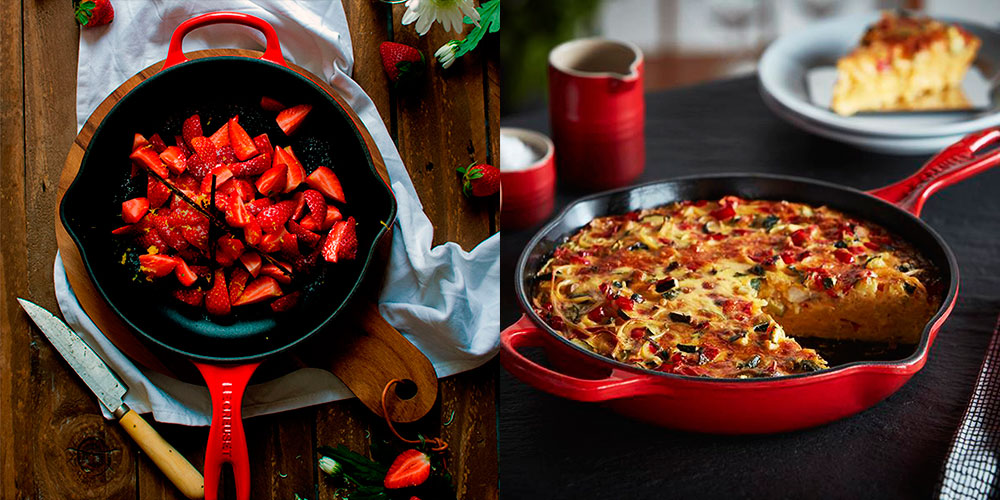
- To make baked eggs (with no oil and with whatever sauce or accompaniment you prefer).
- For frittatas: prepare the mixture and pour it into the skillet to set. You will have a ten-out-of-ten result and an unrivaled presentation at the table.
- Bake puff pastries and shortcrusts: whether savory or sweet pies, place the dough in the pan (with or without parchment paper, according to your preference), add the filling you want and into the oven.
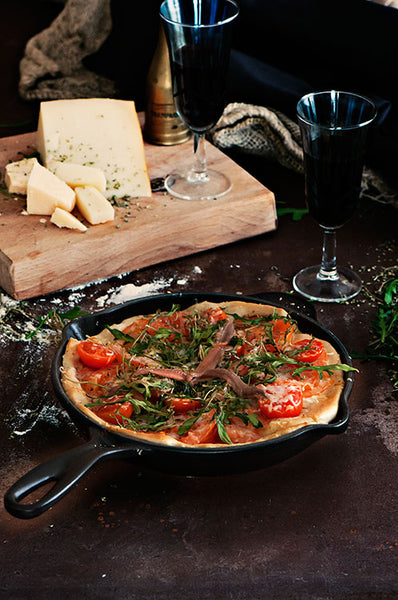
- To make pizza: lay out the dough and season to taste. Whether it's a vegetable-based crust (like cauliflower) or bread dough, you'll get excellent baking results.
- For gratinating: whether you've placed a lasagna, cannelloni, vegetables, or cod loins, you can put it in the oven to gratin your recipes.
- To make XL cookies or traditional biscuits.
- For brownies and sponge cakes (the latter in the tall skillet).

4. How to cook in a Le Creuset skillet
- The skillet does not require any seasoning, so when you receive it at home you only need to wash it with a soft sponge and soap, dry it and it's ready to cook.
- It's recommended to always heat it over low heat (like all pans), to let the iron distribute the heat well (if you turn the heat to maximum, you’ll be heating the center of the pan a lot, but the sides will be cold). Give it time to heat through. Once hot, if what you want is to griddle or cook something over higher heat, you can then turn up the flame.
- Iron gets very hot, so keeping a low or medium temperature is usually enough: if you have the skillet over maximum direct heat, you will easily burn the food on the outside before it can cook through the center.
- You can turn the heat to the maximum when you add the food to griddle or fry (to bring the pan’s temperature back up to the maximum we want for that kind of culinary technique, since when you add the food the temperature inevitably drops); but remember to lower the heat again when you see you've raised the temperature sufficiently.
- Apply a little more oil than usual in the first uses; it will help prevent foods that tend to stick from doing so.
- With use and cooking oils, the pores imperceptible to the naked eye that may be on the pan's surface become filled, and they form a patina that helps make it easier to cook in it each time.
- Add foods at room temperature; if you are cooking something you have in the fridge, let it come to room temperature for half an hour before cooking. That way, you won’t lower the skillet’s temperature as much and the heat will reach the center of the food more quickly, leaving it better cooked.
- To cook meat, oily fish or shrimp on the griddle, it's ideal to heat the pan to medium temperature. Once it's hot, raise the temperature to reach the optimal point. Apply a few drops of oil, cook the meat turning once or to each person's taste. It's advisable to add salt at the end (preferably flaky salt).
- Remember when roasting meats that iron first grabs and then releases: if you’re griddling and you’re going to flip the meat but see that it’s very stuck, it’s because on that side it’s not done yet, it’s not seared. Don’t force it because you’ll tear the meat: wait a couple more minutes and try again. When the meat is seared on one side, you’ll be able to turn it easily with tongs, and then sear the second side.
- If you're going to cook batters for cakes or cookies, simply apply a little butter with kitchen paper or a release spray over the entire interior surface. If you prefer, or if you don’t even want to have to clean the pan afterwards, instead you can place a sheet of baking paper in it and put the batter inside. After baking, you will see that the skillet is spotless.
- The skillet gets very hot. Always handle it with a cloth or guards, and if it is hot place it on the table with a trivet so as not to burn the tablecloth.
- You can use it in the oven comfortably, up to 300 ºC if you want and more; nothing will happen to it.
- Nothing like a skillet to induct on induction cooktops: Careful! don't set it to maximum power on induction because it will heat a lot and you'll burn the food.
- You can cut meats, cakes, and others directly in it; you won't damage it.
5. How to clean a skillet and how to maintain it
Don’t miss these tips and video to cook with and clean your skillet properly. In general, you can clean the skillet with a sponge and dish soap. Always do it by hand and keep the following in mind:
- Let it cool a few minutes before washing the pan. Keep in mind that sudden temperature changes can damage the enamel layer, so never immerse the hot product in cold water.
- Clean with a sponge and a bit of soap.
- Once clean, dry with a cotton cloth and store until next use.
- If there are food residues that resist, leave the pan soaking in hot water and soap for a few minutes - you'll see how you clean them without problems. If you need to 'scrape', always do it with a soft scouring pad (the blue or green ones, not an aluminum scourer).
- If residues remain on the surface, fill with hot water and a few drops of soap, and soak for about 15 or 20 minutes. Then clean it with a sponge (they come out spotless and there's no need to scrub with any scourer).
- If you've had the food on the heat too long or at too high intensity, and there are very stuck burnt residues on the Skillet, we recommend filling it halfway with water, adding a bit of soap and heating it over medium-low heat. You'll see how all the burnt residues come loose and you can recover the pan without problems, then cleaning it with water and soap. If necessary, add a few drops of vinegar.
- To maintain an impeccable shine or if you want to clean encrusted residues, you can use the Pots & Pans skillet and cocotte cleaner by Le Creuset. It removes small black stains and the white ones resulting from some juices, and enhances the enamel's shine.

- The only part susceptible to a speck of rust is the upper rim (the top perimeter line). It's rare that it happens, or it's not noticeable, but if you need to clean it you'll achieve it simply by rubbing a kitchen paper with a little oil on it. Otherwise, running a scourer along the rim you'll see it goes away as well.
6. Skillet recipes
We have been making recipes in the skillet for a very, very long time to show you its multiple uses. Here you will find more than 80 skillet recipes of our blog.
Some of the recipes that have always been most successful are:
- Baked eggs with ratatouille
- Rice with lamb
- Artichoke and ham frittata
- Tuscan salmon
- Pork tenderloin with orange glaze
- Pizza with tomatoes, anchovies, Idiazabal cheese, Parmesan and arugula
- Provoletta
- Cantonese chicken
- Strawberry and rhubarb cobbler
- Nutella brownie

As you can see, we have a great variety of recipes, and many more that you will be able to make in your skillet!
I hope all these tips are useful to you and that you greatly enjoy your Skillet pan, one of the best investments in any kitchen.


Comments
Claudia&Julia said:
Hola María José,
Con los alimentos delicados, como el pescado blanco o los huevos, puede costar un poco más acostumbrarse a cocinar en la Skillet sin que se peguen. Siempre es importante esperar a que la sartén esté bien caliente (dejar que se vaya calentando a potencia baja/media), cocinar los huevos con un poco más de aceite del habitual, (sobre todo al principio, hasta que nos familiarizamos con ella) y no intentar dar la vuelta a la tortilla o mover el huevo hasta que veamos que se despega solo de la sartén (prueba con una espátula a moverlo, si ves que está pegado, déjalo un poco más).
¡Un saludo!
Maria Jose Fernandez said:
No consigo hacer tortilla o huevo a la plancha sin que se pege
Pedro said:
He comprado Sartén de hierro con mango de madera Le Creuset .Porque se pega y despues y la Segunda vez, me ha salido manchas, blancas en fondo del sarten ? .
Lo he limpiado , dejando 10 -15 min con agua caliente y sal dentro despues lo limpiado con papel de cocina, nada mas .Por dios !
Noemi said:
Hace no mucho compré una y los verdad que estos consejos vienen muy bien. Los he compartido con mi pareja que dice que siempre se le pegan los alimentos en ella 😅 Requiere de paciencia y mimo. Pero el sabor que da a los alimentos me encanta.
CAROL said:
que pasada, son todas estas cosas que te gustaria tener en la cocina, la proxima compra no se me resistira
Samuel said:
Me encanta esta sarten y estoy interesado en adquirir una, pero mi pregunta es que medida usais en la recetas??