
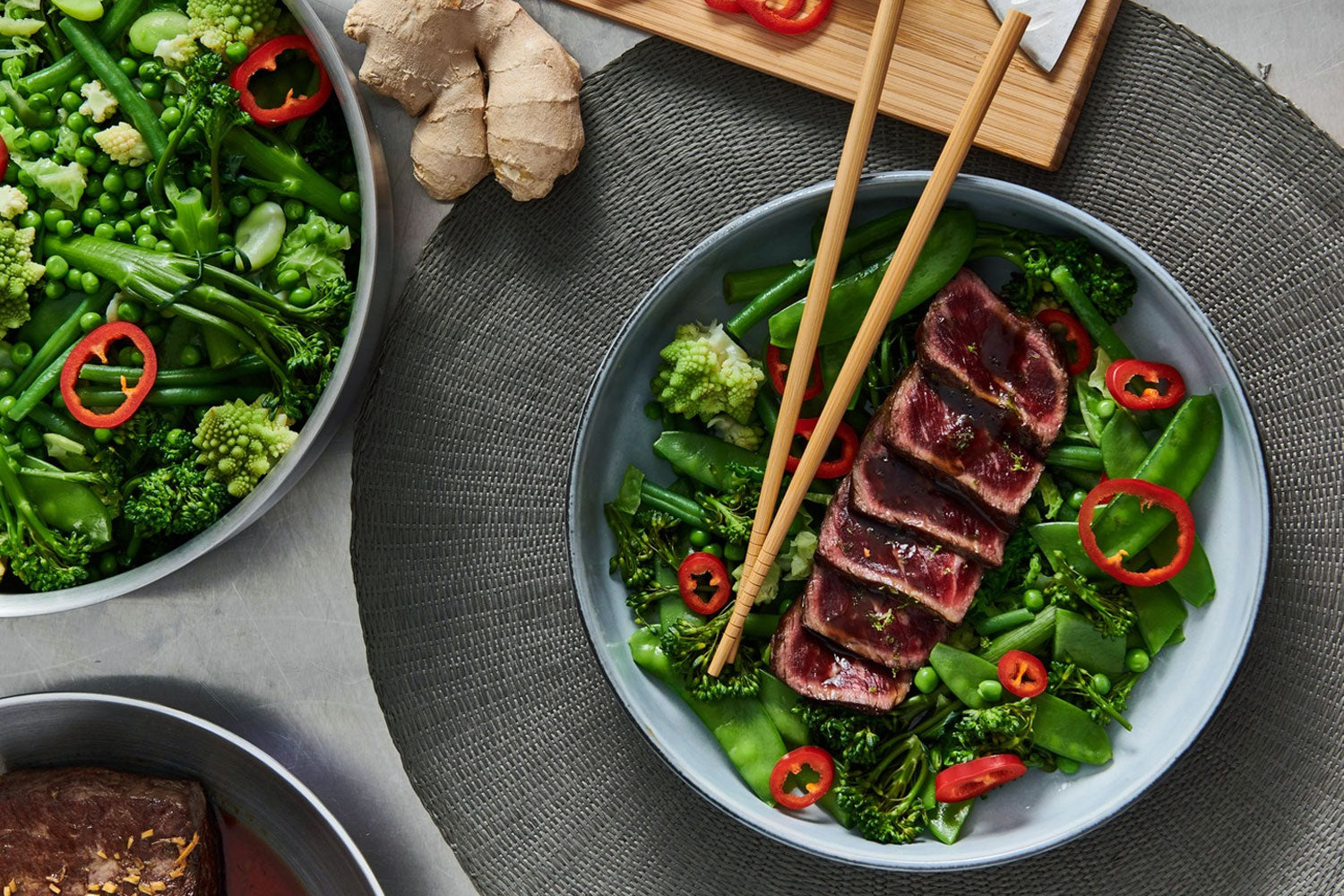
A few days ago I suggested a salmon sashimi, and today's recipe revolves around another typical Japanese preparation that I absolutely adore. This beef tataki with sautéed vegetables is a perfect dish to enjoy meat and vegetables in a different way, and I'm sure you'll love it.
Tataki is a Japanese culinary technique that consists of searing a piece of meat or fish quickly in a very hot pan or grill, leaving the center raw or slightly cooked. We can easily achieve this high temperature with a Alchimy stainless steel frying pan from De Buyer, which, thanks to its multilayer construction, provides even heat distribution efficiently and allows optimal temperature control. With it we will obtain perfectly seared meat while keeping all its flavor.
This way, the exterior of the meat becomes slightly caramelized and crispy, while the interior remains juicy and tender. A true delight accompanied by vegetables cooked al dente, which add a crunchy touch that pairs wonderfully with the beef.
I highly encourage you to make this dish because it's wonderful. Take note of the recipe, and enjoy!
Ingredients
For the sautéed vegetables
- 100 g peas
- 100 g broad beans
- 100 g sugar snap peas
- 1/4 head of green kale
- 1/2 head romanesco
- 1/2 head broccoli
- 1 fresh chili or, if unavailable, 1 small red pepper
- Salt
- Sesame oil
For the tataki
- 300 g beef steak cut into a rectangle
- 10 ml cooking sake
- 100 ml soy sauce
- 1 garlic clove
- 15 g fresh ginger
- 1/2 lime
Preparation
Beef tataki (must be prepared at least 2 hours beforehand or the day before)
- Peel and remove the germ from the garlic. Finely chop it.
- Grate the ginger.
- Grate the zest of the half lime and squeeze it.
- In an Alchimy stainless steel frying pan from De Buyer with a little oil, brown the steak with a bit of oil. Do it on all sides, about 3 minutes per side.
- Without turning off the heat, remove the steak to a large plate or platter.
- Pour the sake and soy sauce into the pan to dissolve the meat juices.
- Add the lime juice, the grated ginger and the chopped garlic.
- Pour the resulting juice over the meat and refrigerate it.

Sautéed vegetables
- Wash all the vegetables separately.
- Cut the kale leaves into thin strips.
- Cut the romanesco into florets, all roughly the same size.
- Bring plenty of water to a boil to cook the vegetables. Add salt when the water boils.
- Prepare a bowl with ice water.
- Cook each vegetable just until done separately, transferring them from the boiling water to the ice water once cooked to stop the cooking. Set them aside. (To make it easier, you can cook them using a steamer basket or use a slotted spoon to remove them).
- Cut the red pepper into thin rings and set aside.

Assembly
- Lightly sauté the vegetables and the fresh chili with a little sesame oil.
- Drain the meat, reserving the juice, and slice it thinly with a slicing knife well sharpened.
- Warm the juice over low heat in a small saucepan until reduced by half.
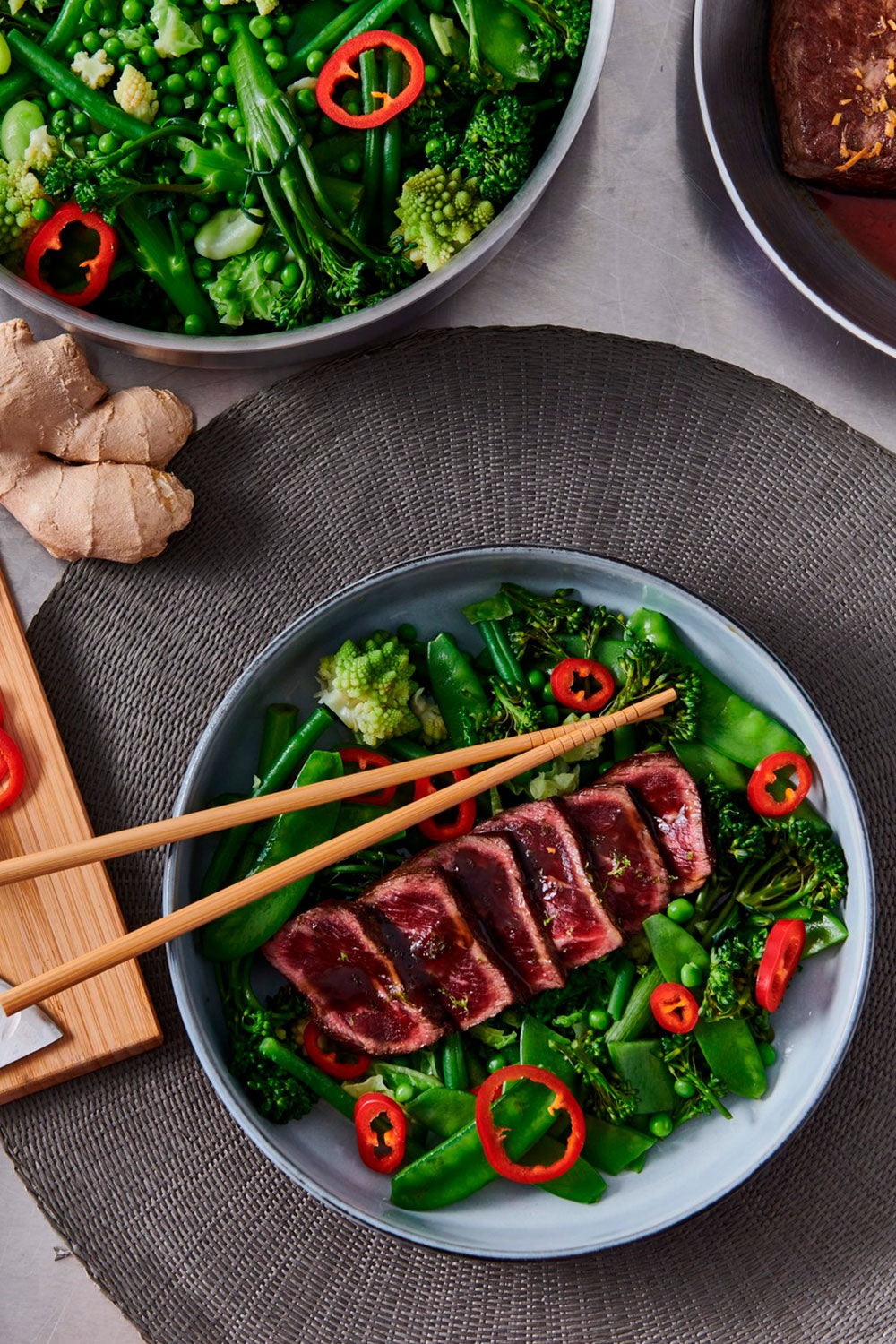
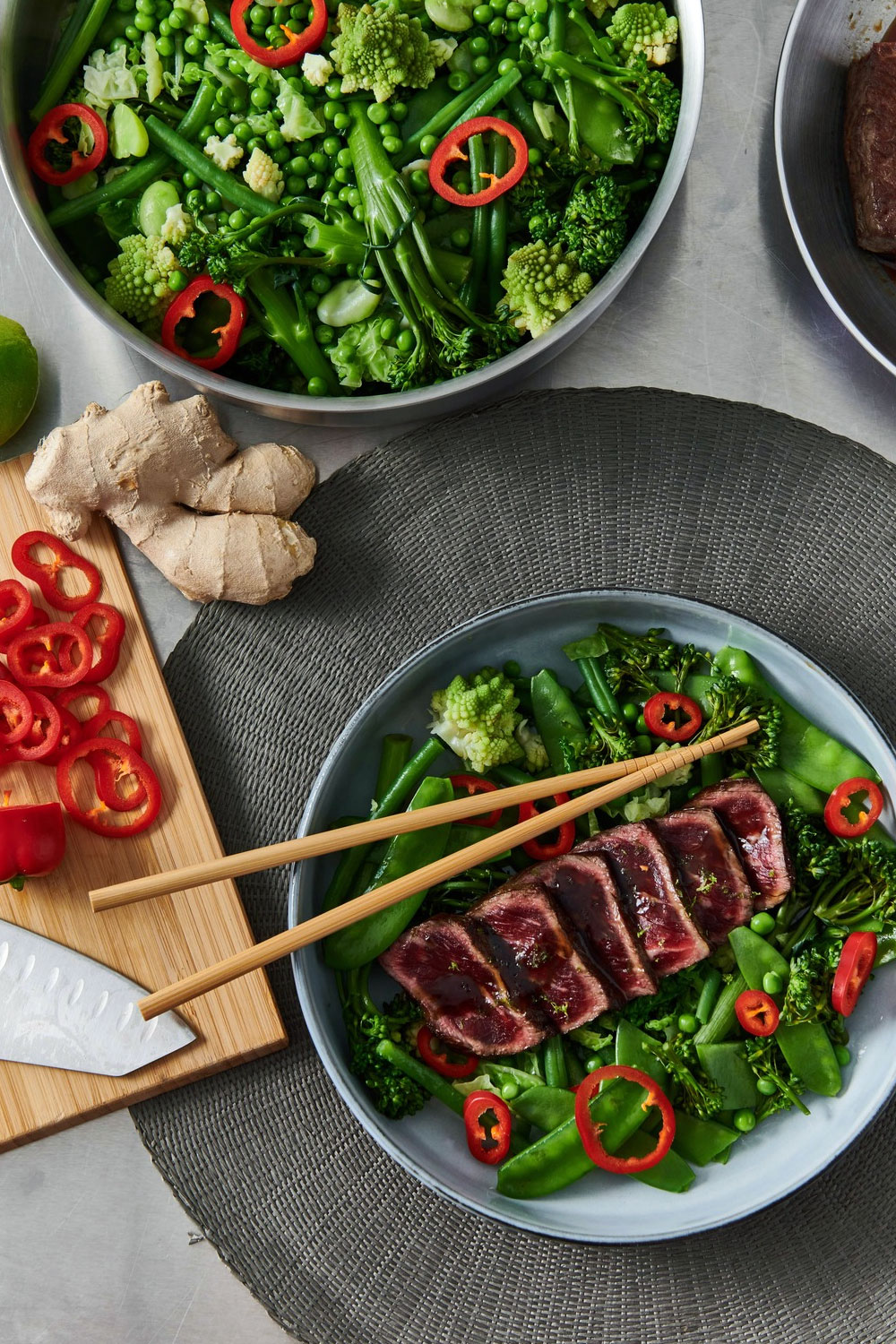
- Arrange the vegetables on a plate, place some slices of the beef tataki and pour a little of the juice over them before serving.
Notes
- If you don't have sesame oil, you can use olive oil or your regular cooking oil.
- If you're missing any of the vegetables in the recipe, don't worry. You can use what you have in the fridge or even serve the tataki with a good green salad with mixed sprouts.
- To sear the meat, you can also use a cast-iron pan or a flat cast-iron grill. The important thing is to reach a high temperature that ensures the meat is perfectly seared.
- A tataki recipe that's also delicious and I encourage you to try is marinated tuna tataki. You can find it here.
- If the salmon sashimi recipe on the blog sparked your curiosity, you can see it here.
- And if you love Japanese food as much as I do and want to get started with its cooking and discover more about its dishes and ingredients, I highly recommend the book My First Japanese Cookbook. A little gem!
- These Japanese culinary techniques (both tataki and sashimi) require good knives so the cut is precise and without tearing. If you want to learn more about knives, you'll find several blog posts discussing them: different types, maintenance, sharpening, etc.


Comments
Paul-Matthias said:
Das sieht sehr lecker aus. Ich werde es Mal mit unserm Hereford Weiderind versuchen.
Https://www.hof-herweg.de