
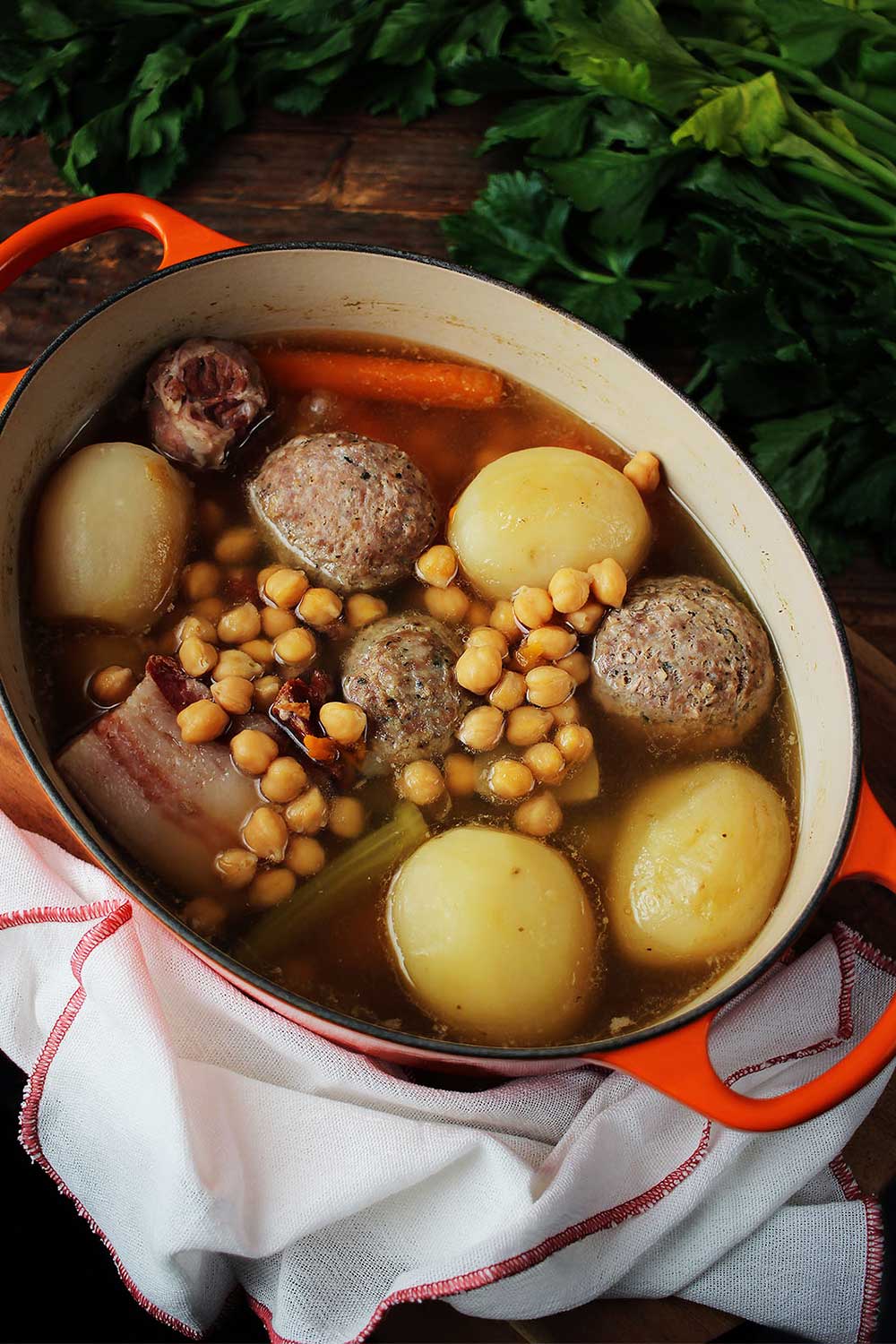
The cocido with meatballs from La Vega Baja del Segura is a traditional dish from our region. Like any other cocido in Spain (madrileño, lebaniego, escudella, Andalusian puchero…), it’s a hearty, family meal whose recipe is passed down through generations. You’ll never find two exactly the same, and even within the same area there are always slight differences. But perhaps that’s part of the charm of these inherited traditional recipes, don’t you think?
Cocido with pelotas is very much a Sunday family dish, but here in my area it’s especially tied to Christmas Day. It’s also very common to use the leftovers to make cocido cannelloni on 26th December — so not only do you enjoy a spectacular cocido with its “peloticas” (as we call them around here), you also look forward to delicious cocido cannelloni the next day.
To make this recipe, I always use my oval Le Creuset cocotte, because although it might seem that the contents matter more than the vessel, from experience I can tell you the difference between a regular pot and a cocotte is huge. In this particular recipe — both in texture of meat, potatoes and legumes and in taste — it’s something you really don’t want to be without for this type of traditional slow cooking.
 Oval Cocotte Evolution Le Creuset, T&G wooden peel, Mini‑Cocotte Le Creuset and Pallarès kitchen knife
Ingredients
For the cocido:
- 500 g chicken breasts
- 100 g Iberian salted pancetta
- 150 g ham bone (garrón)
- 230 g pork shank
- 1 peeled turnip
- 1 peeled parsnip
- 3 celery sticks
- 3 peeled carrots
- Medium potatoes (one per person)
- 500 g cooked chickpeas (*)
- Pelotas (one per person)
- 3 strands of saffron
For the pelotas:
- 200 g stale bread, soaked (*)
- A good handful of pine nuts
- ¼ tsp cinnamon
- ¼ tsp nutmeg
- 1 tsp salt flakes
- Pinch of pepper
- 2 large eggs
- Zest of one lemon
- 2 peeled, crushed garlic cloves
- A handful of fresh chopped parsley
- 750 g mixed beef and pork
- 250 g turkey or chicken breast
- One “blanco” (*)
Notes:
(*) Pre‑cooked canned chickpeas work beautifully in this recipe. If you want to use dried chickpeas, soak them 24 h beforehand and change the water regularly.
(*) A “blanco” is a boiled sausage typical of La Vega Baja, made from boiled minced pork, spices (cloves), salt, pepper and egg. If you can’t find it where you live, use a similar boiled sausage with those ingredients for a similar result.
(*) The bread should be a few days old rustic village loaf. Crumble it and soak it in water — especially if using the crust. Once softened, squeeze well and add to the mix.
 Oval Cocotte Evolution Le Creuset, T&G wooden peel, Mini‑Cocotte Le Creuset and Pallarès kitchen knife
Method
For the cocido:
- In a cocotte (I used a 27 cm oval one), place all ingredients in this order: meats (chicken breasts, pancetta, ham bone, pork shank); turnip, parsnip, celery, carrots.
- Fill the cocotte with water and bring to a boil over medium heat. Skim frequently until no impurities rise.
- Cover and simmer very gently for at least 3 hours. After this time, add the saffron strands.
- Add the potatoes, chickpeas and pelotas to the cocido. They should be covered by the broth at least three‑quarters of the way; cook covered at low heat for about 45 minutes (until potatoes and pelotas are cooked).
- To serve, first ladle out the broth (with or without noodles), with one pelota per person; as a second course, serve the meats, vegetables, chickpeas and potatoes in the centre of the table so each guest can help themselves.
How to make the pelotas:
- In a food processor, finely chop all the meat. Transfer to a large bowl with the rest of the ingredients and knead by hand until you have a uniform mixture — neither too soft nor too compact.
- Shape the pelotas slightly larger than a ping‑pong ball, pressing well so they don’t fall apart. Chill in the fridge until ready to cook.



Comments
Claudia&Julia said:
Hola José Luis, Diego Ignacio y Luisma,
Hemos revisado la receta y ajustado los tiempos de cocción de las patatas y los garbanzos. Gracias por vuestros comentarios :)
¡Saludos!
Luisma said:
Sin duda, las patatas echándolas tan temprano sería historia.
Lo suyo es cuando el cocido ya lo tenemos más o menos listo. Echamos las pelotas y calculando que las patatas podrían ser 15 20 minutos ahí ya jugamos y se la añadiremos cuando toque.
La pelota jugando con el tamaño mínimo 30 minutos a fuego, no muy fuerte para que no se nos deshaga.
Saludos desde la Vega baja!!!!
Diego Ignacio said:
4 horas hirviendo las patatas?
José Luis said:
Cociendo cuatro horas garbanzos ya cocidos? Tas segura? Bueno bueno, entonces sin cocer que le echamos ocho?
Un saludo