
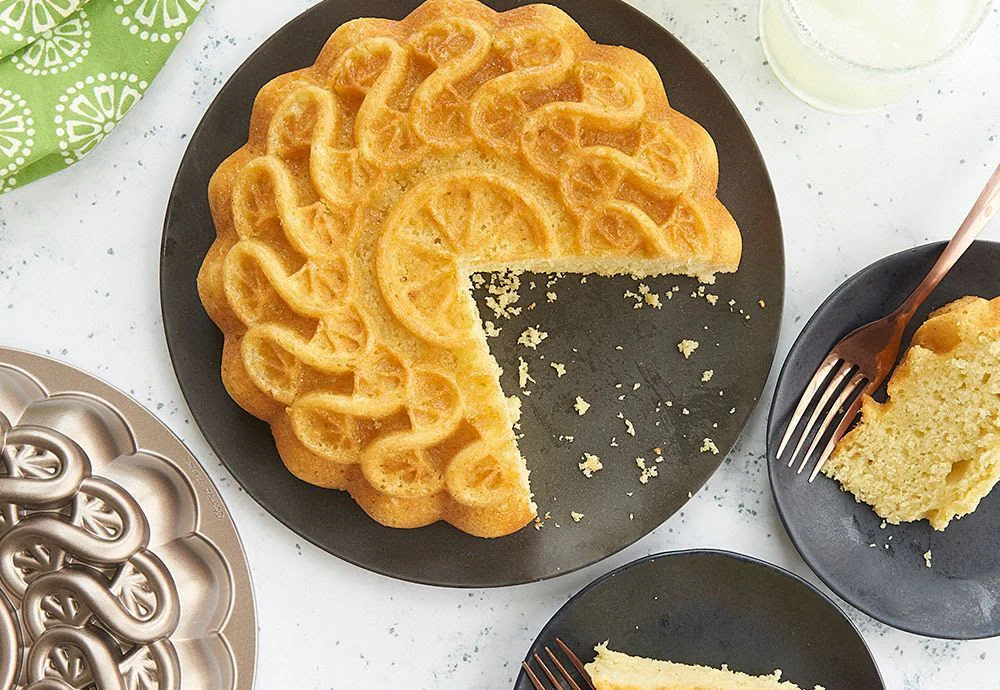
This oil and lemon cake recipe is one of those that makes you fall in love at first sight and, when you taste it, steals a smile. It has that special, light and fluffy touch that makes it the perfect companion for an afternoon coffee or to show off at a family meal. It’s not the typical cake, no… Baked in our beloved Citrus Twist pan, with its spiral shape and citrus details, it looks made for a display. But the best part is not only its appearance.
Every bite is full of freshness and softness, thanks to the olive oil that gives it a wonderful texture and a lemon glaze that soaks into it, intensifying its flavor and giving it that slightly tart touch that awakens the palate. It’s a cake with personality, ideal for those of us who love citrus flavors and always look for something special in homemade desserts. You’ll see, get ready for the compliments, because this cake will be the star of any occasion. And the best part is that it’s super easy to make!

Ingredients
- 200 g sugar
- Zest of 2-3 large lemons, about 2 heaping tablespoons (reserve the lemons to juice later)
- 260 g wheat flour
- 1 dessert tablespoon baking powder
- 3/4 tsp salt
- 1/4 tsp baking soda
- 180 ml mild olive oil (0.4º)
- 120 ml freshly squeezed lemon juice
- 3 eggs
- 180 ml whole milk
- 1/2 tsp vanilla extract
For the lemon glaze:
- 100 g sugar
- 60 ml lemon juice
Preparation
- Preheat the oven to 180°C.
- Spray the inside of the Nordic Ware Citrus Twist pan with baking spray and make sure to coat the entire interior using a pastry brush. If you don’t have spray, use melted butter to grease the pan (do not use oil on Nordic Ware pans).
- In a small bowl, mix the lemon zest with 200 g granulated sugar, rubbing them with your fingers and pinching the sugar with the zest so the lemon releases its juice and the sugar absorbs its aroma. You’ll see the sugar becoming moistened by the lemon. Set aside to let the sugar infuse with the aroma.
- In a medium bowl, mix the remaining dry ingredients - the flour, baking powder, salt and baking soda. Set aside.
- In the KitcheAid bowl, combine the infused sugar, olive oil and lemon juice. Beat at medium speed with the paddle attachment until the mixture is pale and the sugar has dissolved, about 1 to 2 minutes.
- Add the eggs one at a time, mixing well after each addition, at high speed.
- Without stopping stirring, add the vanilla extract.
- Now, begin adding the dry ingredient mixture. Do it in three batches, alternating with the milk, and finishing with the flour. Mix only until the ingredients are well incorporated after each addition.
- Pour the batter into the prepared pan, filling it up to 3/4 of its height. Tap the pan gently on the countertop to remove air bubbles.
- Bake for 35-40 minutes at 175-180ºC (place the pan in the middle-to-lower area of the oven), until it has a deep golden color and a skewer inserted in the center comes out clean.
- Cool the cake in the pan for 10 minutes on a cooling rack. After ten minutes (not earlier and not later), it’s very important to unmold: invert it carefully onto the rack, and let it finish cooling.
- While the cake cools in the pan, prepare the glaze. Bring 100 g sugar and 60 ml lemon juice to a boil in a small saucepan, stirring occasionally until the sugar dissolves. Reduce the heat and let it simmer until it thickens slightly (about 2 minutes).
- After unmolding the cake and while it’s still hot, poke the surface of the cake with a skewer (the holes will help the glaze penetrate inside and give it a stronger lemon flavor). Then, using a pastry brush, apply the glaze to the top and sides of the cake. Let the glaze absorb and repeat the process.
- Let cool to room temperature. It’s important that the cake rests for a few hours so its aroma settles and you can enjoy its true, delicious flavor.

I hope you enjoy it! With its lemon glaze that soaks in and gives it a perfect tart touch, every bite is soft, juicy and full of freshness. Ideal to accompany coffee or to surprise at a family meal… You’ll see how everyone will want the recipe!
Notes
- For the recipe we used the Citrus Twist pan, but it also works great in the Charlotte pan.
- If you like the recipe but prefer to skip the glaze, you can! It won’t have such an intense lemon flavor, but it’s delicious as well (and it will be a recipe with less sugar, if that’s what you’re looking for). In that case, simply skip the glaze and serve it as is (still let it rest a few hours after unmolding to settle the flavors), or sprinkle a little powdered sugar on the surface.


Comments
Claudia&Julia said:
Hola Raquel,
No aconsejamos sustituir toda la harina de trigo por harina de almendras. El resultado sería completamente distinto.
Si tu consulta es por alguna intolerancia al gluten, tenemos varias recetas de bizcochos, galletas y bundts sin gluten en nuestro blog. Puedes verlas en el siguiente enlace:
https://claudiaandjulia.com/pages/search-results-page?q=sin%20gluten&tab=pages
Esperamos que te gusten :)
¡Un saludo!
Claudia&Julia said:
Hola Alba,
Podrías probar con harina de espelta o de avena, aunque quizás tengas que modificar la cantidad de líquido. Si tu consulta es por alguna intolerancia al gluten, tenemos varias recetas de bizcochos, galletas y bundts sin gluten en nuestro blog. Puedes verlas en el siguiente enlace:
https://claudiaandjulia.com/pages/search-results-page?q=sin%20gluten&tab=pages
Esperamos que te gusten y las pruebes :)
¡Un saludo!
Raquel said:
¿Se podría sustituir la harina de trigo por la de almendras? Gracias
Alba said:
Hola! Tiene una pinta deliciosa…se podría sustituir la harina de trigo por otra harina con éxito? (Para que quede igualmente esponjoso y rico) Gracias!