

In this chicken curry recipe, you'll see an easy and delicious version of this classic dish from Indian cuisine. With accessible ingredients and a step-by-step process with photos, you'll be able to enjoy a super flavorful chicken curry, in authentic Indian style, in very little time.
In this recipe, we'll teach you how to make a super tasty and quick chicken curry, without compromising the authentic flavor. This preparation is perfect for a quick and delicious weeknight dinner or to share with friends and family at a special meal.
In this recipe we'll use simple but flavorful ingredients, like chopped chicken, a curry spice blend, milk or yogurt... These ingredients will cook slowly so the chicken absorbs the flavor and creaminess of the coconut milk, achieving a unique texture and taste.
So without further ado, let's begin preparing this amazing chicken curry dish! In no time you'll have a top-quality dish on your table that won't leave anyone indifferent.
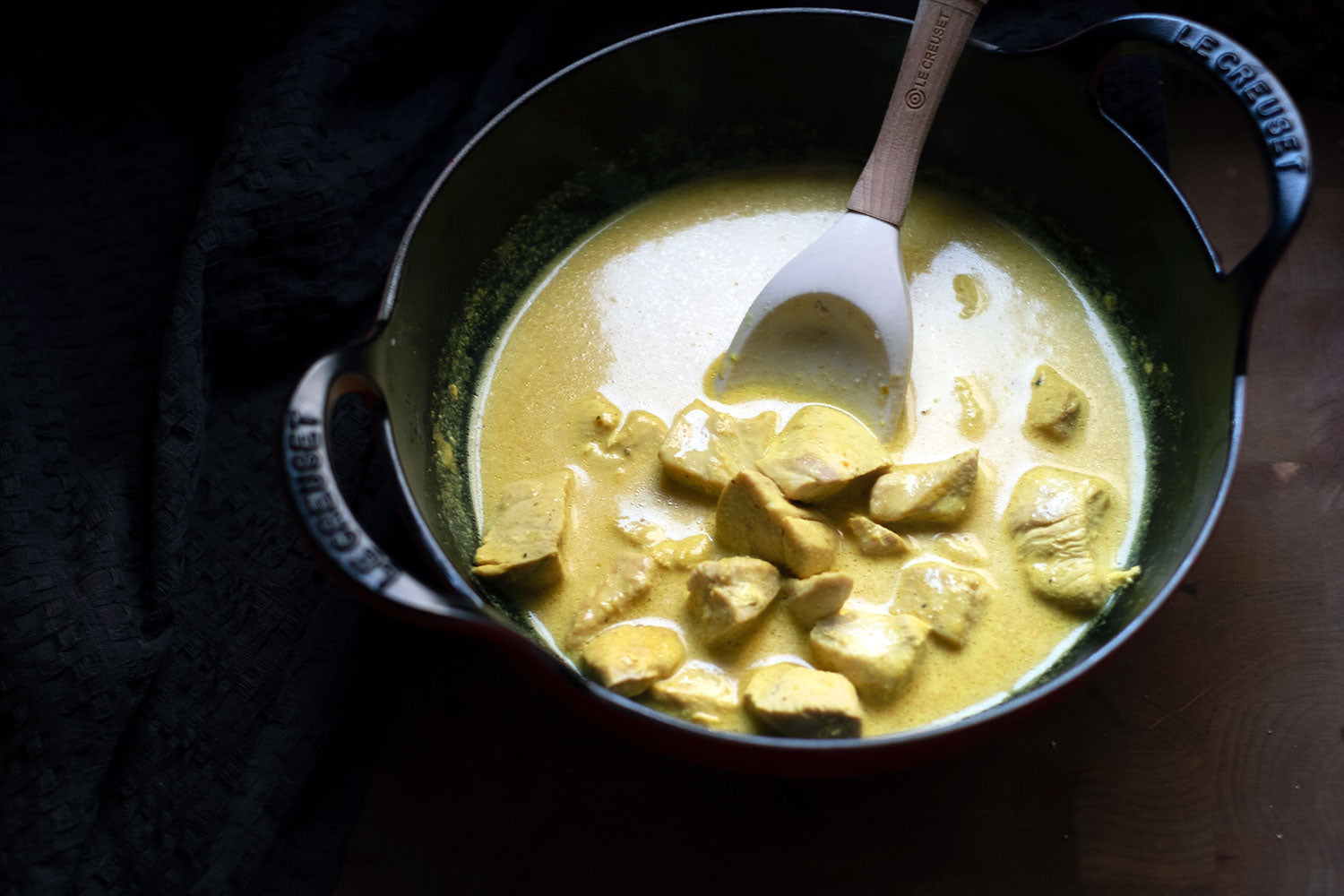
Which utensil to use to make chicken curry
The first thing you'll need to do is sear the meat, so for that there's nothing like a cast iron pan or a cast iron wok. After searing the meat, ideally in the same utensil, we'll add a good amount of coconut water, so the utensil you use should have high sides, so you can handle and stir with the confidence that nothing will spill. For all these reasons, we recommend using a deep skillet or a wok. In our case, we've opted for the Le Creuset enameled cast iron wok, the Balti Dish, ideal for this type of preparations - you can also choose to make the recipe in another type of wok, if it's iron even better, you'll find them all here.
Ingredients
- 2 XL chicken breasts or 3 standard breasts (about 500 g of meat)
- Salt
- Black pepper or pepper mix (black, red, white)
- 2 tbsp oil
- 1 dessert spoon level of curry (or 2 coffee tsp)
- 1 level teaspoon of turmeric
- 310 ml coconut milk (coconut water)
- 3 tbsp cooking cream (if not available, 2 tablespoons of yogurt)
- 2 garlic cloves (optional)
Preparation
- Heat the Balti Dish wok over low heat, and add a splash of oil. Add the whole peeled garlic if you like its flavor.
- Meanwhile, prepare the chicken: wash it with water, pat it dry with paper towels and cut it into large cubes.
- When the Balti is hot, add the chicken and sauté it so it seals quickly (now with medium/high heat). Do not overcook the chicken to avoid it becoming dry. Cook it until tender and juicy.
- While the meat browns, season it with salt and pepper to taste.
- When it starts to brown, lower the heat and add 1 level teaspoon of turmeric and one dessert spoon of curry. Stir with a spatula.
- Add the coconut milk (enough to cover, about 300 ml) and a couple of tablespoons of cooking cream (or yogurt).

8. Now it's time to give it 10 minutes of simmering, so that the coconut milk heats up and soaks into the meat, while the spices do the same. After 10 minutes, it's time to start reducing the sauce: increase the heat to medium/high, and let the milk reduce.
9. The reduction time will depend on you. I like the sauce reduced, somewhat thick and with concentrated flavor, but if you don't have much time, don't like waiting, or prefer the sauce to be not too spicy, leave it just a few minutes and remove it while still quite liquid.
10. Let it reduce until it has the texture you want, stirring occasionally. Adjust the heat and remove when you wish.

Notes and tips for good chicken curry
- If you have more than 10 minutes to make the recipe, it's great to gently sauté some leek or onion first in the oil while you heat the wok, and also to sauté some chopped carrots before adding the chicken. I encourage you to try this chicken curry with onion and carrot!
- With a larger amount of meat, add more or less spices (but be careful not to overdo it!).
- At first you'll see the sauce very pale, but as you stir the chicken you'll see how everything takes on that curry yellow color typical of the recipe.
- Reduce to taste, but not to the minimum because you'll love having plenty of sauce to dip bread in (also, if you reduce it too much, the sauce becomes really spicy!).
- If you're thinking of reducing the sauce a lot, you might want to use half a teaspoon less curry and turmeric, or it will become too spicy.
- Rest before serving: Let the curry rest a few minutes before serving so the flavors blend and intensify.
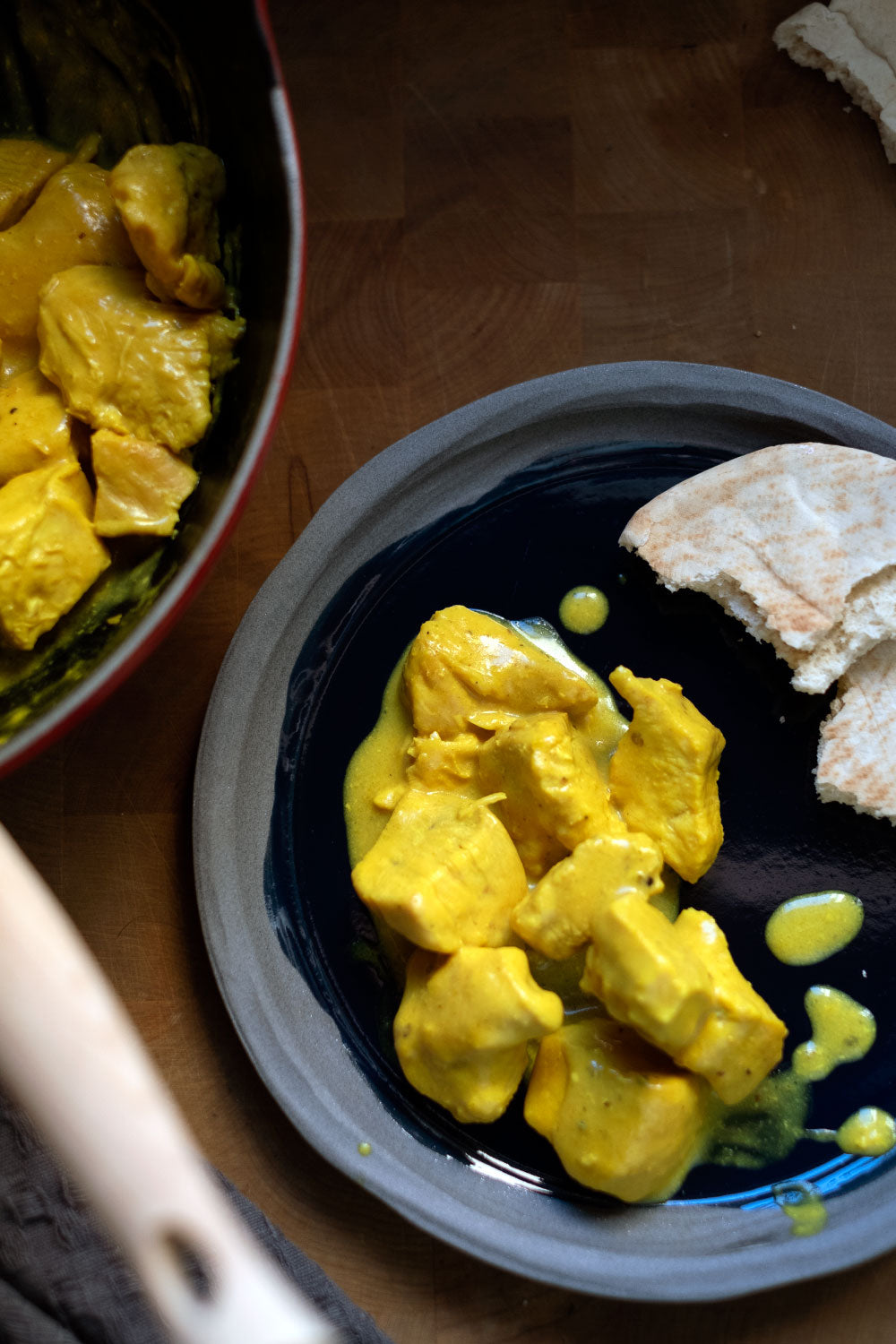
- Chicken curry lovers enjoy it as is, with some bread to enjoy the sauce twice (a classic here is naan or pita bread). It's also classic to accompany it with basmati rice, and personally I love it with garlic bread.

How to serve chicken curry
Curry rice can be served alone with its sauce, but you can also accompany it with some ingredients or sides like the ones we suggest below:-
Bed of Basmati Rice: Serve the chicken curry over a generous portion of cooked basmati rice. The texture and flavor of the rice will perfectly complement the curry sauce.
-
Fresh Naan: Serve the dish with freshly baked or warmed naan. The fluffy bread is ideal for soaking up the delicious sauce.
-
Fresh Salad: Add a refreshing touch with a fresh salad of cucumber, tomato and leafy greens dressed with lemon and herbs.
-
Mango Chutney: Offer a sweet and sour touch with mango chutney. Its sweetness will complement the spiced flavor of the curry very well.
-
Toasted Almonds or Hazelnuts: Sprinkle toasted almonds over the curry to add a delicious crunch and a nutty flavor.
-
Various Garnishes: Serve the curry with various garnishes, such as fried plantain, raisins, grated coconut or chopped peanuts.
-
Fresh Cilantro: Scatter fresh cilantro leaves on top before serving. Its aroma and fresh flavor will add a vibrant touch.
-
Orange or Lemon Zest: Grate a bit of orange or lemon zest over the dish before serving to enhance the flavors.
I hope you really enjoy this chicken curry recipe - it flies off the table every time I bring it to ours!


Comments
Claudia&Julia said:
Hola Ana,
La cantidad de curry indicada en la receta es de 1 cucharada de postres o dos cucharaditas de café, para 1 cucharadita rasa de cúrcuma, por lo que la cantidad de esta última es inferior. No obstante, puedes aderezarlo siempre a tu gusto, si prefieres añadir más cúrcuma a la receta ;)
¡Un saludo!
Ana said:
Hola, ¿se echa más curry o cúrcuma? Gracias.