

Loreto, author of Sabores de Colores, takes us into the world of spices and intense flavors. Korma is a Indian stew that you can prepare as she has done, with lamb, or with other meats like chicken, beef or pork. The steps to follow will be the same, so I encourage you to make it with what you will enjoy most, and discover how delicious it turns out!
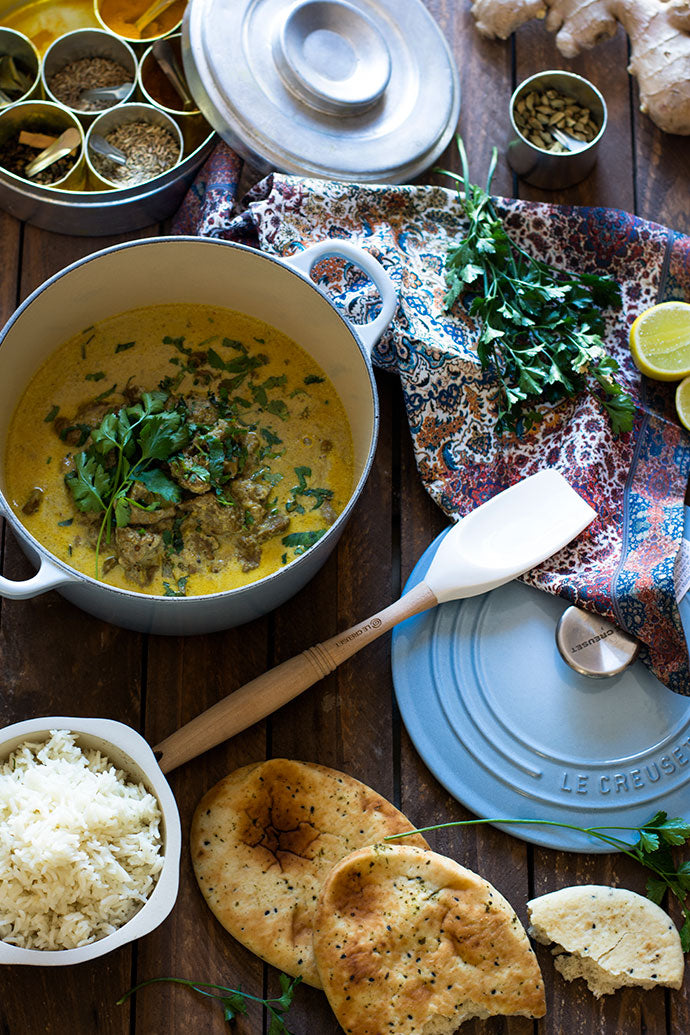
I have a special weakness for Indian cuisine, I love the spices and the colors that surround it; when well combined they create delicious flavors.
For that reason I couldn't resist making a delicious Korma, in its simplest version, a mild curry made with a base of yogurt and even cream, achieving a creaminess you won't be able to resist.
Korma is typical of Northern India and can be prepared with lamb as well as chicken, beef or pork or even completely vegetarian; I also encourage you to add almonds, peanuts or cashews to create your own version of Korma. A true delight for all the senses.
Ingredients
(for 4 people)
- 1kg of cleaned lamb (I recommend shoulder) in pieces of about 3 centimeters
- 2 large onions
- 4 garlic cloves
- 1 knob of fresh ginger
- 125gr natural yogurt
- 600ml water
- 100ml cream
- Fresh cilantro
- Extra virgin olive oil
- Salt
Spices
- 10 peppercorns
- 4 cloves
- 8 cardamom pods
- 2 teaspoons ground coriander seeds
- 1 teaspoon Graram Masala
- ½ teaspoon turmeric
- 1 cayenne pepper
Preparation
- In our Emile Henry mortar we crush the peppercorns, the cloves and the insides of the cardamom pods until they are almost powder. Set aside.
- We chop one onion into pieces and together with the garlic and ginger we process them in a food processor until we get a paste. Set aside.
- Once we have completed the previous steps we will heat two tablespoons of olive oil in our Le Creuset casserole, add the remaining onion which we will have finely chopped. Sweat well until it acquires a light golden color.
- Next we add the spices that we crushed in our Emile Henry mortar and the pieces of lamb, previously seasoned with salt and pepper; we cook over high heat until the lamb has browned.
- Then we add the onion, garlic and ginger paste, cook until the mixture is fully cooked and dries out.
- Stir in the cayenne, coriander, and Garam Masala, then cook for 2 more minutes. Add the yogurt in three additions and cook until, again, the meat is dry and starts to stick to the bottom of the casserole.
- Finally we add the water and cook about 50 minutes or until the meat is tender and the sauce/liquid has reduced by half. Adjust salt.
- Before serving, we add the cream, cook a few minutes over low heat and sprinkle to taste with chopped fresh cilantro.

Emile Henry ceramic mortar, Le Creuset spatula and Cocotte Evolution Le Creuset
This lamb Korma Indian curry is ideal to accompany with basmati rice or warm naan bread. I assure you you'll want seconds.
Loreto


Comments
CLaudia said:
Gracias por la sugerencia Marta, me parece uan idea estupenda lo de la leche de coco!! Gracias, un saludo!
Marta Garcia said:
Hola! Yo soy muy aficionada a preparar pollo al curry en mi cocotte Le Creuset; de hecho, voy variando de especias pero la base de cebolla es muy parecida a la tuya. Una sugerencia es sustituir la leche o la nata (que nunca empleo) por leche de coco. Queda espectacular! En mi próximo curry voy a probar tu pasta de jengibre…
Claudia said:
Hola Chelo,
el sistema permite hacer un “Me gusta”, pero no compartirlo. Lo lamento.
Si no estás viendo el icono de facebook para hacer ese “Me gusta”, debes estar viendo un “Log in” entre el incono de G+ y Pinterest. Si aprietas allí podrás hacerlo. Lamento no poder ser de más ayuda. Saludos!
Loreto said:
Hola Laura,
el mundo de la gastronomía hindú es bastante complejo, de hecho podríamos casi que realizar un master.
El Garam masala aunque sea una mezcla de especias (con muchísimas variantes según la zona y la familia que la prepare) puede utilizarse tanto sola como acompañada de parte de las especias que la componen para que sean esas las que destaquen en el guiso y tenga matices específcos, de hecho si obviaramos la poca cantidad de Garam Masala de la receta seguiría siendo un Korma pero si obviáramos las otras especias se convertiría en un plato totalmente diferente.
Espero haberte ayudado un poco y de corazón te animo a preparar la receta, es un plato muy aromático y realmente delicioso.
Un saludo
Loreto said:
Hola Blanca,
gracias por el comentario.
Comentarte, al cilantro también se le llama coriandro, proviene del latín Coriandrum sativum, no porque se haya hecho una traducción del inglés.
Cuando vamos a comprar las semillas, donde yo vivo las llamamos coriandro no semillas de cilantro, es por eso que ha llevado a confusión.
Gracias por comentarlo, lo cambiaremos para que no os confunda a la hora de realizar la receta.
Un saludo
Blanca said:
Coriandro??, me da la impresión de que el artículo está traducido… que yo sepa el coriandro en español no existe… el “coriander” inglés es nuestro cilantro…imagino que se refiere a que en el mortero hay que poner las semillas de cilantro y al final espolvorear con cilantro fresco..hay otras palabras/expresiones que suenan raro en castellano…
Chelo said:
Por que no se puede compartir en Facebook? es que si no, no me interesa recibir nada, gracias.
ITSE said:
Eso mismo habia pensado yo…
LAURA said:
Hola, tengo una duda. No entiendo porqué se incluyen tantas especias en los ingredientes si el Garam Masala ya contiene la mayoría: pimienta,clavo, cardamomo,canela,nuez moscada y cúrcuma y el coriandro muchas veces también lo lleva. Gracias