

Carmen, author of Yerbabuena en la Cocina, brings us the recipe to enjoy the night of Saint John in the best way: with a delicious coca with cream, pine nuts and candied fruit. I encourage you to make it at home!
Although with the cold of these last days no one would say it, we are on the threshold of the summer solstice and on the eve of the shortest night of the year, Saint John's. There are many gastronomic traditions spread across the different regions of Spain; on this occasion I bring you one of the signature recipes that in many corners of Catalonia that night cannot be missed, the Coca de San Juan, which I have decorated with cream, pine nuts and candied fruit.
There are many customs and rituals celebrated throughout Spain, but they all share a common main protagonist: fire. Tradition dictates that we should throw into it, even symbolically, all the negative things from the past months so that they remain behind us and we can purify ourselves.
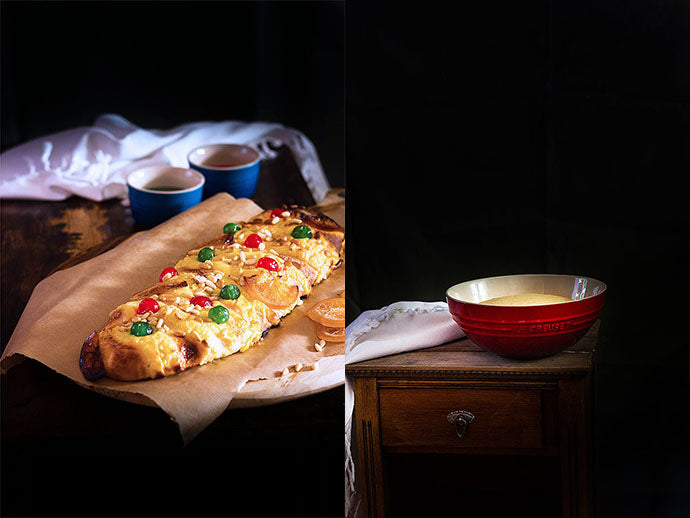
Le Creuset set of ramekins and Le Creuset salad bowl
I hold this tradition very close. I remember when I was a child and lived in Vigo: when June arrived, the children on my street, taking advantage of the fact that there was no school in the afternoons, would look for and collect objects that could burn and then compete with kids from other streets to build the best and biggest bonfire.
The adults also took part: they prepared a queimada around the fire and culminated the night with it amid spells and incantations... I can still smell the aguardiente, coffee beans and lemon peel slowly burning. What a magical night!
How to prepare a cream Sant Joan coca for this celebration
INGREDIENTS
For the starter dough:
100gr strong flour
100ml milk
20gr fresh baker's yeast
For the coca:
The previously prepared starter dough
350gr strong flour
110gr sugar
50ml milk
100gr softened butter
2 eggs
1 teaspoon vanilla extract
Grated orange and lemon zest
50ml orange blossom water
1 pinch of salt
For the decoration:
250gr pastry cream
Candied fruit
Pine nuts
Sugar
Egg for brushing
METHOD
The night before we prepare the starter dough. To prepare the starter dough, in a bowl we put the fresh yeast dissolved in the milk and mix with the flour. Cover and keep in the fridge for about 12 hours.
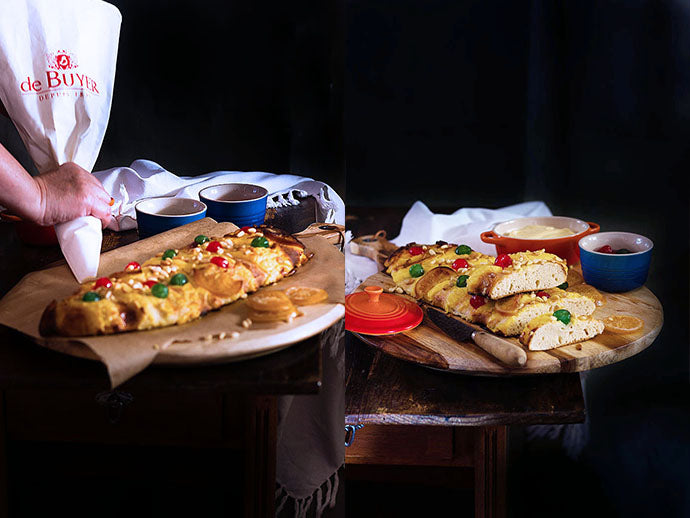
Decorate with candied fruit, pine nuts and a dusting of sugar.
I hope you enjoy this coca and this magical and special night of Saint John, where all bad moments are purified by fire.


Comments
Claudia&Julia said:
Hola Annie,
Lo ideal es preparar la masa madre la noche anterior, tal como indicamos, y llevarla a la nevera hasta el día siguiente, unas 12 horas.
Esperamos que te guste el resultado :)
¡Un saludo!
Annie said:
Me pueden aclarar por favor con el tema de la masa madre si son unas 12 horas en la nevera, o 1 o 2 horas en la nevera.
Muchas gracias.
Una receta estupenda!!!
Claudia&Julia said:
Hola Isabel,
Podrías sustituir el azúcar por azúcar invertido, pero has de tener en cuenta que este último endulza más, por lo que la cantidad deberá ser menor. La equivalencia es de 75 g de azúcar invertido por cada 100 g de azúcar común. El momento de añadirlo es el mismo que el que se indica en la receta. Esperamos que disfrutes de la coca :)
¡Un saludo!
Isabel said:
Se puede sustituir el azúcar por azúcar invertido? Si es asi, en que proporción y en que momento lo añadiriamos?
Rosa Abellán said:
Que significa mantequilla en pomada
Anabel said:
Qué significa mantequilla en pomada? Algo templada y batida?
Evita said:
Una coca deliciosa, ha salido espectacular!
Olga said:
Todo tiene muy buena pinta .