

It's important to choose a good cutting board for the kitchen; it's worth taking care of your knives and working on a surface that feels comfortable. Today I'd like to talk to you about some important concepts when choosing a board and how to care for it properly.
Types of cutting boards
The first thing that characterizes a board is the type of material it was made from.
Plastic or synthetic boards have become very popular since they usually don't damage knives and are easy to maintain. They're a good option, although I personally prefer the charm of wooden boards.
The wooden boards as a natural material, require a bit of maintenance and care with cleaning, but they can be used both in the kitchen and for serving depending on the type of wood chosen.
Finally, there are boards made of other materials like marble that are beautiful for serving but not suitable for cutting — obviously using a marble board is like cutting directly on the countertop (the worst for knives).
Types of wood for cutting boards
The type of wood of the cutting board will define the best use you can give it: in the shop we have bamboo, acacia, beech and olive wood boards.
I'll start with the last: olive wood boards like those from Bérard are perfect for presenting at the table, since it's a truly beautiful wood: its shapes, grain and silky feel are features that win you over. It's a hard wood so it's not the most suitable for knives, but it's fine to use for cutting at the table (cold cuts or cheese, for example). It also has the advantage that cuts are not as marked as in other woods, so it will keep its lovely appearance for a long time.
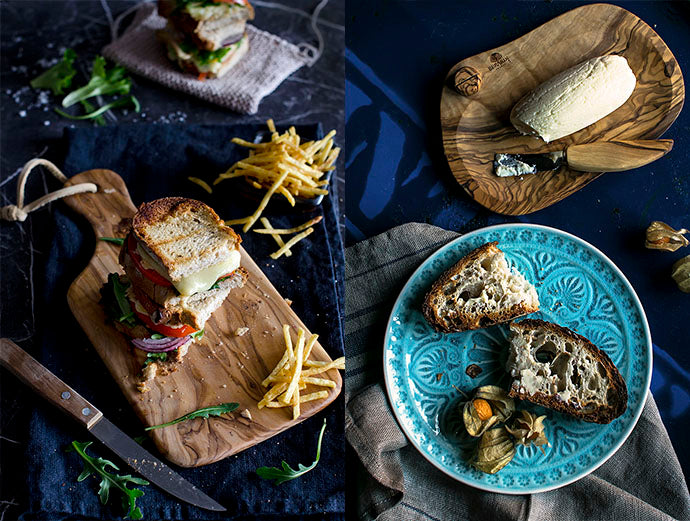
Regarding the other boards we have in the shop, acacia boards are a slightly softer wood. These are the T&G boards, but also very much intended as bread-cutting boards or for presenting cold cuts or cheeses at the table. Honestly, T&G is a brand I find full of character, with a rustic style I adore. They have very beautiful boards at a great price, and the quality of their wood is indisputable. With the variety of their designs you're sure to find a board that catches your eye or that you feel was made for your kitchen.

Beech wood boards are the softest you'll find in our shop, and what makes them, as I mentioned, ideal for cutting is that they will keep knives sharp longer. The downside, as many of you may have experienced, is that cuts will be marked on them, which will make them a bit less attractive, but for that reason they are recommended for keeping in the kitchen, not for serving at the table. Of these, both the T&G and the Le Creuset boards are practical, roomy and offer very good value for money.
There is another highly appreciated board in our shop, the Rösle. It's beech but you can optionally buy synthetic sheets to place on top, so you protect the wood from cuts — allowing you to use it perfectly for serving — and you can separate the types of food you cut on each sheet (one for vegetables, another for fish, a third for meat...). This board is very popular because it's attractive, practical thanks to its non-slip feet, and convenient since with a single board you can get multiple uses.

Then there are bamboo boards. Bamboo is a type of wood considered hard but it also absorbs impact well, making it an ideal material for cutting. It has another advantage: bamboo has bacteriological properties, which makes bamboo boards very suitable for use in the kitchen.
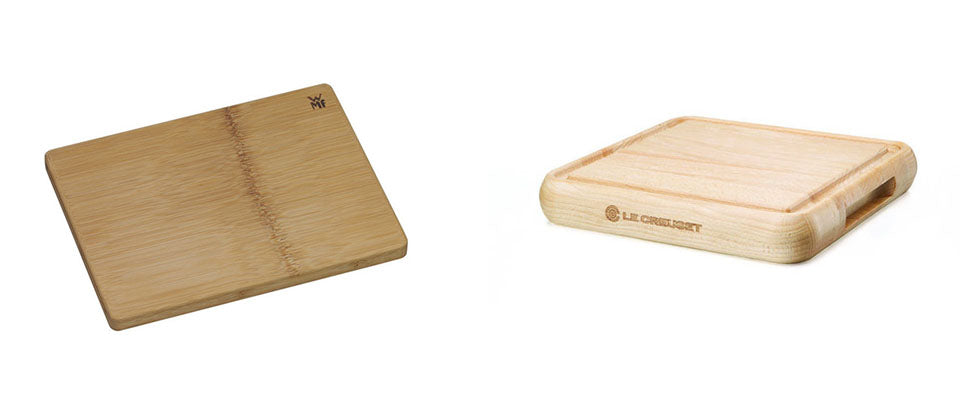
WMF bamboo board and Le Creuset beech board (both available in 26cm and 38cm sizes)
Cleaning and maintenance of wooden cutting boards
Proper hygiene of wooden boards after use is important because otherwise bacteria will proliferate, which is not at all desirable given the contact with the foods we will eat.
Boards should be washed with water and soap on both sides. After washing, dry them well with a cloth — leaving them damp can encourage bacterial growth.
It's recommended to do a deeper cleaning from time to time: just rub half a lemon over the entire surface of the board. Its acidity will eliminate bacteria and odors. Let it soak in its juice for a few minutes, and then wash it normally with water and soap.
In the case of olive wood boards it's recommended to give them a coat of oil (you can do this by pouring a stream of oil and spreading it with a paper towel). Olive wood is an oily wood and is revived with good hydration. This is useful both for boards and other utensils like spatulas and spoons.
You can also opt to apply the Bérard wood cleaning and moisturizing cream, which provides deep hydration and is a 100% natural cleaner.
If you can, store the board standing vertically in the kitchen — it will ventilate, which adds hygiene to the wood.
NOTE: If you're interested in seeing these tips and how to use Bérard's cream, I encourage you to watch the video you'll find here.
Which cutting board would I recommend
It's hard to say which is the best choice or which wood is best for a cutting board since everyone has their own habits and preferences, but I recommend having a large cutting board in the kitchen. It's true that small boards take up much less space when stored, but working on a large board is much more comfortable. Besides, the board doesn't have to be put away — doesn't it look beautiful propped against the wall or on top of the counter? Also, better to have it within reach, because you use it daily.
Therefore, speaking of basics, my choice is a large board (30cm and up) of beech or bamboo for the kitchen (like those from T&G, Le Creuset or the WMF bamboo), and an olive wood or acacia board for serving at the table. In that case, I love having a small board to present a cheese with the knife, or some cold cuts (Bérard's are ideal for this purpose), and also having a large board, like those from T&G (many are large) or Kitchen Craft. They're beautiful and ideal for presenting a variety of cold cuts and some bread. Dinner is served!
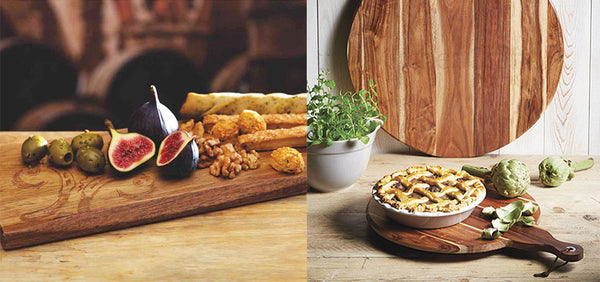
Baguette board and Kitchen Craft MasterClass round board


Comments
Elsa Solís Caballero said:
Las tablas de picar de Nambu son recomendadas para la salud, porque las de plástico y madera no recomienda
Sigrid said:
Gracias por la publicacion, nos ha aclarado muchas dudas y ahora sabemos que necesitamos minimo 2, una para la cocina y otra para servir en la mesa. Nos podriais comentar el uso que tienen las tablas de madera de mango? Visialmente son muy bonitas, recuerdan las formas del olivo. Que uso le podemos dar y si son aconsejable q?? Gracias
adrian said:
Genial el Post. Aclara muchas dudas. Yo compré hace años una tabla de corte de Hernández Vela y son brutales… Están hechas como se hacían antes, soy profesional y La uso a diario y la sigo teniendo nueva con un pequeño mantenimiento, se que tienen página web pero yo los localice por facebook. Os dejo el enlace
https://www.facebook.com/Tablashernandezvela/
Claudia&Julia said:
Hola Ana,
Disculpa el retraso en responder tu consulta, no hemos podido verlo hasta hoy.
Algunas tablas de cortar que no se mueven con el uso pueden ser la de bambú de Kuhn Rikon, la de Zwilling y también la de madera de haya de Rösle, dado que llevan pies antideslizantes.
Ahora mismo contactamos contigo para poder enviarte los enlaces.
Muchas gracias.
Ana said:
Hola , quiero comprarme una tabla de madera,la que tengo es sintética es bastante higienica pero no pesa nada, para cortar me gusta que no se mueva, cual me recomiendas?. Un saludo
Claudia said:
Muchas gracias!! me alegro que lo hayas encontrado interesante!
Manipulador de alimentos said:
Un articulo muy completo.Y preciosas fotos para explicar cada tabla-
Claudia said:
Hola Mercè, sin duda requerirías una tabla grande para cortar con comodidad, y que sea de cortar de haya o de bambú; una buena base es importante para tener seguridad. La que te recomendaría y que me encanta es la tabla grande de T&G. La encuentras aquí: http://bit.ly/1PGCJtE
Saludos, Claudia
Claudia said:
¡Me alegro mucho, Mireia! Muchas gracias y un saludo!
Mireia said:
Excelente explicación. Precisamente estaba pensando en adquirir una tabla y me habéis despejado todas las dudas. Sois los mejores!!
Mercè said:
Que tabla de madera necesitaria para cortar con el hacha pequeña por ejemplo el hueso del jamon i el pollo huesos fuertes etc…