

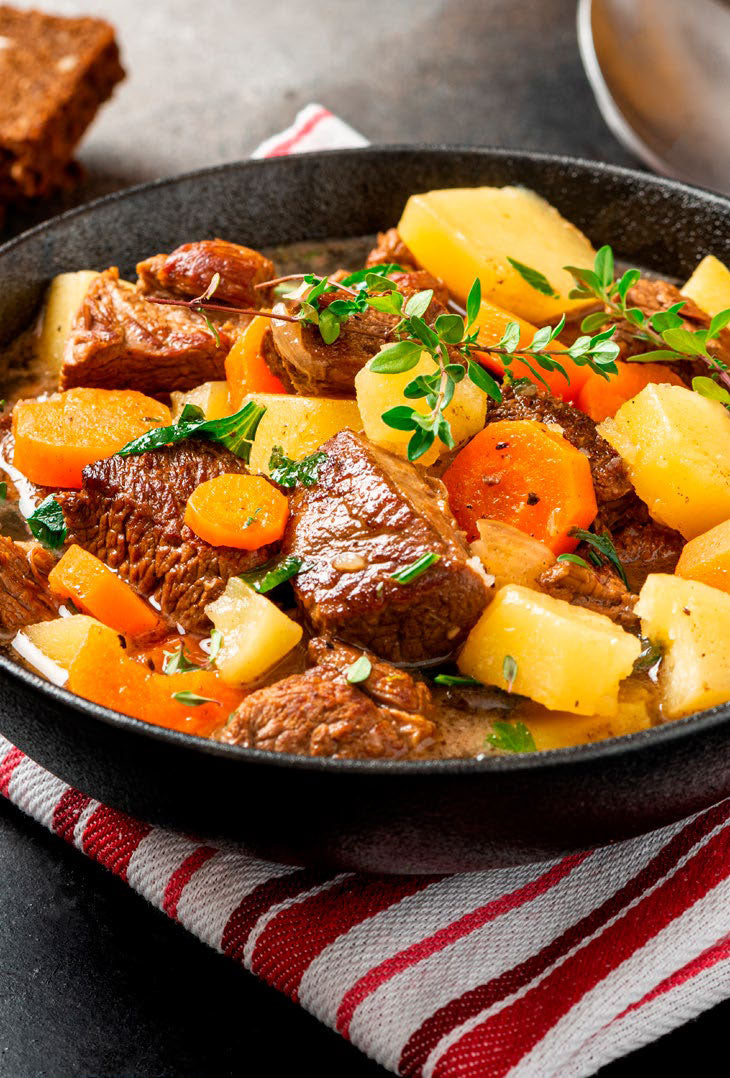
Discover the art of preparing a beef stew in a pressure cooker, a recipe that transforms beef and vegetables into a sublime and comforting dish, perfect for those who value time without wanting to give up flavor. At the heart of modern cooking, the pressure cooker emerges as an indispensable ally, allowing us to enjoy tender and juicy cuts of beef in less time than traditionally required, without compromising the rich flavors that characterize a traditional stew.
By choosing to cook this stew exclusively with wine, leaving aside the use of stock, we embrace a technique that infuses the dish with a unique complexity of flavors. The wine, protagonist of this method, contributes fruity notes and a balanced acidity that enhances the tenderness of the meat and complements the subtlety of the vegetables, thus celebrating beef in a pressure cooker with unsurpassed quality.
At Claudia&Julia, you know we often rave about pressure cookers, and we understand the importance of using the right cookware for each recipe. Choosing a quality pressure cooker is not only a practical decision but an investment in your kitchen, transforming simple ingredients into culinary masterpieces. This recipe is a testament to how classic flavors can adapt to our current pace of life while preserving the essence of a dish made with love and dedication.
I invite you to keep reading to discover how you can bring this beef stew to your table, surprising your loved ones with a dish full of flavor and tradition, perfectly adapted for modern life. Join me on this culinary journey and together we will rediscover the pleasure of cooking traditional dishes, taking advantage of the best of technology and current gastronomic knowledge.

Ingredients
- 1.2 Kg Beef shank* (see notes)
- 2 Carrots
- 1 Onion
- 3 Cloves of garlic
- 100 g tomato sauce or, even better, crushed tomato
- 2 Stalks of celery
- 200 ml Red wine
- 1 Sprig of thyme
- 1 Kg potatoes (variety for frying)
- Oil
- Salt
- Pepper
Preparation
- Cut the beef into pieces (large cubes) and season them with salt and pepper to taste.
- Then finely chop the onion and garlic. Peel the carrots and cut them into slices, and wash and chop the celery.
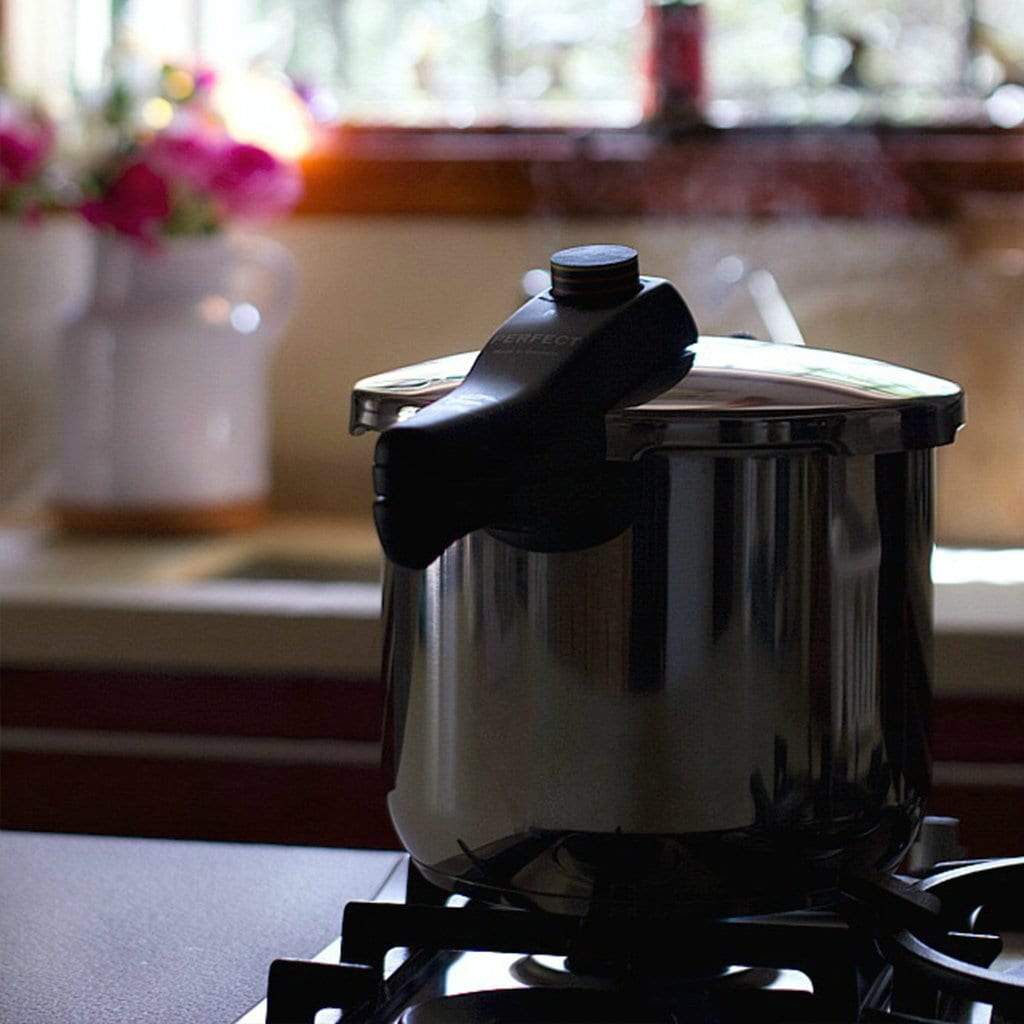
- Place the Perfect pressure cooker or Perfect Premium WMF over the heat, warm the base and add a generous splash of oil.
- Brown the meat (in two batches, to ensure all pieces touch the bottom of the pan to sear), trying to move it as little as possible so it browns evenly and, above all, to seal it well so it retains all its juice and flavor. Remove the seared meat from the pot and set aside.
- After browning the meat, use the same oil to sauté the onion, celery and carrots (you can add more oil if you see fit). Add a little salt and sauté until they begin to brown (stirring with a spatula to ensure the vegetables are sautéed on all sides).
- Add the chopped garlic and sauté it briefly, making sure it does not burn.
- Return the meat to the pot, stir to distribute everything and pour the wine, the tomato and the thyme into the pot.
- Set the heat to medium-high until the mixture starts to boil (we want the alcohol in the wine to evaporate). Adjust the salt if necessary and stir well.
- Close the cooker and keep cooking at medium-high heat until the pressure indicator shows its second ring (on PERFECT PREMIUM models, set the handle selector to position 2). Then, lower the heat to minimum and cook for 30 minutes.
- While the meat is cooking, peel the potatoes, cut them into square pieces, wash them, and drain them. Now you can decide whether you want to make them fried (heat plenty of oil in a frying pan and fry the potatoes until they are golden and tender.) or boiled** (put salted water in a Shallow Casserole and boil them until they are tender).
- Once the 30 minutes have passed, turn off the heat and let the pressure of the WMF cooker drop on its own for 20 minutes, until the cooking rings are no longer visible and you can open the pot (this way, you finish cooking the meat).
- Empty the contents of the pot into a serving dish, mix with the freshly made potatoes (boiled or fried). Decide whether to serve immediately or leave it in the fridge until the next day, to let the flavors settle). Either way... Always accompany with bread because it is delicious!
Notes
- *Beef shank is known for its rich, gelatinous texture when cooked slowly, making it perfect for stews and braises, as slow cooking allows the connective tissue to soften, providing a tender texture and deep flavor to the dish.
-
Morcillo or Zancarrón: Although technically they are parts of the shank, these terms are used in some regions to refer to specific cuts within that section. Morcillo (front part) and zancarrón (rear part) are excellent for stews.
-
Beef tail: Provides an intense flavor and a gelatinous texture similar to the shank. It is ideal for slow cooking in stews.
-
Beef brisket: Although it is a fattier cut, brisket can be an excellent alternative for stews, as the fat adds a lot of flavor and helps keep the meat juicy.
-
Beef flank: This cut is leaner than brisket but is still very flavorful and softens wonderfully with slow cooking.
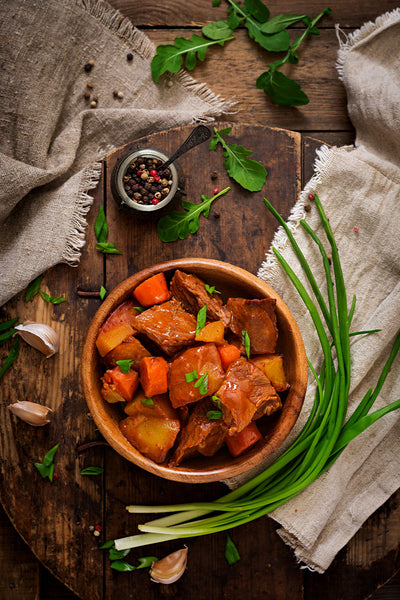
- **We do not add the potatoes to the cooking so they don't fall apart. Still, if you make them boiled, one option for them to absorb flavor from the stew is, when you stop the heat of the cooker, depressurize the cooker, add the boiled potatoes (leave them slightly firm when boiling!), close again and put on the heat for 5 more minutes and then turn off the heat so the stew finishes cooking for 15 more minutes with the residual heat.
- An alternative accompaniment for this dish could be serving it with aromatic white rice, choosing varieties such as Basmati or Thai Jasmine. To adapt the recipe to this change, you can omit the step of peeling and cooking the potatoes.
- If you want to serve the beef with a thick sauce, do not make the potatoes and instead of the last step, proceed as follows: transfer the contents of the pot to a tray, separate the meat and keep it to one side. Then, pour the vegetables and remaining liquids into a blender jar and blend until you obtain a homogeneous sauce. To finish, pass this sauce through a fine sieve or chinois to obtain a smoother, more refined texture. Serve the meat and pour the sauce over it (And grab bread, because it's delicious!).


Comments
Claudia&Julia said:
Hola María Rosa,
Nos alegramos de que esta receta te traiga recuerdos. Es un plato que resulta delicioso y, además, en olla rápida, se hace casi solo ;)
Ahora que ya tienes los pasos, esperamos que la disfrutes mucho.
¡Un saludo!
Maria Rosa Pons said:
Gracias por la receta. Mi madre las hacia y yo no recordava como se hacian.