
Many new kitchens nowadays feature induction cooking, which, due to the way it works and because it is a relatively new concept, raises many questions when buying induction cookware that is suitable.
In this article, we try to answer the common question: Will it work with induction?
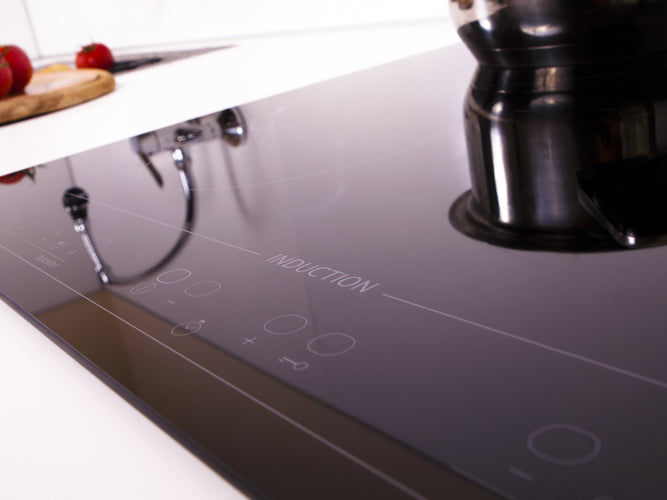
How induction works
An induction cooktop generates a variable electromagnetic field. This magnetic field induces heating in any ferromagnetic material that comes into contact with the cooktop.
In other words, it is important to understand that the induction cooktop only heats up if it comes into contact with magnetic metals, to which a magnet would stick, such as iron or certain types of stainless steel. So, if you place a ceramic dish on an induction cooktop, for example, it will not heat up even if you turn it on —the magnetic field has no effect on ceramic.
The great advantage of induction cooktops is that the container heats directly; on a standard ceramic glass cooktop, the electric elements heat first, and then they transfer heat to the container placed on top, with the lower efficiency that this entails. Induction heats much faster, with the resulting energy savings.
Induction cookware
The answer to which products are suitable for induction cooking is clear: any product with an iron base or ferromagnetic steel base. Among these cookware items, we find induction casseroles, induction frying pans, and pots for induction cooktops, among others. Anything with a base made only of aluminum, terracotta, ceramic, glass, or copper will not work.
In theory, to check whether a cookware item is suitable for induction cooking, all we need is a magnet like the ones you probably have on the fridge door: if the magnet sticks to it, it is suitable for induction*.
Frying pans suitable for induction
All the frying pans in our catalog are suitable for induction, either because they are made entirely of ferromagnetic material (all iron frying pans), or because they have a special ferromagnetic diffuser base, suitable for induction.
You can also find more affordable frying pans on the market that do not have a diffuser base, but at Claudia&Julia we prefer frying pans with a diffuser base because they also give induction pieces greater strength: the frying pan is less likely to warp. So, you will see that all the nonstick frying pans in our store are also suitable for induction, and the same goes for the stainless steel frying pans in the store -all of them are suitable..
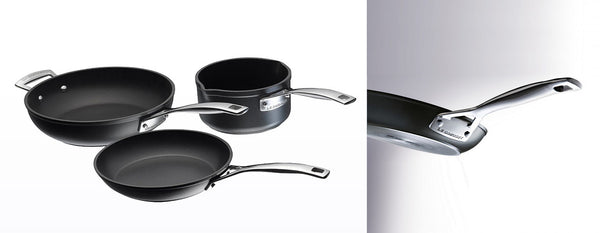
Iron frying pans
In the store, we are fans of iron frying pans, among other reasons, because they do not require any specific diffuser base for induction, since the whole frying pan is responsive to induction and heats up completely. In other words, any iron frying pan in our store is suitable for induction.
You should know that you can find iron frying pans on the market that are not suitable for induction. That happens because they are very thin and could warp (which is why the manufacturer will have stated that they are not suitable for induction) or because they have an alloy with an iron percentage that is not sufficient to work with induction).
But all the iron frying pans from Claudia&Julia (those from De Buyer, Le Creuset and Skeppshult), have more than enough quality and thickness to work perfectly with induction.
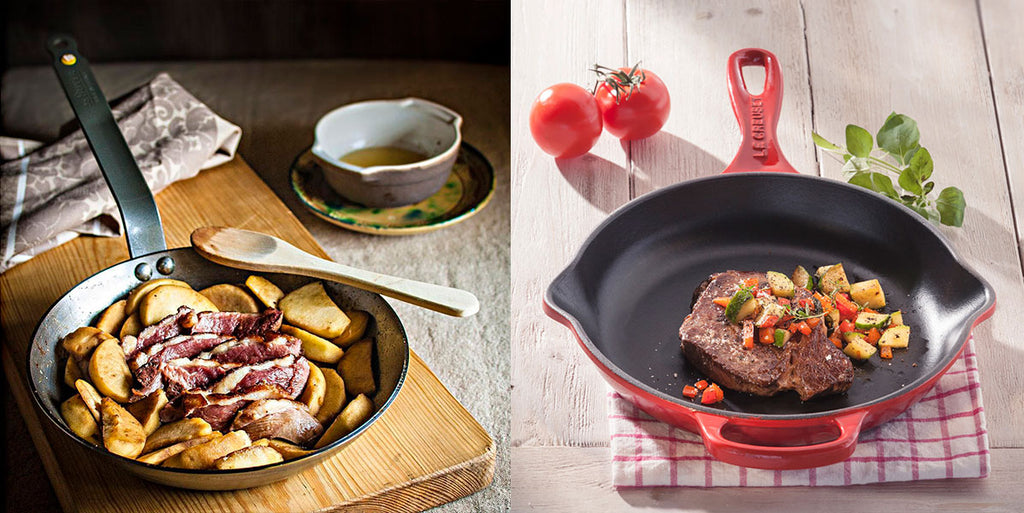
Cocottes and casseroles suitable for induction.
Another good example is cocottes: the Le Creuset cocottes are made of cast iron, are perfect for induction.
You should also know that, if you are looking for clay cocottes or casseroles suitable for induction, Emile Henry's Delight range is available: it is a range that includes cocottes, casseroles, tagines, and other cookware pieces in which the brand has injected, using state-of-the-art technology, a ferrous iron base that makes them suitable for induction. So, with that range, you have traditional ceramic cocottes that are suitable for induction.
As for casseroles and saucepans, the same theory applies as with frying pans and cocottes: iron casseroles are all suitable for induction; ceramic ones will, in principle, never be suitable for induction, except for Emile Henry's Delight range, which includes that magnetic base; and nonstick casseroles and stainless steel ones will be suitable if they include a diffuser base that makes them suitable (all the ones in our store have one).

We also want to mention the tagine: most tagines on the market are made of clay and are not suitable for induction. If you want an induction-compatible tagine, you will need to choose either an iron one such as the Le Creuset tagine (although it has a ceramic lid, it has a cast iron base -super versatile too!-), or the Delight tagine if you want a ceramic one.
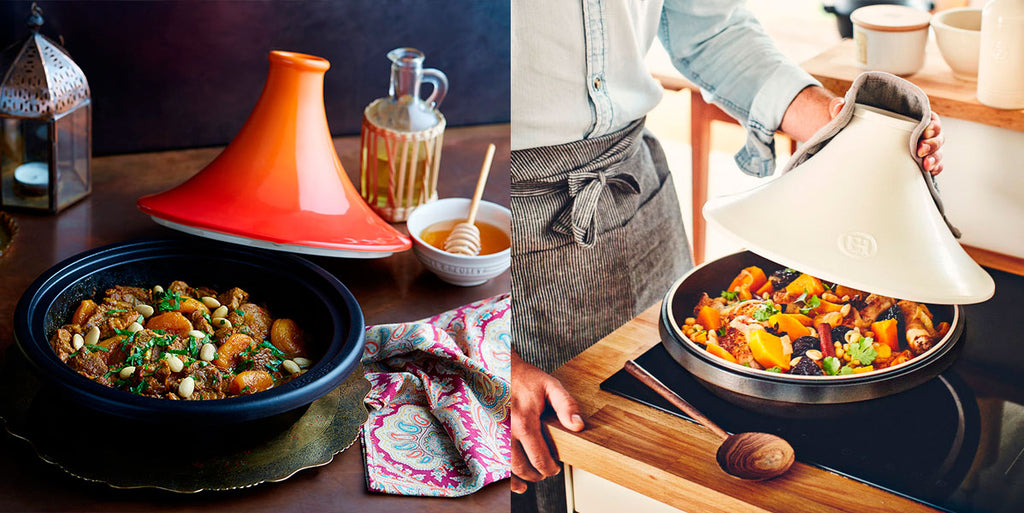
Le Creuset Tajine (left) and Tajine Delight
Stainless steel: cookware and pots suitable for induction
Cookware made of stainless steel with a ferromagnetic stainless steel base also works for induction cooktops. Be careful: not all stainless steel cookware is ferromagnetic and suitable for induction; there are older cookware sets made of non-magnetic stainless steel (which do not attract magnets) that are not suitable for induction cooktops.
But good-quality pots or cookware sets made of stainless steel and with a ferromagnetic stainless steel diffuser base work wonderfully on induction cooktops. The same applies to pressure cookers: if we are talking about a modern, high-quality pressure cooker (Kuhn Rikon, WMF, Fissler...), they will all have an induction-compatible diffuser base.

Size of induction cookware
Another common question is the size of the cookware used with induction. It is not necessary for the base of the cookware to have the same diameter as the burner you plan to use it on.
Unlike ceramic glass cooktops, modern induction cooktops do not need to cover the entire surface of the burner for heating to be efficient, since they adapt to the size of the cookware used. In other words, if the base is smaller than the burner, only the surface in contact will heat up. But be careful, because this is a double-edged variable: although that is how it should work, we must remember that the cooktops are very sensitive, and the cooktop may not activate induction because it does not detect a sufficient base to do so (even though the cookware is suitable for induction).
Keep in mind
We should note that there are cookware items that, even though they contain iron, are not suitable for induction cooktops. Although induction would work, it could happen that the base of the cookware is too thin and could warp (which is why that cookware, despite being ferrous, will not be recommended for induction), that it is so thin and the induction cooktop so sensitive, or that for some other reason it cannot be used with induction. We should always check the packaging or instructions to make sure the cookware can be used on an induction cooktop.
I think that’s all from me for now. And I remind you that don’t hesitate to let us know any questions you may have, because we are here to answer them and because we all learn from them!


Comments
Gladys said:
Hola quisiera saber si en el horno induccion se puede usar recipientes de vidrio…. gracias
Claudia said:
Hola Mishelle,
En respuesta a la duda que planteas, lo que puedo decirte es que a pesar de que la cocina sea de inducción, el horno debe trabajar con aire como todos (los hornos de inducción se utilizan más en la industria). Puedes usar los moldes que tenías sin problemas. :) Saludos!
Mishelle Forootan said:
Buen dia, tengo una cocina de induccion con horno, y deseo hacer un postre, pero en mi anterior cocina usaba los moldes normales que se conseguian en cualquier lado, quiero saber si en mi horno de induccion puedo usar este tipo de moldes o si necesito adquirir algun otro, o deberia hacer los postres en ollas, gracias por la respuesta
Ardid said:
No, no, me refería a mi experiencia pero no hablaba de vosotros. Siento si ha dado a entender eso. Muy buen post.
Claudia said:
Hola Eduardo,
Para tener acceso a las recetas, la forma sería que te suscribieras al newsletter, y recibirás las recetas que vayamos publicando.
Además, al darte de alta recibirás un libro de recetas en pdf gratuito.
Puedes suscribirte aquí:
http://www.claudiaandjulia.com/pages/libro-la-cocina-de-claudia-julia
Espero que lo disfrutes! Saludos, Claudia
Claudia said:
Hola Ardid, Respecto a lo que comentas, que te has encontrado algún utensilio que dice ser para inducción y que no funciona, me gustaría comentar un par de cosas: lo primero es que en la tienda sólo tenemos artículos en los que creemos, y con una calidad contrastada. Así, a nuestro entender todos los utensilios que dicen ser hechos para inducción es porque ciertamente funcionan en inducción.
Dicho esto, lo segundo que puedo comentar es que, para que funcione la inducción, se requieren de dos cosas: que el utensilio tenga el material inductivo necesario (que a veces no ocurre, pero no pasaría con los de la tienda), o que el disco es demasiado pequeño para generar esa inducción.
Así, si algún utensilio no te funciona tanto puede ser por una cosa o por la otra, o por una combinación de ambas.
Si te has encontrado con problemas con algún producto nuestro, te agradecería de veras que nos lo comentases, para solucionarlo o ver qué ha ocurrido, y hablar también con el fabricante.
Muchas gracias y no dudes en escribirnos si hay cualquier otra cosa. Saludos! Claudia
Claudia said:
Hola Isabel, lo normal en inducción es que funcione aunque el utensilio sea más pequeño que el disco. Si en algún utensilio no calienta también puede ser que la base no tenga suficiente metal inductivo. Ésto sumado a una base pequeña puede hacer que el disco no lo detecte. Espero haber aclarado tus dudas. Saludos!
eduardo nava said:
quiero tener acceso a sus recetas
Ardid said:
Hay algunas baterías que se venden para inducción y que, sin embargo, a la hora de ponerlas en el placa no funcionan. Es difícil encontrar la batería idónea.
Isabel said:
He comprado utensilios que no cubren toda la superficie del disco y, en mi caso, NO FUNCIONAN.
Recomiendo que no se rompa o tire el embalaje hasta comprobar que el utensilio funciona a fin de poder devolverlos.
Jose Luis said:
No estou muy de acuerdo con la certeza de que cualquier recipiente de acero inoxidable funciona con la induccion.El acero inoxidable no es magnetico, como puedes comprobar con un simple iman.
Hay algunos fabricados en acero inoxidable que tiene un fondo doble de hierro. Entonces si.
Pido disculpas si estoy equivocado
Jose Luis said:
No estou muy de acuerdo con la certeza de que cualquier recipiente de acero inoxidable funciona con la induccion.El acero inoxidable no es magnetico, como puedes comprobar con un simple iman.
Hay algunos fabricados en acero inoxidable que tiene un fondo doble de hierro. Entonces si.
Pido disculpas si estoy equivocado