
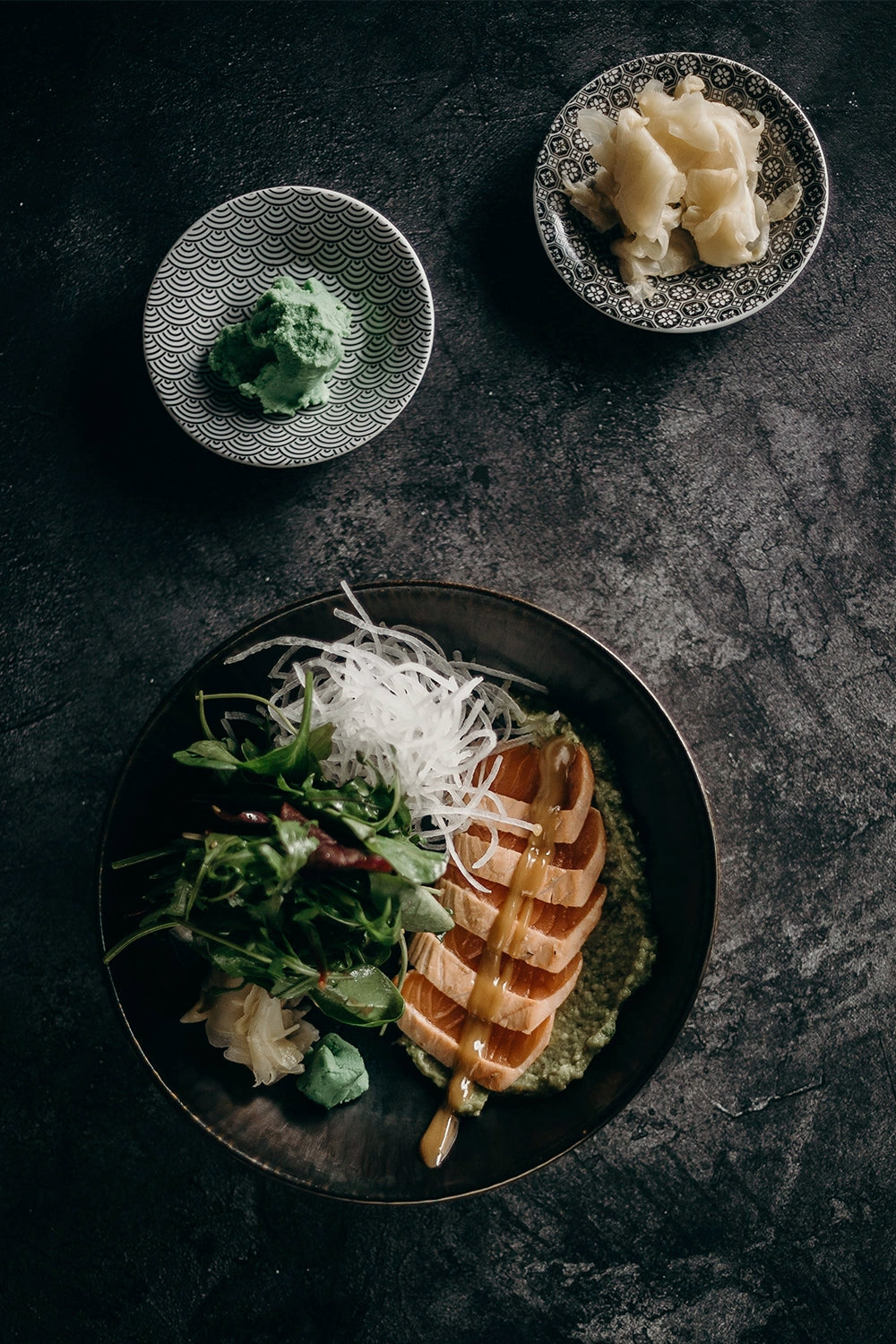
One of my favorite dishes of Japanese cuisine is salmon sashimi. It's also true that I love salmon in any form, as you may have already seen in the different recipes on the blog. The recipe I share today is very simple to prepare, you'll see that the recipe shows you how to do it step by step, but it's important to keep something in mind above all, and that is that the salmon should be as fresh as possible.
Besides this fundamental rule, which is basic in any recipe (and especially if it involves raw fish), it's also important to choose the best part of the salmon and the most appropriate cut. For sashimi, the best part is the loin, since it has less fat.
The loin is cut along the central spine, as close to it as possible, to obtain the largest amount of meat and is usually cut about 3 cm wide. Once we have the loin and before preparing the sashimi, the safest thing is always to freeze it for the recommended time to prevent anisakis.
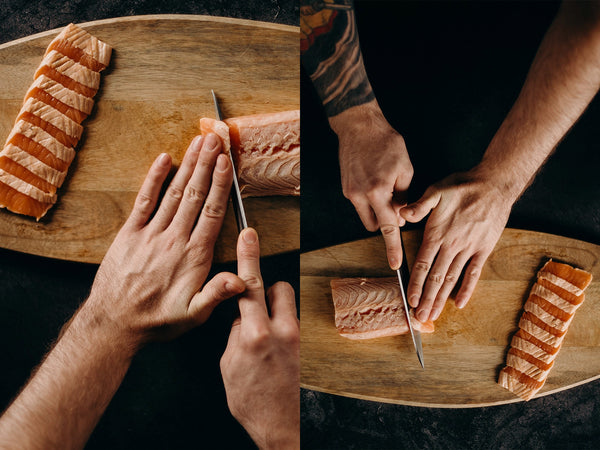
Once it's thawed, we're going to need a good knife for slicing. In this case, the best option is a long, very sharp knife, since sashimi should be cut in one motion, sliding the knife all the way through, without effort or pressure, because it should not tear.
With the salmon thawed and the knife very sharp, here is the recipe.
Ingredients
- Salmon loin (150 g per person)
- Mashed avocado (approximately half per person)
- Wasabi (optional, but if you use it, put a teaspoon of coffee per person)
- Pickled ginger (1 dessert spoon per person)
- Daikon or Japanese radish (about 30-40 g per person)
- Some arugula leaves
- Lamb's lettuce
- Soy sauce to accompany
Preparation
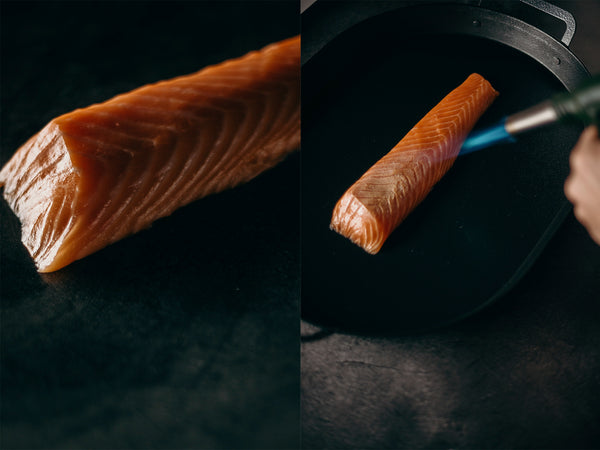
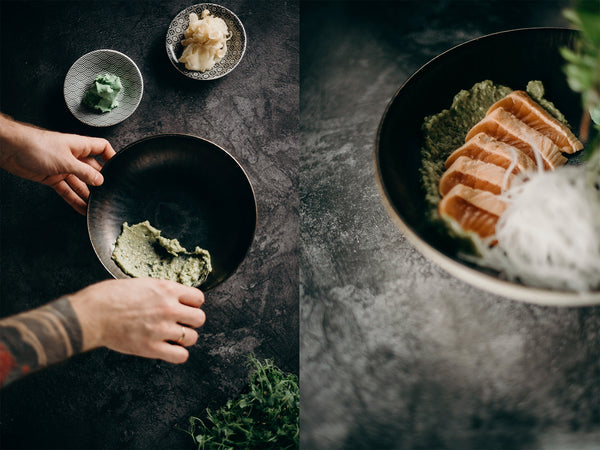
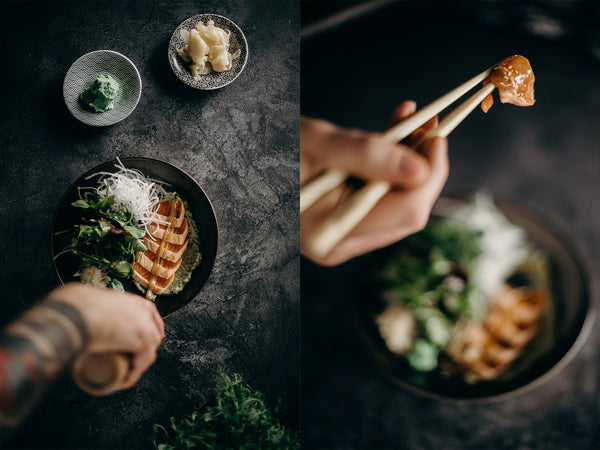
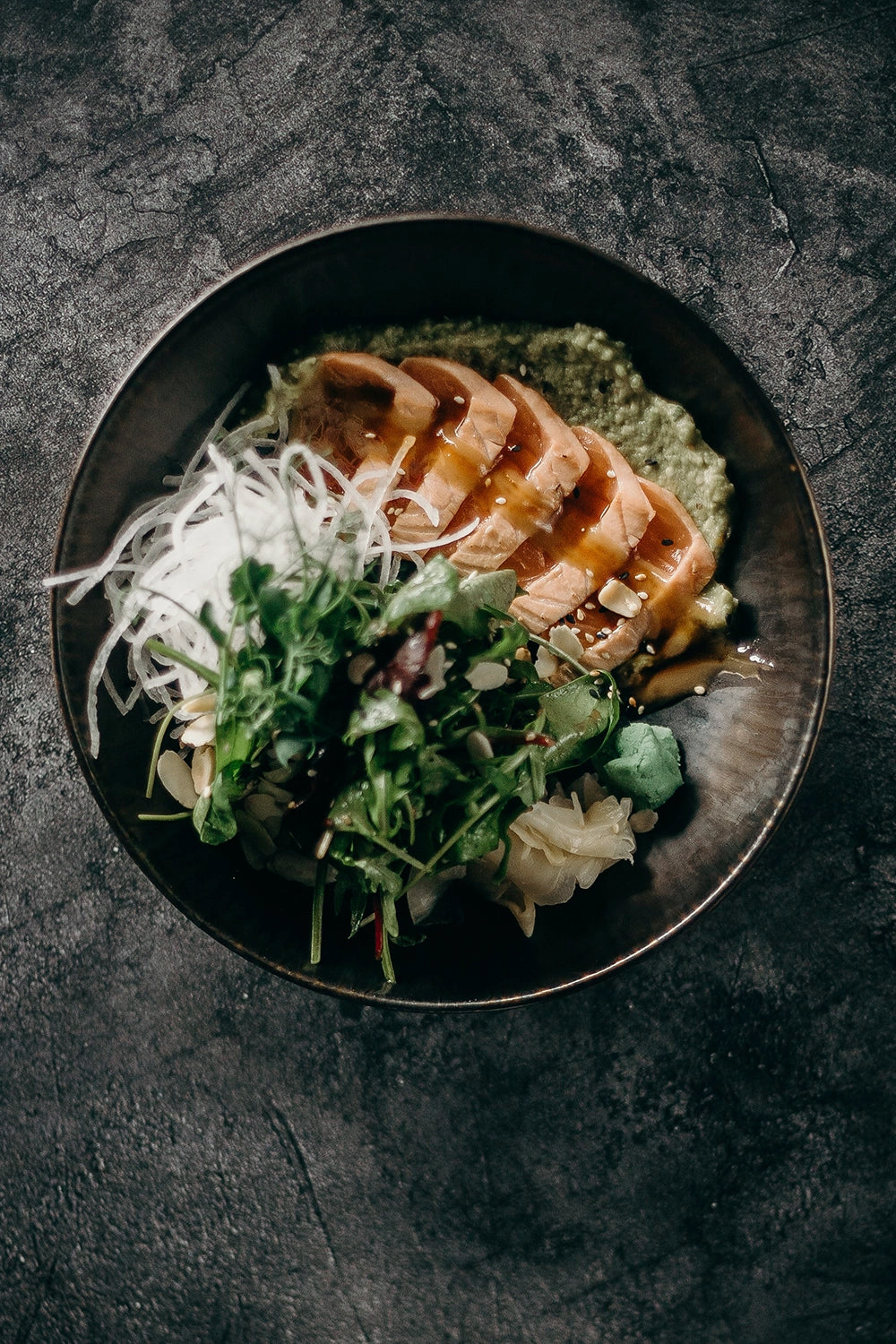
6. Arrange the salmon medallions covering the avocado, following the curve of the plate. The part you torched should be visible.
8. Next, add a dessert spoon of pickled ginger.
Notes
- Accompany the salmon with whatever you like: some lettuce or endive leaves, a tomato salad, a bit of rice or some fried noodles.
- You can use another fish, but it should always be as fresh as possible and, to avoid any risk associated with anisakis transmission, it should be frozen at -20 °C (at least) for the required time. Freeze the whole loin, once cleaned and dry, preferably vacuum-sealed in a vacuum bag.
- The thickness of the salmon medallions indicated in the recipe is merely a guideline. You can cut them thinner (or thicker) if you prefer, but always make the cuts with a very sharp knife and cut each slice in one motion, without tearing it.
- If you want to know more about knives, on our blog you'll find several posts talking about them: different types, maintenance, sharpening, etc.
- If you love Japanese food as much as I do and want to get started in its cuisine and discover more about its dishes and ingredients, I highly recommend the book My First Japanese Cookbook. A little gem!


Comments
Claudia said:
A ti, Chris! ¡¡Muy buen provecho!!
Claudia said:
A ti, Chris! ¡¡Muy buen provecho!!
Claudia said:
¡Gracias, Vero! Muy amable, espero que lo disfrutes!!
Chris said:
Gracias
Vero said:
Muy bueno