

As is tradition during Lent and Holy Week, we invite you to make torrijas, this sweet that although it originated from the need to use up leftover bread from several days, is so tasty that it has become a highly desired dessert or snack. Carmen, author of Yerbabuena en la cocina, brings us the recipe with a slightly different touch: instead of sugar or honey, she sweetens them with a delicious orange and honey syrup. Happy Holy Week!
If there is one recipe from our most traditional kitchen that I hold a special fondness for, it is undoubtedly torrijas. I remember as a child, year after year when Holy Week arrived, my mother and I would make countless of them, both milk and wine versions. The house would be filled with that wonderful smell of sugar, milk, cinnamon, etc., intoxicating every corner, under the watchful eyes of my siblings, who impatiently waited for permission or for mom to be distracted so they could sink their teeth into them.
Although this is the traditional recipe that has always been in my home, on this occasion I have replaced the sugar and the cinnamon sprinkled at the end with a light orange and honey syrup… a delicious suggestion that my aunt prepares and, coming from an exceptional cook like her, will surely delight you.
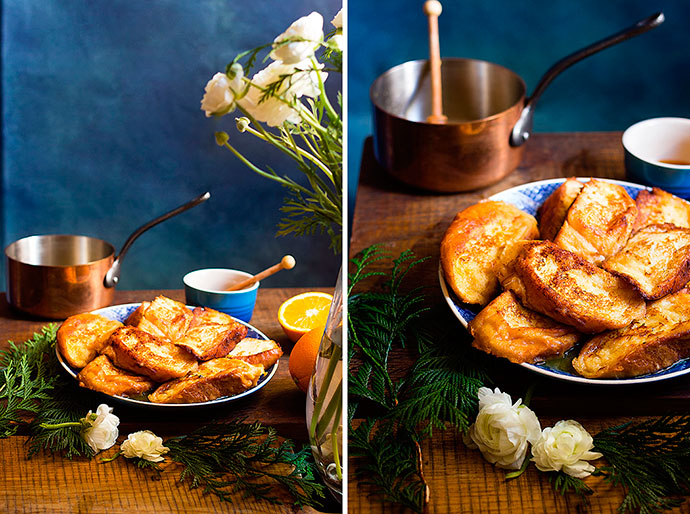
But keeping with tradition, in preparing these torrijas I couldn't resist using such noble materials as iron and copper, both excellent conductors of heat and ideal for quick cooking. And what better than my adorable sartén Skillet de Le Creuset and my charming cazo de De Buyer to keep this type of recipe alive?
I wish you a very happy Easter; I hope you enjoy them according to your tastes, but first I leave you with a few final tips to achieve delicious Torrijas:
- To largely avoid burnt residues in the oil, use a silicone brush to spread the beaten egg before frying the torrijas instead of breading them.
- Every two batches of torrijas, place absorbent paper in a strainer, filter the oil and clean the pan with a little more paper to remove undesirable impurities. You can also use an oil saver if you have one.
- Fry in plenty of very hot olive oil for only 30 seconds on each side; this will seal the torrijas and the milk will barely escape.
- Never overload the pan to avoid the temperature dropping.
- Between batches, add a little more oil if necessary.
- You can use whichever honey you prefer.
Ingredients
- 1 loaf of bread for torrijas
- 1 liter of milk
- 170gr sugar
- 1 cinnamon stick
- A piece of orange peel
- The peel of half a lemon
- 2 tablespoons of honey
- 200ml freshly squeezed orange juice
- 2 eggs
- Mild olive oil
Preparation
- In a saucepan put the milk with the sugar, the cinnamon stick, a piece of orange peel and another of lemon, reserving a little of the latter to flavor the oil where we will fry the torrijas, and bring to the heat. When it begins to boil, remove the pan and let cool.
- Meanwhile, cut the loaf of bread - preferably one made especially for torrijas - into slices two centimeters thick.
- Once cold, strain the milk and immerse the torrijas in it until they have absorbed enough liquid. Place on a rack to drain the excess.
- In a sartén (for frying, preferably iron), put plenty of mild olive oil with the reserved piece of lemon peel. Beat the eggs and brush the torrijas with them; this way we will have fewer burnt residues in the oil and the torrijas will stay cleaner.
- When the oil begins to smoke, put the torrijas in it, never overloading the pan to avoid a temperature drop; this way the torrijas will seal and the milk won't escape. Fry on high heat for 30 seconds on each side. Remove using tongs or a spatula and place on absorbent paper.
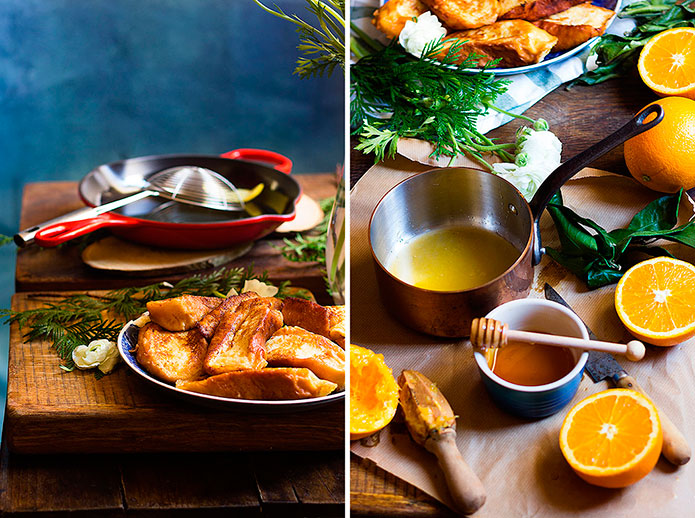
Skillet Le Creuset, slotted spoon Le Creuset, De Buyer copper saucepan and ramekins Le Creuset
6. Put the honey in a saucepan and bring it to the heat so it dilutes better. Then add the orange juice and stir. It is not necessary to boil; just keep the juice on the heat until the honey dissolves. Remove and let cool.
7. Once the orange and honey syrup is lukewarm, pour it over the torrijas that you will have previously placed on a tray. Store in the refrigerator and serve cold.


Comments
Claudia&Julia said:
Oh, Astromelia, ¡pero qué bonito! No sabes qué bien reflejan tus palabras lo que intentamos transmitir :)
Muchas gracias por tu comentario.
¡Un saludo!
Claudia&Julia said:
Y qué satisfactorio es ver disfrutar a nuestros hijos cuando hacemos algo tan rico como estas torrijas :)
Nos alegra mucho que os hayan gustado tanto.
¡Un saludo!
Claudia&Julia said:
Qué bien que las hayas hecho y te hayan gustado tanto, Carmen. Este almíbar es una perdición ;)
¡Un saludo!
Astromelia said:
Esta página huele a sol i campo, a fogones dode se cuece la vida.
María del Mar said:
Yo siempre las hacía con leche o con el almíbar de siempre tradicional pero el año pasado mirando en Internet me salieron estas las hice y les encantaron, guarde la receta para hacerla todos los años.
Sacas tu torrija y mis hijos les ponen un choreoncillo solo como un adorno por encima de chocolate y quedan genial.
carmen said:
Hola,
Nunca las había probado ni hecho torrijas con este almíbar. Me he atrevido a hacerlas y debo decir que me han parecido exquisitas. Gracias por acercarnos esta receta, ya no se si haré torrijas con otro almíbar que no sea este :-)
Claudia said:
Claro que sí, Verónica. Debes probarlo. Un saludo!
Claudia said:
Estupendo Conchi, ya nos contarás qué tal. Un saludo!
Claudia said:
Muchas gracias Verónica. Me alegra que te haya gustado, un saludo!
Claudia said:
Me alegro mucho Conxi, muchas gracias por tus palabras :)
Claudia said:
Gracias Pilar! Un saludo, Claudia
elena said:
Qué genial! nunca he hecho, pero esta receta me ha animado!! Lo provaré
conchi said:
Distintas a las mias las probare
veronica said:
Es priera ves que entro a esta pagina, me encanto ,felices pascua de resureccion.
conxi said:
Impresionantes torrijas!!! Me encanta esta receta.Bss.
Pillar Gómez said:
Las recetas de cocinas estupendas y fácil de elaborar a la vez que muy buena presentación, y los utensilios de cocina me gustan mucho