Crème Brûlée, Trinity Cream, burnt milk, burnt cream, or Crema Catalana, this creamy dessert is one of those I love to make. It brings back very good memories from when I was little. My grandmother would make custard for dessert whenever I went to visit her. When I opened the door, I would run to ask if she had made me some. I loved it, and it’s still one of my favorite desserts.
It consists of a custard with the top covered in burnt sugar, forming a layer of caramel.
The history of this delicious dessert is somewhat ambiguous. Some believe that it comes from English cuisine and that it is currently known as crème brûlée because of its popularity in France.
There are others who say that it's a French adaptation of crema catalana because it was prepared in French Catalonia.
In England this dessert is called Trinity Cream because it is associated with Trinity College, Cambridge, where the cream is served with the college’s coat of arms imprinted on the caramel.
The cream is very easy and quick to make, and the ingredients to prepare it are easy to have on hand at home: eggs, sugar, heavy cream, and a bit of vanilla. With this combination you get a perfect dessert or snack!
It comes in individual containers. I have this Set by Emile Henry which I think is absolutely adorable. They come in different colors, really fun for giving the icing a very pretty finishing touch. This Set includes a torch-style burner to make burning easier.
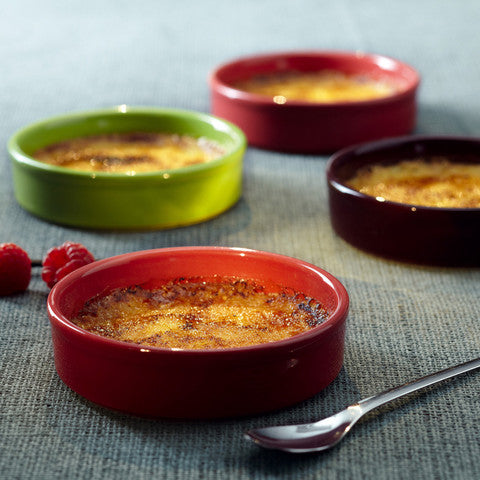
Photo: Emile Henry Crème Brûlée Set
I also use the containers for other recipes since they can be used in the oven or the microwave. Whether it's a cream with foie gras or a tomato crumble... everything I cook with these containers looks fantastic.
And since you already know me, I always try to go one step further and innovate in the kitchen. How about a coffee and dark chocolate Crème Brûlée? Just reading it made your mouth water, right? I’m going to satisfy your craving to try this delight. You can find this recipe on the Emile Henry website. I assure you you’re going to love it!

I hope I’ve been helpful with my information about this fantastic dessert, and I hope you make it with as much excitement as I do! Do you know any other fun facts related to this dessert that you’d like to share? I’d love to hear them!
Source: Emile Henry website and my dearest grandmother's experience.




Comments
Juan said:
hola agradezco vuestro artículo sobre el origen de la Crème Brûlée , pero no he sabido encontrar la receta de la Crème ?? gracias.
Claudia&Julia said:
Hola Emmanuelle,
Lamentamos el malentendido, pero lo que indicamos es que se le atribuyen varios orígenes, entre ellos que pueda provenir de la cocina inglesa o de la catalana, porque también se preparaba en la Cataluña francesa, sin afirmar que se preparase antes allí.
Agradecemos tu interés y revisaremos la historia para modificar el texto, si fuera necesario.
¡Un saludo!
Emmanuel said:
Una pena leer estas mentiras que :
- dice que la crème brûlée sería una variante de crema catalana cuando la base es diferente ( en caso francés la crema es más un flan cuando la versión catalana es crema pasterlera )
- hacer pensar que fue la catalana la primera .. no se de donde sacáis esto pero una simple vista a wikipedia España les dará algo de cultura sobre la historia y origen de este postre