
Sourdough starter is essentially a mixture of flour and water fermented by natural yeasts and bacteria found in the environment and in the flour itself (without the need for commercial yeast). When we talk about rye sourdough starter, we refer to that mixture made and fed with whole rye flour, which gives it unique and valuable characteristics for bread baking.
Unlike commercial yeasts, sourdough starter is not a chemical ingredient: it’s a microbial ecosystem that works gradually. Lactic acid bacteria and wild yeasts work together to digest the sugars in the flour, release gas, and provide structure, aroma and flavour to the bread.
Rye sourdough behaves differently from wheat-based sourdough. Rye flour is richer in enzymes and fermentable sugars, which encourages microbial activity and allows for faster, more consistent fermentation. That makes it an excellent ally for baking rye breads, mixed loaves or whole grain breads with a moist crumb and deep flavour.
In this post, I’ll show you how to prepare rye sourdough starter, answer some frequently asked questions and explain how to use it.

Why use rye sourdough starter?
- Better digestibility (more digestible bread): The long fermentation helps break down some gluten and phytic acid in the grains, making digestion and nutrient absorption easier.
- Richer, more complex flavour: Bread fermented with rye sourdough develops tangy and sweet notes with aromas that can’t be achieved with commercial yeast.
- Longer shelf life: Bread made with sourdough stays fresh for longer thanks to the organic acids that act as natural preservatives.
- Structure and moisture: Rye absorbs water differently than wheat, and sourdough helps the crumb stay tender, moist, and well-developed.

Rye sourdough starter (how to make it step by step)
Sourdough is just flour + water + time, and rye is ideal because it ferments very easily.
Ingredients
- Organic whole rye flour
- Water (preferably mineral or rested tap water)
Preparation
- Day 1
30 g whole rye flour
30 g water
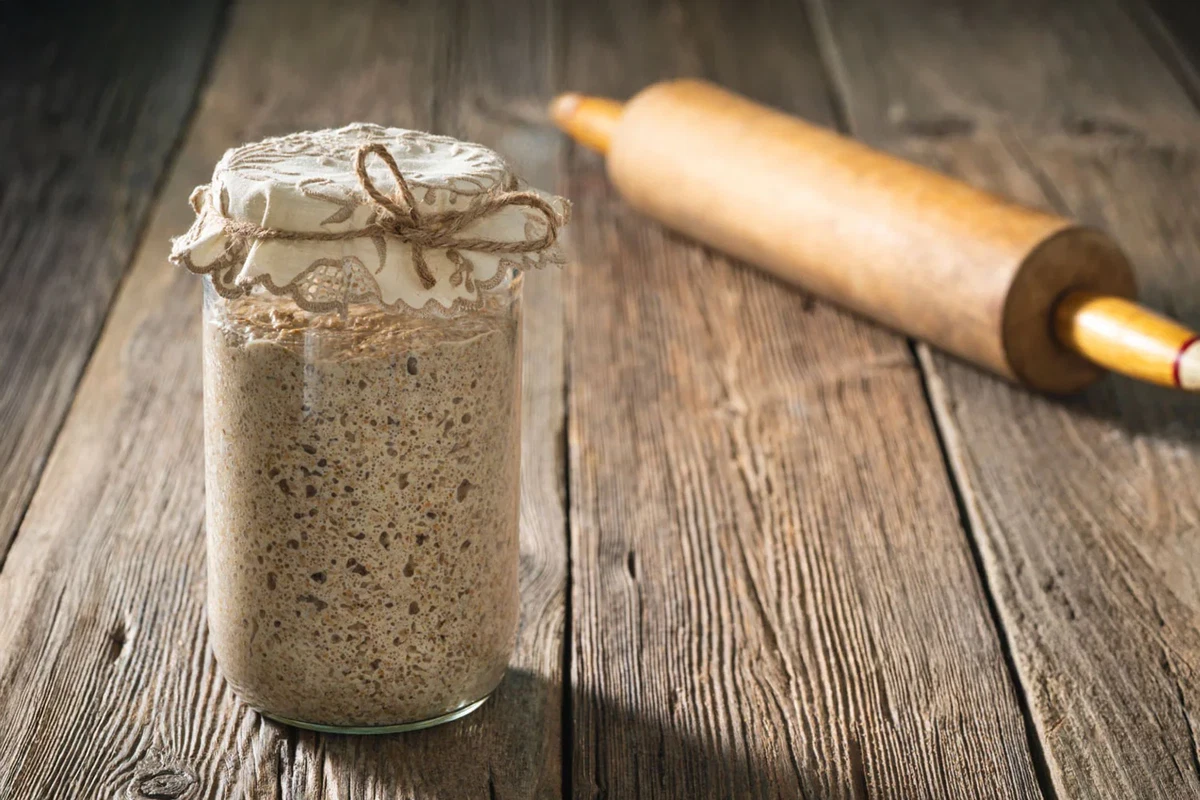
In a glass container, combine the flour and water, mix, cover with a kitchen cloth secured with a rubber band, and let it sit for 24 hours.
- Day 2
Add to the previous day’s mixture:
30 g rye flour
30 g water
Stir and cover again.
- Day 3
Discard half of the mixture from the previous days and add:
40 g rye flour
40 g water
- Day 4
Your starter is ready if it:
Doubles in volume
Has visible bubbles
Smells pleasant
If it’s still sluggish, repeat day 3’s feeding once more.

How do you know your sourdough starter is ready?
Clear signs your starter is mature:
- It visibly bubbles
- It rises and falls
- It has a mild acidic smell (not vinegary)
- It has an airy, non-liquid texture
If not, it’s not ready yet. No worries — just keep feeding it.
How to store your sourdough starter daily
Which container to use?
The ideal is a clean, wide-mouthed glass jar so you can stir well and observe fermentation. Avoid using metal containers for regular storage.
Covered or uncovered?
Covered, but not airtight.
The starter doesn’t need to “breathe” in the open-air sense, but it does need to release gases during fermentation.
The best methods are:
- Use a lid placed on top without sealing
- Or cover with a clean cloth or gauze secured with a rubber band

How to use your sourdough starter in bread
When your rye starter is active — meaning it’s bubbly, has grown in volume and smells slightly acidic — you can use it to bake breads like:
- 100% whole rye bread
- Rye and wheat mixed bread
- Multigrain bread
- Rustic loaves or rolls
How to replace baker’s yeast with sourdough starter
Replacing yeast with sourdough doesn’t mean adding it as another ingredient — it means swapping the leavening agent.
How much starter to use? As a general reference, use 20–30% active starter based on the total flour weight.
Example:
If the recipe calls for 500 g of flour, use 100–150 g of starter and do not add commercial yeast.
Bear in mind that you’ll need to allow more time for dough fermentation, judging by volume and texture rather than the clock, since sourdough rises more slowly.

Common issues… and how to overcome them
Fermenting with sourdough takes patience, not haste. Some typical challenges include:
- No bubbling at the beginning: Don’t worry — this is normal in the early days. Keep feeding and give it time. Often it’s just a matter of temperature and consistency.
- Very acidic or strong odour: This can happen if the starter is over-fermented or hasn’t been fed for too long. Frequent feedings and discarding part of it helps maintain balance.
- Watery texture: If you see liquid on top (“hooch”), it’s a sign it needs to be fed more regularly.
In general, with consistent feeding, proper flour/water ratio and moderate temperatures (20–24°C), rye sourdough stabilises quickly.
Conclusion
Rye sourdough starter is no gimmick or trend — it’s an age-old tool that, with patience and consistency, lets you bake bread that’s tastier, healthier and longer-lasting. Understanding how it works, how to care for it, and how to use it in recipes opens the door to a more mindful and rewarding baking experience.
If you want to bake your first rye sourdough bread, check out this post with a delicious recipe.


Comments
Claudia&Julia said:
Hola Aida,
Los 4 días son orientativos, ya que la masa madre puede necesitar algo más de tiempo dependiendo de la temperatura y de cómo evolucione. Lo importante es que duplique su volumen, tenga burbujitas y su olor sea agradable, ligeramente ácido. Si al cuarto día todavía no está lista, puedes seguir repitiendo el proceso del día 3, descartando la mitad y añadiendo 40 g de harina de centeno y 40 g de agua. Anímate a intentarlo de nuevo, a veces solo necesita un poquito más de paciencia :)
¡Saludos!
Aida said:
Hola intents hacerla y no salió, volvere, solo son 4 días?
Claudia&Julia said:
Hola Mariela,
Depende mucho de la temperatura, la cantidad de masa madre y la receta. Por si pudiera orientarte, podría ser de 3–6 horas para la primera fermentación, y después una segunda fermentación de 1–3 horas a temperatura ambiente o bien, de 8–16 horas en nevera.
¡Saludos!
Mariela said:
Y al hacer la masa de pan con la masa madre x ejemplo en harina de trigo con harina de centeno cuanto se deja leudar?