
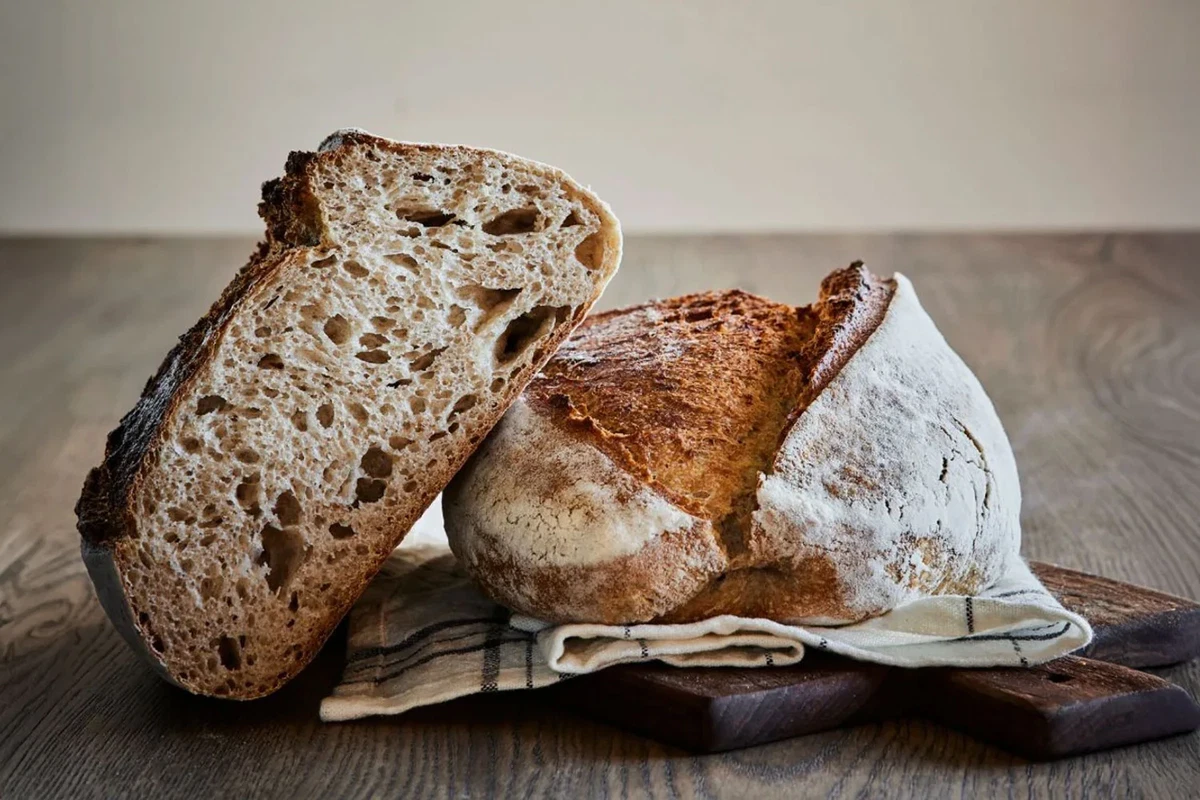
This homemade rye bread, made with sourdough starter, it's the perfect excuse to turn on the oven. Once baked and after the proper resting time, each slice of this rye sourdough bread it will be a full-on celebration. Delicious with butter, honey, or bitter orange marmalade; if you spread it with fresh cheese and top it with a slice of smoked salmon, you’ll be in heaven with every bite.
To make this unleavened bread from the bakery, this time we'll use wheat flour and a portion of rye flour. The sourdough starter, together with the water, will work its magic. The cold fermentation, leaving let the dough rest in the fridge all night before baking it, it will reward us with a homemade loaf full of aroma and a wonderful crumb.
You'll see how easy it is how to make homemade bread step by step, following the recipe from rye sourdough bread that I'm sharing with you today. The most labor-intensive part, which is the kneading, we'll leave to our Ankarsrum stand mixer, who is quite an expert in these tasks and is going to make our work much easier. The fridge will take care of the resting and getting a rye sourdough bread Getting it nice and crispy is the oven's job. So, you'll just need to take care of the shaping and follow the recipe instructions to enjoy homemade bread that's perfect for any occasion.

Ingredients
- 280 g of organic wheat flour
- 120 g of organic rye flour
- 300 g of water
- 80 g of rye sourdough*, at room temperature
- 2 tablespoons of honey
- 8-10 g of salt
*Here’s the recipe for making rye sourdough starter in this post. For how the bread turns out, I assure you it's well worth it!
If you want to make the recipe without sourdough, using yeast, I’ve left some notes in the comments.
Preparation
- Place the stainless-steel bowl, the dough hook, and the spatula in your Ankarsrum stand mixer
- Pour the water into the bowl, add the sourdough starter, and start mixing on low speed.
- Now add the flours, salt, and honey, and mix gently on low speed until the ingredients are combined.
- Place the plastic lid on the bowl and let the dough rest for one hour.
- Once the time has passed, grease a with olive oil a tupperware container or a rectangular container that is large enough. Remove the dough from the mixer bowl and place it in the oiled bowl.
- Now lift the dough by the corners and bring the corners to the center. Turn the dough over and cover the bowl. Let the dough rest for 30 minutes.
- Repeat the folding in the same way 3 more times, leaving half an hour of rest between each fold.
- Once you've done all the folds, cover the bowl and let the dough rest until it has doubled in size. Depending on the room temperature, this can take 4 to 6 hours.
- Once the dough has doubled in size, place it on a lightly floured baking sheet and sprinkle a little flour over the dough. If you find the dough is sticking, use a spatula to help place it on the sheet.
- Gently stretch one corner of the dough, fold it toward the edge, pressing lightly in the center, and rotate the dough about 45 degrees.
- Repeat until the dough has tension, turn it over, flour it, and let it rest for about half an hour, covered with a cotton cloth.
- After 30 minutes have passed, lightly flatten the dough with floured hands. Bring the 4 corners of the dough toward the center and press. Then fold one edge over the other and place the dough in a rectangular banneton floured, placing the seam side up. Lightly pinch the seam with your fingers and cover the dough again with the cloth.
- Transfer the dough to the refrigerator and let it rise overnight.
- In the morning, preheat the oven to 270º C (if your oven doesn’t reach this temperature, set it to its maximum) and place the baking tray for the bread on the middle rack.
- Take the dough out of the fridge and, flipping it over, place it on a pizza peel or a smooth, lightly floured board.
- Remove any excess flour the dough may have and make a crosswise cut with a bread scoring blade.
- Slide the bread from the peel onto the baking tray and bake for 15 minutes at 270º C.
- After the time has elapsed, lower the temperature to 225º C and bake for about 30 minutes more. The bread’s internal temperature should be 96–98º C.
- Remove the bread from the oven and let it cool and rest on a rack for an hour before cutting the first slice.
Suggestions
- As you can see, this rye bread recipe is made with sourdough starter. If you want to bake bread but don't have sourdough starter or prefer to use baker's yeast, here you have different options so you can choose the one you prefer, or try them all! Some of our favorite breads include this one easy bread in casserole, the coca bread, or two perfect recipes to get started in the world of bread that you will see here.
- For make this bread without sourdough starter, Simply replace the 80 g of sourdough starter with 5 g of dry yeast (or 15 g of fresh yeast). By leaving out the sourdough starter, it's best to subtract about 40 g of water from the recipe and shorten the fermentation times, since yeast works faster.


Comments
JBHKVSD said:
Perfecto?
Claudia&Julia said:
Hola Jose,
Puedes poner vapor si lo prefieres.
¡Saludos!
José said:
Paso 17.
¿No hay que poner vapor esos 15 minutos iniciales?
Zenks.