
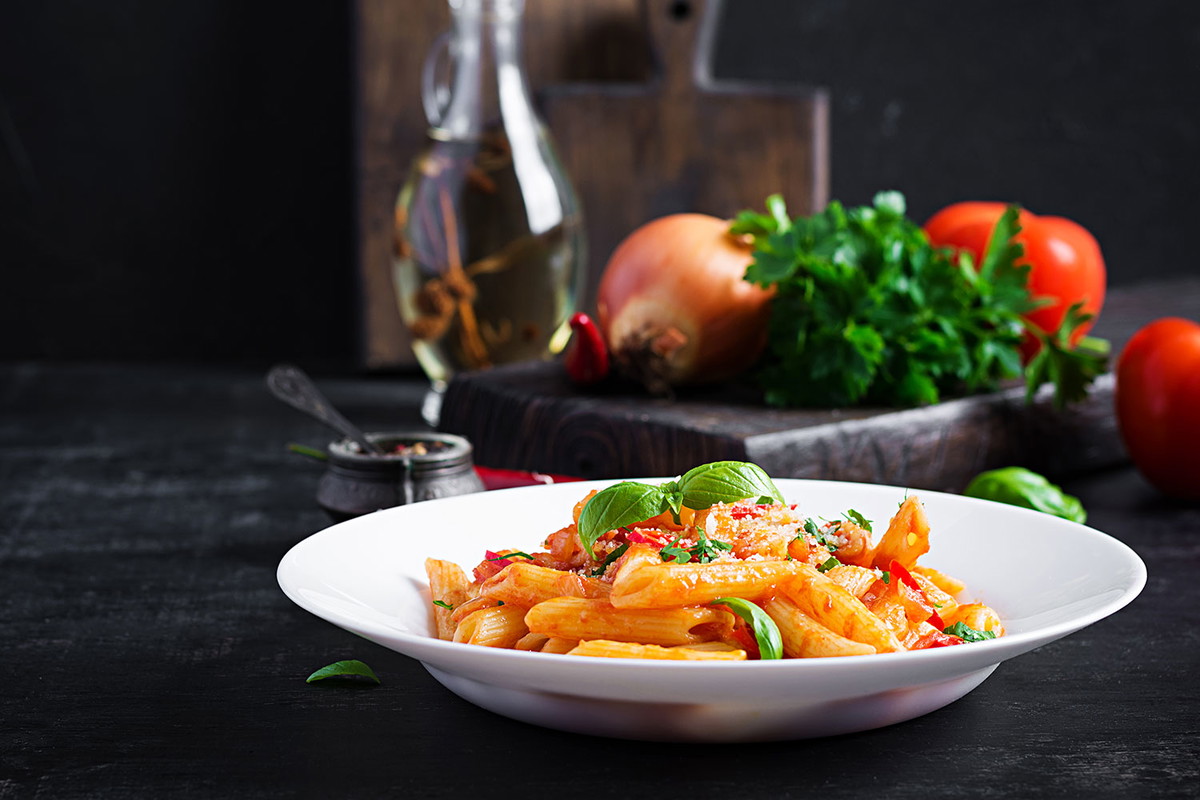
One of the things I love most about pasta is that it offers a huge range of possibilities. I believe there isn't any ingredient that can't be paired one way or another with some kind of pasta. Even white chocolate! But today I'll stick to something more traditional, both for the pasta and the sauce, a dish of penne all'arrabbiata that, even when the heat is on, tastes wonderful to me.

As the word "arrabiata" suggests, meaning "angry, mad or furious," this is a recipe with bite, fierce; a dish that must be spicy, no doubt. And at this point there is no discussion possible. We can make it more or less intense, but the spiciness has to be there for this dish to make sense. In this very Italian sauce, typical of Roman cuisine, the ingredient that gives it meaning must not be missing, whether cayenne, fresh red chili, in paste, ground, jalapeño, habanero or tabasco. Choose whichever you prefer, but make sure it's spicy!

This is the main secret of the dish, along with choosing a pasta like ridged penne or penne rigate, one of the most traditional short pastas in Italian recipes and among the most well-known worldwide. Because of its shape it is a pasta ideal to serve with this sauce thick, juicy, full of flavor and as spicy as you want. And to save time, we'll use the pressure cooker. With the Vitavit Premium de Fissler you'll see how cooking these penne all'arrabbiata takes less time than licking the plate.

Ingredients

  • 400 g of penne rigate or penne
  • 100 g of onion
  • 3 garlic cloves
  • 1 fresh red chili or 1 tablespoon of red chili paste
  • 1 large can of chopped tomatoes
  • 30 g of concentrated tomato paste
  • 1 teaspoon of sugar (optional)
  • 800 ml of vegetable broth
  • AOVE
  • Salt and black pepper (freshly ground) to taste
  • Grated cheese (parmesan, pecorino or grana padano)
  • A few fresh basil leaves

Preparation

  1. Put a splash of AOVE in your Vitavit Premium de Fissler pot and heat over medium heat.
  2. While the oil heats, clean and finely chop the onion and garlic.
  3. When the oil is hot, add the chopped onion and garlic and cook until golden.
  4. Add the tomato paste and stir to combine.
  5. Now add the red chili paste or the sliced chili, the teaspoon of sugar (if using), and the chopped tomatoes and season to taste with salt and freshly ground black pepper. Stir everything so the ingredients and flavors mix well.
  6. Put the pasta and the vegetable broth in the pot, put on the lid, close it and increase the heat. Set the cooking to level 3.
  7. When you see the yellow ring appear, reduce the heat (roughly keep it at medium) and wait for the green ring to appear.
  8. As soon as the green ring appears, let it cook for 5 minutes, lowering the heat a little if necessary.
  9. After 5 minutes turn off the heat and depressurize the pot.
  10. Open the pot and serve the pasta, grate your favorite cheese on top and serve with a few fresh basil leaves.

Leave a comment

Penne all'arrabbiata

Claudia&Julia

Comensales

4

Tiempo de preparación

10 minutes

Tiempo de cocinado

5 minutes

Categoria

Main Course

One of the things that fascinates me most about pasta is that it offers a huge range of possibilities. I don't think there's a single ingredient that can't be paired in one way or another with some type of pasta. Even white chocolate! But today I'm sticking with something more traditional, both for the pasta and the sauce: a dish of penne all'arrabbiata that tastes wonderful to me even when the heat is intense.

As the word "arrabbiata" suggests, meaning "angry, annoyed, or furious," this is a recipe with punch, fiery; a dish that has to be spicy, no question. And there's no room for debate here. We can make it more or less intense, but it has to have heat for this dish to make sense. In this very Italian sauce, typical of Roman cuisine, the ingredient that gives it its meaning cannot be missing, whether it's cayenne, fresh red chili, chili paste, ground chili, jalapeño, habanero chili, or Tabasco. Choose the one you like best, but make sure it's spicy!

This is the dish's main secret, together with choosing a pasta such as ridged penne or penne rigate, one of the most traditional short pastas in Italian recipes and one of the best known around the rest of the world. Because of its shape, it's a pasta ideal for serving with this sauce, thick, juicy, full of flavor, and as spicy as you like. And to save time, we're going to use a pressure cooker. With the Vitavit Premium by Fissler you'll see that it takes less time to cook these penne all'arrabbiata than to mop up the plate.

Penne all'arrabbiata

Ingredientes

  • 400 g penne rigate or penne
  • 100 g onion
  • 3 garlic cloves
  • 1 fresh red chili or 1 tablespoon red chili paste
  • 1 large can chopped tomatoes
  • 30 g concentrated tomato paste
  • 1 teaspoon sugar (optional)
  • 800 ml vegetable stock
  • EVOO
  • Salt and black pepper (freshly ground) to taste
  • Grated cheese (Parmesan, pecorino, or Grana Padano)
  • A few fresh basil leaves

Preparación

  1. Pour a drizzle of EVOO into your Vitavit Premium by Fissler pot and heat over medium heat.
  2. While the oil heats up, peel and finely chop the onion and garlic.
  3. When the oil is hot, add the chopped onion and garlic and cook until golden.
  4. Add the tomato paste and stir so everything combines.
  5. Now add the red chili paste or the chili sliced into rings, the teaspoon of sugar (if you're using it), and the chopped tomatoes, then season to taste with salt and freshly ground black pepper. Stir everything well so the ingredients and flavors combine.
  6. Add the pasta and vegetable stock to the pot, put on the lid, lock it, and turn up the heat. Set the cooking level to 3.
  7. When you see the yellow ring appear, lower the heat (roughly to medium) and wait for the green ring to appear.
  8. As soon as the green ring appears, let it cook for 5 minutes, lowering the heat a little more if necessary.
  9. After 5 minutes, turn off the heat and depressurize the pot.
  10. Open the pot and serve the pasta, grate your favorite cheese on top, and serve with a few fresh basil leaves.