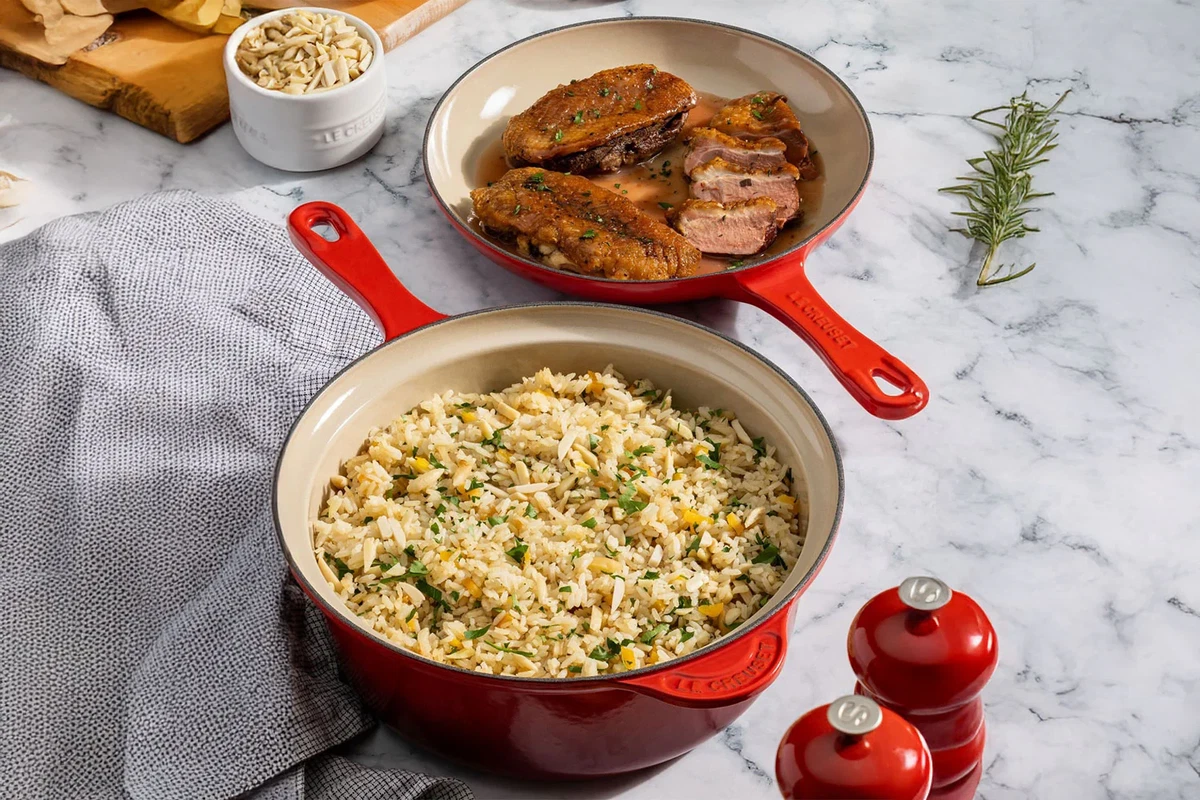
There are recipes that seem restaurant-quality, but in reality they only need good ingredients and proper cooking. This duck magret with pilaf rice and orange sauce is exactly that: an elegant, aromatic dish with a sweet-salty contrast, but totally achievable at home.
The duck benefits from slow, controlled cooking. And here cast iron makes the difference. Cooking the magret in a cast-iron pan or lid lets the fat melt slowly, achieve truly crispy skin and keep the inside pink and juicy. Cast iron distributes heat evenly, avoids sudden spikes, and that is gold with fatty meats like duck.
The pilaf cooks in the base of the same piece: fluffy rice, toasted almond, a touch of dried apricot… and a glossy orange sauce that ties it all together.
A complete, balanced and very impressive dish... And you will see it’s not complicated!

Ingredients (for 4 people)
For the pilaf rice
- 200 g long-grain white rice
- 15 g butter
- 1 small shallot, finely chopped
- 2 garlic cloves, chopped
- 2 tablespoons sliced almonds
- 3 dried apricots, finely chopped
- 2 teaspoons fresh parsley, chopped
- 1 teaspoon fine salt (adjust to taste)
- 500 ml low-salt chicken stock
For the duck
- 4 duck magrets
- Salt to taste
For the orange sauce
- 2 tablespoons orange liqueur
- 120 ml fresh orange juice
- 60 g red currant jelly or jam
- Juice of 1 lemon
- 1/8 teaspoon Dijon mustard
- 1 tablespoon cornstarch
- 1 tablespoon water
Preparation
For this recipe we will use the two-piece multifunctional Set by Le Creuset, but you can use, if not, a tall stainless steel Shallow Casserole and, for the duck, do use a cast-iron skillet or grill for a good sear.
We prepare the pilaf rice:
- Rinse the rice under cold water 5 or 6 times, until the water runs almost clear. Drain well and set aside.
- In the base of the multi-function pot, melt the butter over medium heat. Add the shallot and garlic and sauté for about 1 minute, until tender but not colored.
- Add the rice, almonds and salt. Stir for 1 minute to slightly toast the grains.
- Add the stock, bring to a boil, cover and cook without uncovering for 18 minutes over low heat.
- Remove from the heat and let rest for 10 minutes, still covered.
- Just before serving, stir in the chopped dried apricots and parsley, and fluff the rice gently with a fork so it stays light.
Cook the duck magret
While the rice rests, prepare the duck.
- With a sharp knife, score the magret skin in a diamond pattern without cutting into the meat. The cuts should be fairly close (about 3 mm apart).
- Place the magrets cold, skin-side down, in a cast-iron skillet. Put over medium-low heat.
- After 4–5 minutes you’ll see the fat begin to render. Keep a gentle, steady simmer. Skim off excess fat as it releases.
- Cook about 15 minutes, until most of the fat has rendered and the skin is golden and crispy. The internal temperature should be around 52 ºC for a pink doneness.
- Flip and cook a few more minutes according to your preferred doneness:
- 54 ºC for rare
- 60 ºC for medium
- 68 ºC for well done
- Remove and let rest a few minutes before slicing.
Prepare the orange sauce
- With the pan still hot, discard excess fat (you can reserve a teaspoon to enrich the sauce).
- Deglaze with the orange liqueur, scraping the bottom well.
- Add the orange juice, red currant jelly, lemon juice and mustard. Bring to a gentle boil.
- Mix the cornstarch with the water until dissolved and add it to the sauce. Cook 2–3 minutes until it thickens slightly.
- Remove from the heat.
To serve
- Slice the magret, serve it alongside the pilaf rice and spoon the hot orange sauce over it.

It’s a dish of contrasts: crispy skin, juicy interior, aromatic rice and a glossy sauce that balances the duck’s fat.
And here cast iron does most of the work: it controls the heat, respects the product and achieves that perfect skin that makes the difference.