
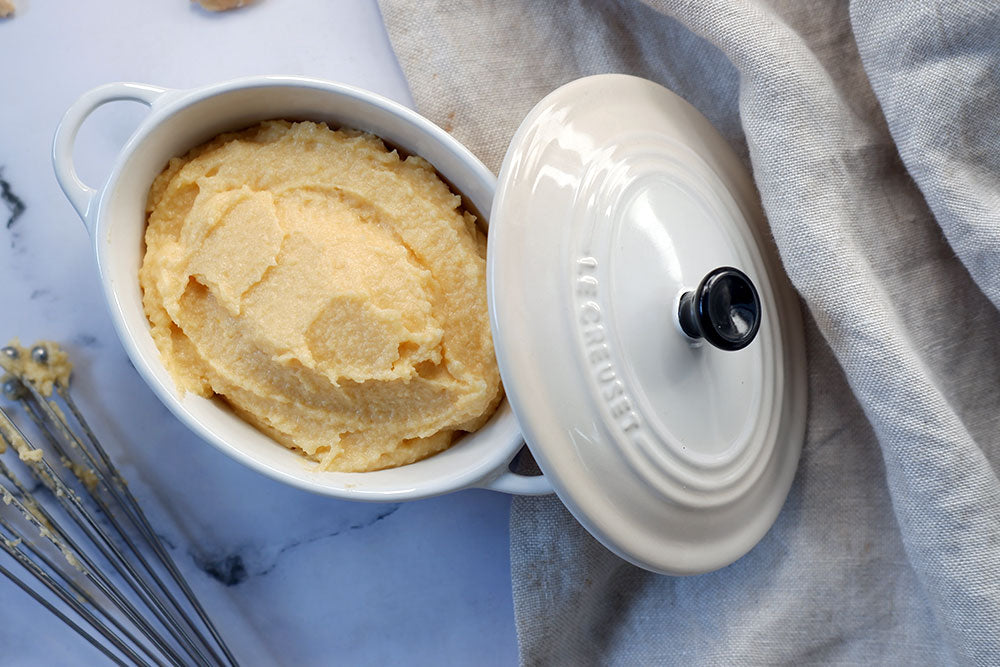
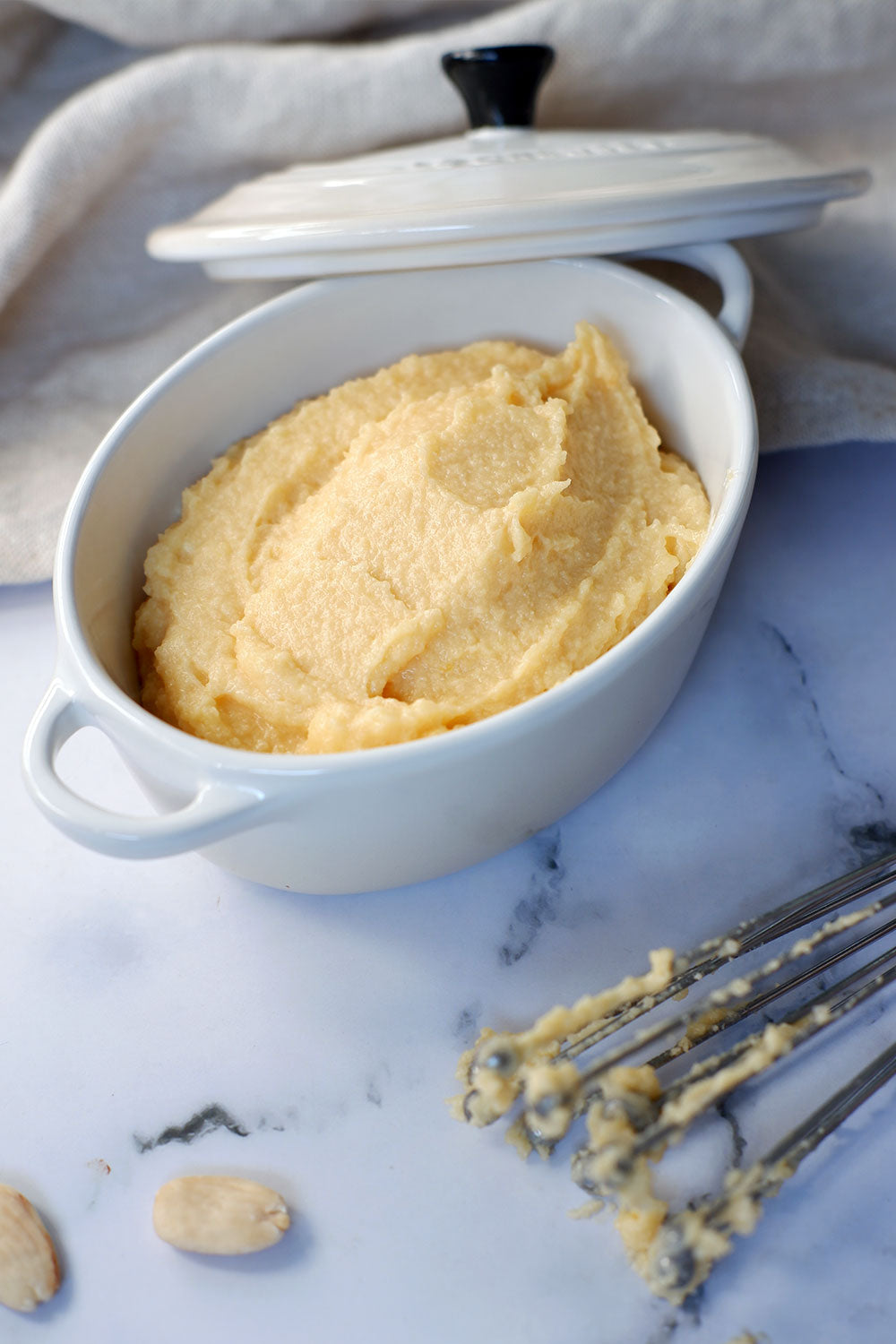
The frangipane cream is a typical cream from French pastry, with a mild almond flavor and widely used in all kinds of cakes and sponge cakes. It is a cream that is made by mixing traditional pastry cream and almond cream. With it you make, for example, the classic Galette des Rois (Kings' cake) or it is also a classic in pear tarts and sponge cakes, among many others.
What is frangipane cream
To make frangipane cream you only have to make pastry cream (with its vanilla touch) and a delicious almond cream, and we will mix them in a ratio of 1 to 2 (that is, 100 g of pastry cream for every 200 g of almond cream).
The fact of having to make 2 different creams may seem tedious if you are just starting in baking, but far from that perspective you should know that making those creams is really simple (and the result exceptional!).
While the pastry cream is flavored with vanilla extract, the almond cream is flavored with a liqueur — it is often flavored with dark rum or other liqueurs; personally I like to use moscatel.
I recommend always starting by making the pastry cream, so while it cools you make the almond cream and, when you finish the second, you can already mix both to make your frangipane cream.
Recipe to make frangipane cream
Frangipane cream = pastry cream + (x2) almond cream.
1) First, we make the pastry cream:
Ingredients for the pastry cream:
- 250 ml Whole milk
- 3 Egg yolks (55 to 60 g yolks)
- 45 g Granulated sugar
- 20 g corn starch (Maizena)
- 15 g Softened butter
- 1 tsp Madagascar Vanilla extract
Preparation of the pastry cream:
- In a bowl, mix the sugar, the 3 egg yolks and the corn starch.
- Put the milk in a wide saucepan, and heat it over medium heat. Add the teaspoon of vanilla extract and wait until it is about to boil (try not to let it reach boiling).
- When it is hot, pour a few tablespoons of the hot milk into the bowl with the yolks, stirring to combine. Add a few more tablespoons, stirring constantly, and finally add the rest of the milk (we do it this way, little by little, because milk that hot could cook the eggs and ruin the process, so it is also important not to stop stirring).
- Return all the contents to the saucepan and heat again, over low/medium heat, stirring constantly with a balloon whisk.
- After a few minutes, you will notice parts starting to thicken. It is important to stir vigorously and constantly then, without removing from the heat, and you will see how all the liquid becomes cream. You now have your pastry cream ready!
- Remove from the heat, pour into a wide bowl, add the butter and mix until melted and incorporated and cover with cling film (place the film in contact with the cream so it does not dry out or form a skin).
2) Second, we make the almond cream:
Ingredients for the almond cream:
- 120 g icing sugar
- 120 g unsalted butter at room temperature
- 120 g almond flour (ground almonds)
- 2 whole eggs
- 45 g moscatel or dark rum
Preparation of the almond cream:
- Place the butter and icing sugar in the KitchenAid bowl, and mix with the paddle attachment at medium speed until combined.
- Add the eggs, without stopping stirring, until you obtain a liquid, integrated and homogeneous paste (at the beginning of adding the eggs it may look curdled, but by continuing to mix you will finish with a whitish, integrated paste).
- Add the almond flour while continuing to stir.
- Finally add the liqueur (the moscatel or the rum) and stop when the dough is integrated.
3) We finish making the frangipane cream:
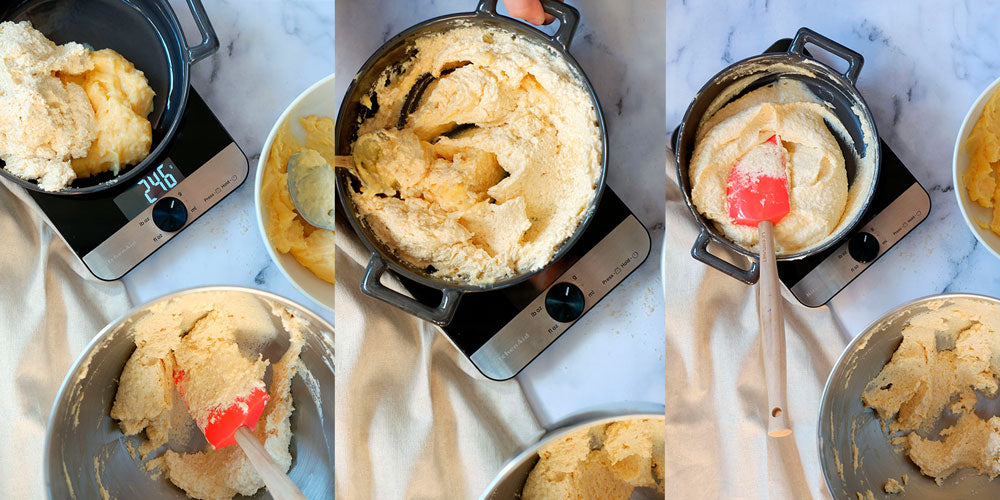
For making the frangipane cream, you must mix 2 parts almond cream with 1 part pastry cream. Thus, in a bowl apply 300 g of frangipane cream, and 150 g of pastry cream, and mix with the help of a spatula until integrated (you can vary those amounts to your liking, depending on whether you want to keep more of the creams obtained for other preparations or not).
Notes
- The fineness of the almond cream will depend on the fineness or grinding level of the almond flour: the finer the flour, the finer the cream; with a coarser grind, a slightly grainier cream (you will appreciate a bit of the almond grain when rubbing it between two fingers). Everything is correct and the result will be the same, and it will depend on the flour you have or your preference whether you prefer it finer or coarser.
- Frangipane cream, under the strictest or textbook theory, contains 2 parts almond cream to 1 part pastry cream. But you can modify that proportion according to what you want to make or your preferences: if you want to make a tart with more almond flavor, you can, for example, add 70% almond cream and 30% pastry cream.


Comments
Claudia&Julia said:
Muchas greacias Carolina,
¡Qué alegría que te gusten las recetas! Siempre es un placer compartirlas para que podáis disfrutarlas :)
¡Saludos!
Carolina Salinas said:
tus recetas son espectaculares muy fáciles de aprender. Me siento contenta de poder parender cada dia junta con tus recetas . Gracias infinitas
Claudia&Julia said:
Hola Ana, en este caso, sí se cuece pero se hace en el horno, tras aplicar la crema en relleno de tartas, croissanes… Lo habitual de esta crema es usarla de relleno, así que es durante el horneado de la repostería en que se aplica que se cuece el horno. Ciertmente, es una crema que debe usarse tras su elaboración, y no guardar muchos días en la nevera. ¡Gracias por preguntar! Epero que te animes con ella porque está deliciosa.
Claudia&Julia said:
Hola Piluca, muy buena pregunta: Sí, la crema frangipane se cuece, pero esto ocurre durante el proceso de horneado, cuando se utiliza como relleno en tartas y pasteles. No se cocina previamente en el fogón. Su textura final es suave y esponjosa, complementando perfectamente la base crujiente de la tarta. ¡Tienes que probar de hacerla, porque está deliciosa!
Ana said:
Hola, ¿en la crema de almendra queda el huevo crudo?
Gracias
Piluca Lafuente said:
Buenos días: me encanta la receta, pero me surge una duda. La crema de almendras, ¿no se pasa por el fuego? Porque utilizar huevos sin cocinar, no me gusta la idea. Muchas gracias
Claudia said:
Hola Reme, me encantará que la pruebes y te aseguro que te encantará :) Es una crema deliciosa, me alegro de que veas el paso a paso detallado, de eso se trata, de hacerlo fácil, pero si tienes cualquier duda escríbenos a tienda@claudiaandjulia.com y te ayudamos. Saludos!
Reme said:
Madre mía, que rico!! Esto hay que hacerlo.
Espero que me salga en condiciones ya que esta muy bien explicado, me toca ponerme a ello.
Muchas gracias.