

Are you looking for a special recipe for these holidays or for a special celebration? Nothing beats the pleasure of sharing a lobster bouillabaisse with your loved ones, and made in a pressure cooker you'll have it in very little time! This Mediterranean recipe, full of sea flavors and comforting aromas and whose origins date back to the Provence region of France, has passed through generations keeping its essence: a delectable combination of fish, fresh shellfish and aromatic herbs.
Bouillabaisse soup is known for its intense flavors and long traditional preparation. However, for those who want to enjoy this iconic dish without spending hours in the kitchen, the pressure cooker becomes an invaluable ally: today we prepare this recipe in the WMF Perfect pressure cooker. With this tool, cooking time is reduced markedly (up to 65-70% less!), allowing you to taste the essence of bouillabaisse in much less time, ideal for busy holiday celebrations.
The essence of Bouillabaisse Soup
Bouillabaisse soup finds its origin with local fishermen of the 18th century, who used the day's assorted fish and shellfish to create this recipe. Over time, bouillabaisse became an icon of Mediterranean cuisine, blending fresh ingredients with authentic flavors. The traditional version includes lobster as a key piece, but the versatility of this soup allows adaptations with lobster, shrimp, or firm fish, always maintaining its maritime essence.
Variations and Adaptations: the versatility of bouillabaisse soup
Bouillabaisse soup is more than a recipe; it is a platform for culinary creativity. In addition to shellfish variations, you can adjust the amount of herbs and spices to create a soup more intense or subtle to your taste. Prefer a spicy touch? Add a bit of pepper or a pinch of paprika. Looking for a more pronounced aroma? Increase aromatic herbs like thyme, rosemary, or tarragon.
Get ready to enjoy an unforgettable gastronomic experience during these festivities with a lobster bouillabaisse prepared in a pressure cooker!
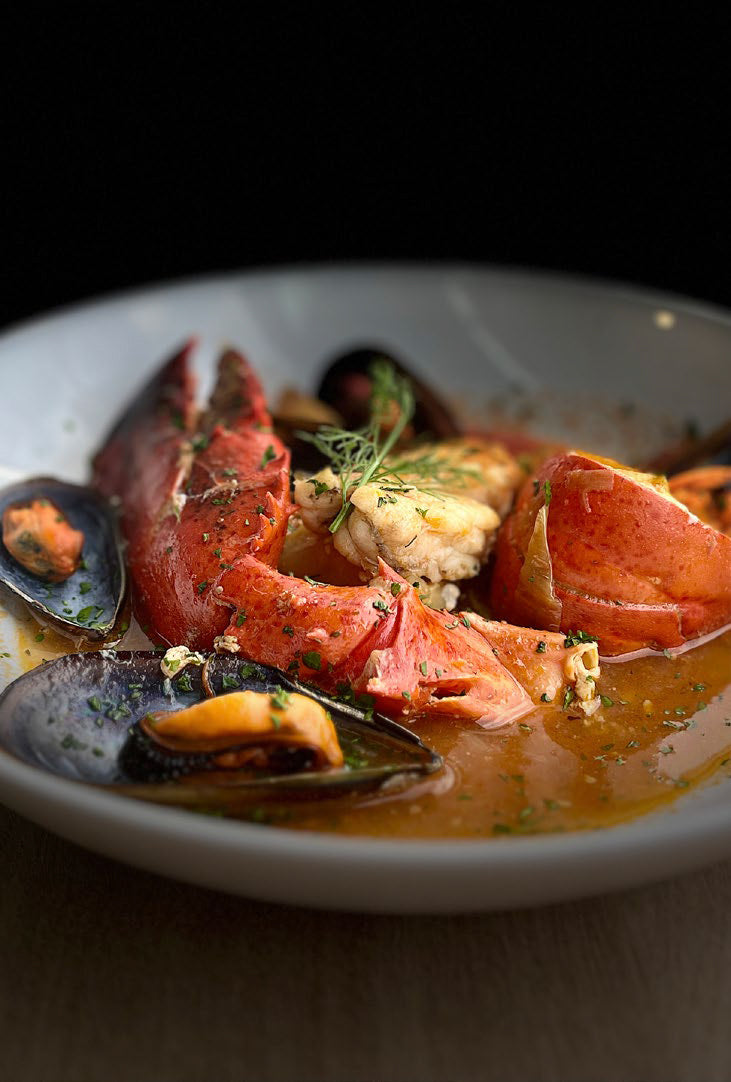 Ingredients
- 2 lobsters of 500g each (approx)
- 400 g monkfish tail, cleaned, skinless, and sliced
- 500 g fresh mussels
- 1 leek (white part only)
- 1 onion
- 3 garlic cloves
- 500 g fresh fennel
- 250 g crushed tomato (without skin, seeds or juice)
- 500 ml fish stock
- a few saffron threads
- 2 sprigs chopped parsley
- 1 bay leaf
- 1 sprig thyme
- Oil
- Salt
Preparation
- Cut the lobsters' heads, slice their tails and separate the claws, cracking the latter slightly. Then cut the heads in half lengthwise and remove the stomach.
- Cut the monkfish into portions or slices not too large and season to taste.
- Slice the white part of the leek thinly, chop the garlic cloves, chop the onion and dice the fresh fennel.
- Heat a pan over high heat and, when ready, add a splash of oil. Brown the monkfish pieces and set them aside. In that same pan, continue with the lobster pieces until they turn red and set them aside.
- Add the prepared vegetables to that same pan and sauté over medium heat for a couple of minutes. Then add the crushed tomato and stir.
- Finally, add the saffron, parsley, bay leaf and thyme. Pour all the pan contents into the Perfect WMF pressure cooker over medium-high heat.
- Add the fish stock to the pot and stir.
- Place the mussels in the steamer basket and, when the pressure cooker contents begin to boil, insert the loaded basket. Cover, but do not lock the lid. Cook 2 minutes to open the mollusks, uncover the pot and remove the basket with the opened mussels, set them aside.
- Close the pot and cook over medium-high heat until the pressure indicator shows its second ring (on the PERFECT PREMIUM model, set the handle selector to position 2). Then reduce the heat to minimum and cook for 5 minutes.
- After 5 minutes, turn off the heat and let the pressure decrease on the WMF pot for 15 minutes, until the cooking rings are not visible and you can open the pot.
- Depressurize and open the pot; add the reserved mussels, monkfish and lobster without mixing. Close the pot again, raise the heat until the pressure indicator shows its first ring (on the PERFECT PREMIUM model, set the handle selector to position 1). Remove the pot from the heat and let stand until the cooking rings are not visible and you can open the pot again.
- Serve immediately.
Notes


Comments
Luis said:
Tiene toda la razón David, se hace con lo que se llama morralla, peces muy espinosos, pequeños, inservibles para su comercialización salvo para hacer un fumet de muerte, asunto que merecería aparecer en la receta (cómo hacer el caldo de pescado) aunque la bullabesa es en sí misma un fenomenal caldo de pescado. Solo una aportación más, en lugar de croutons, mejor unos picatostes con rouille (con los hígados del pescado) o una versión sencilla con alioli, flotando en la sopa humeante a la que en algún momento habría que poner Pernod que refuerce el sabor anisado del hinojo.
Antonia said:
Gràcies David per l’aportació. Bona!
David said:
La cocina tradicional, no emplea productos de lujo, como bogavante (homard) o rape (lotte). La ‘bouillabaise’ se hace con pescado digamos barato, y para alargarla y darle consistencia, se le ponen ‘croutons’ (dados de pan tostado frotados con ajo) el resto es fantasía. Los platos ‘marineros’ se hacen con pescado barato, y se le añaden patatas o judias, para ‘hartar’. La ‘zarzuela’ o ‘Sarsuela’, es un plato de rico, y no lleva ni patatas ni judias, sólo pescados y mariscos ‘nobles’ por llamarlo de alguna manera.
David said:
La cocina tradicional, no emplea productos de lujo, como bogavante (homard) o rape (lotte). La ‘bouillabaise’ se hace con pescado digamos barato, y para alargarla y darle consistencia, se le ponen ‘croutons’ (dados de pan tostado frotados con ajo) el resto es fantasía. Los platos ‘marineros’ se hacen con pescado barato, y se le añaden patatas o judias, para ‘hartar’. La ‘zarzuela’ o ‘Sarsuela’, es un plato de rico, y no lleva ni patatas ni judias, sólo pescados y mariscos ‘nobles’ por llamarlo de alguna manera.