

El Jaggery Sesame Ladoo, these Sesame energy balls which you've surely seen before, it is a traditional sweet from India, especially popular during winter and on festive occasions like Makar Sankranti and Lohri. This candy it is made with simple but nutritious ingredients, which include gud (jaggery in English, a type of unrefined sugar very common in Asia, which you can substitute with panela) and til (sesame seeds).
Gud Til Ladoos are valued both for their taste and for their health benefits, since jaggery is a rich source of iron and sesame seeds are excellent for the body heat during the cold months, in addition to providing good amounts of calcium. They are some energy balls delicious.
The preparation of these sweets is relatively simple. The jaggery is melted and mixed with toasted sesame seeds until it forms a mixture that is then shaped into small balls or ladoos. Sometimes, other ingredients such as grated coconut, peanuts, or walnuts are added to enhance the flavor and texture.

What is jaggery?
El jaggery is a natural sweetener obtained from sugarcane juice or the sap of palm trees, such as the date palm. It comes in the form of solid blocks with a color that ranges from light golden to dark brown, depending on the source and the production process. It is very common in India, Southeast Asia, and some parts of Latin America. Unlike refined sugar, jaggery retains certain minerals and vitamins, since it is not subjected to an intensive refining process.
Jaggery has a distinctive flavor, with notes that can be described as earthy, slightly bitter, and rich, giving dishes a unique flavor profile. Beyond its sweetness, it adds a complexity of flavor that brown sugar cannot always replicate.
Is it possible to replace jaggery with brown sugar in many recipes.. However, brown sugar has a different moisture content and a less complex flavor profile, which it could slightly affect the texture and flavor of the final dish. If you decide to substitute it, you can experiment with the amount to adjust the sweetness to your liking, keeping in mind that jaggery is usually less sweet than processed sugar.
For specific recipes such as the Jaggery Sesame Ladoo, where the unique flavor of jaggery is an integral part of the sweet's charm, replacing it with brown sugar could noticeably change the flavor profile (use brown sugar for this recipe only if you don't have access to jaggery or panela).
However, we have good news: Jaggery and panela are quite similar both in their production process and in their nutritional characteristics and culinary uses. Both are obtained from the evaporation of sugarcane juice, although jaggery can also be produced from the sap of certain palm trees. They are not subjected to a refining process, so they retain a greater amount of minerals and vitamins compared to refined sugar.
The panela is very common in Latin America, while the jaggery It is more commonly used in South Asia. In terms of texture and flavor, both share a rich, earthy flavor profile, with a hint of molasses, although they can vary slightly depending on their specific origin and the production process.
Due to these similarities, Panela can be a direct substitute for jaggery in most recipes, especially in those where a natural sweetener with a rich, complex flavor and aroma is desired. The choice between one and the other may depend on local availability or specific personal preferences.
Where to find jaggery
Jaggery can be purchased in various places, depending on where you are. Here are some options to consider:
-
Stores specializing in Asian or international products.
-
Indian food markets or stores: Since jaggery is a common ingredient in Indian cooking, stores that specialize in products from this country are a good place to look.
-
Natural and organic food stores: Some stores focused on natural, healthy, and organic foods may carry jaggery due to its more nutritious profile compared to refined sweeteners, or you can ask them, as they can easily order it from a supplier.
-
E-commerce: If you prefer the convenience of shopping from home, there are many online options.
-
Large supermarkets with an international section.
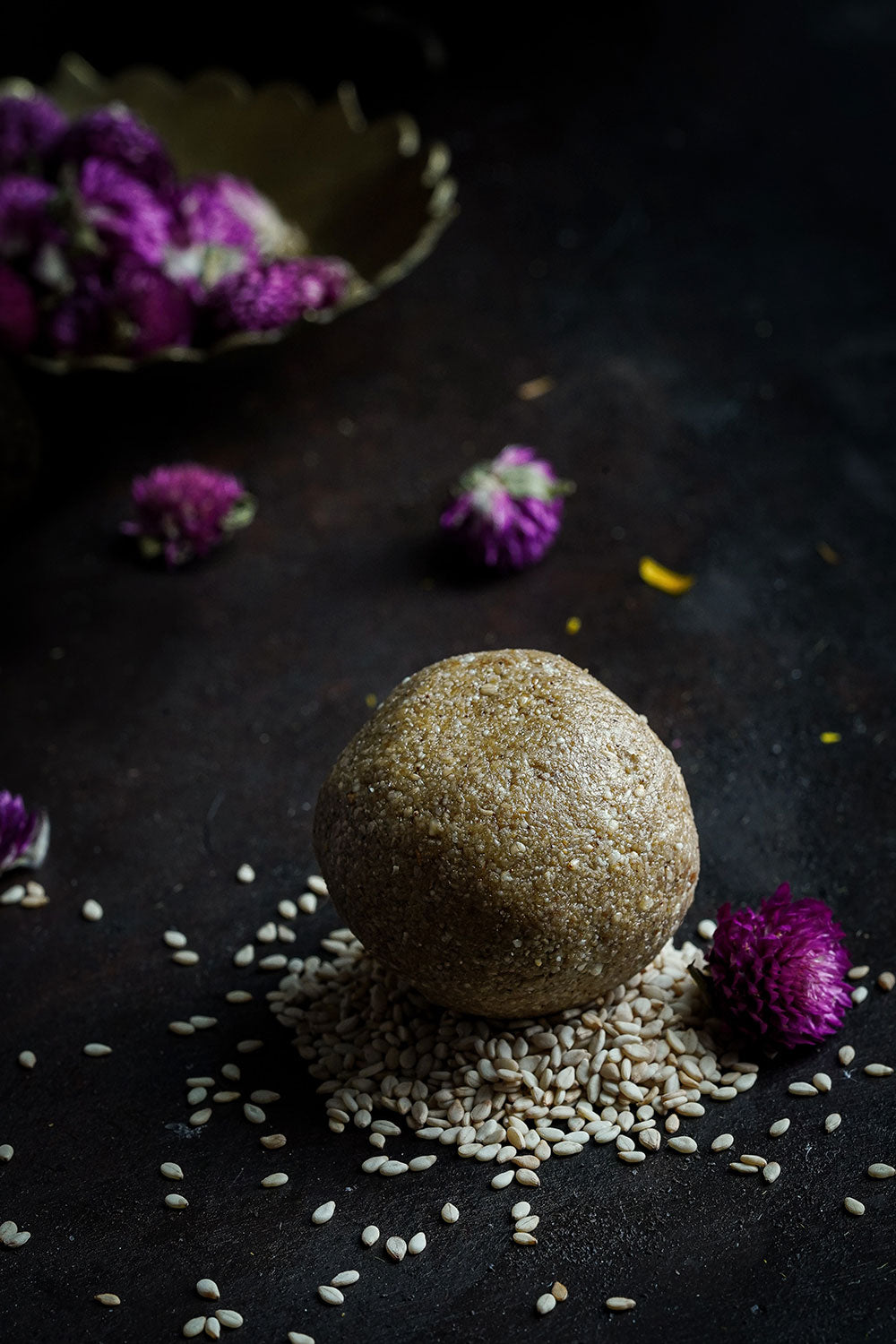
How to make Indian sesame balls
Ingredients
- 1 cup of sesame seeds (approx. 150 g)
- 4 teaspoons of ghee (approx 20 g)
- 1/4 cup of roasted and crushed peanuts (30 g)
- 1/2 teaspoon of ground green cardamom
- 1 cup of chopped jaggery* (200 g)
*Note: If you don’t have jaggery, and as we explained above, you can substitute jaggery with panela (not with brown sugar).
Preparation
- Toast the sesame seeds: Heat a pan without oil and add the sesame seeds. Toast them over low heat for 6-8 minutes. Once ready, set them aside.
- Prepare the mixture for the laddoos: Now, heat the ghee in the same pan and add the jaggery. Mix it well and simmer for about 5 minutes. Do not stop stirring until the jaggery has completely melted.
- Add the sesame seeds to the mixture: Stir in the cardamom powder, crushed peanuts, and toasted sesame seeds. Keep stirring and cook everything together for another minute or two. Then, transfer the mixture to a plate previously greased with ghee or oil and let it cool.
- Shape the laddoos and store them: With slightly greased hands, start forming small round balls with the mixture. Let them rest and air-dry. Finally, store the laddoos in an airtight container. Your Gud Til Laddoos are ready to be enjoyed!
About the ladoos
Ladoos are prepared for celebrations, festivals, and as religious offerings in temples. Each type of ladoo has its own recipe and associated special occasion, such as Besan Ladoo (made with chickpea flour), Boondi Ladoo (made from fried batter drops), and Gud Til Ladoo (with sesame seeds and jaggery), among many others. It is a sweet that encapsulates the culinary diversity and richness of South Asian traditions.
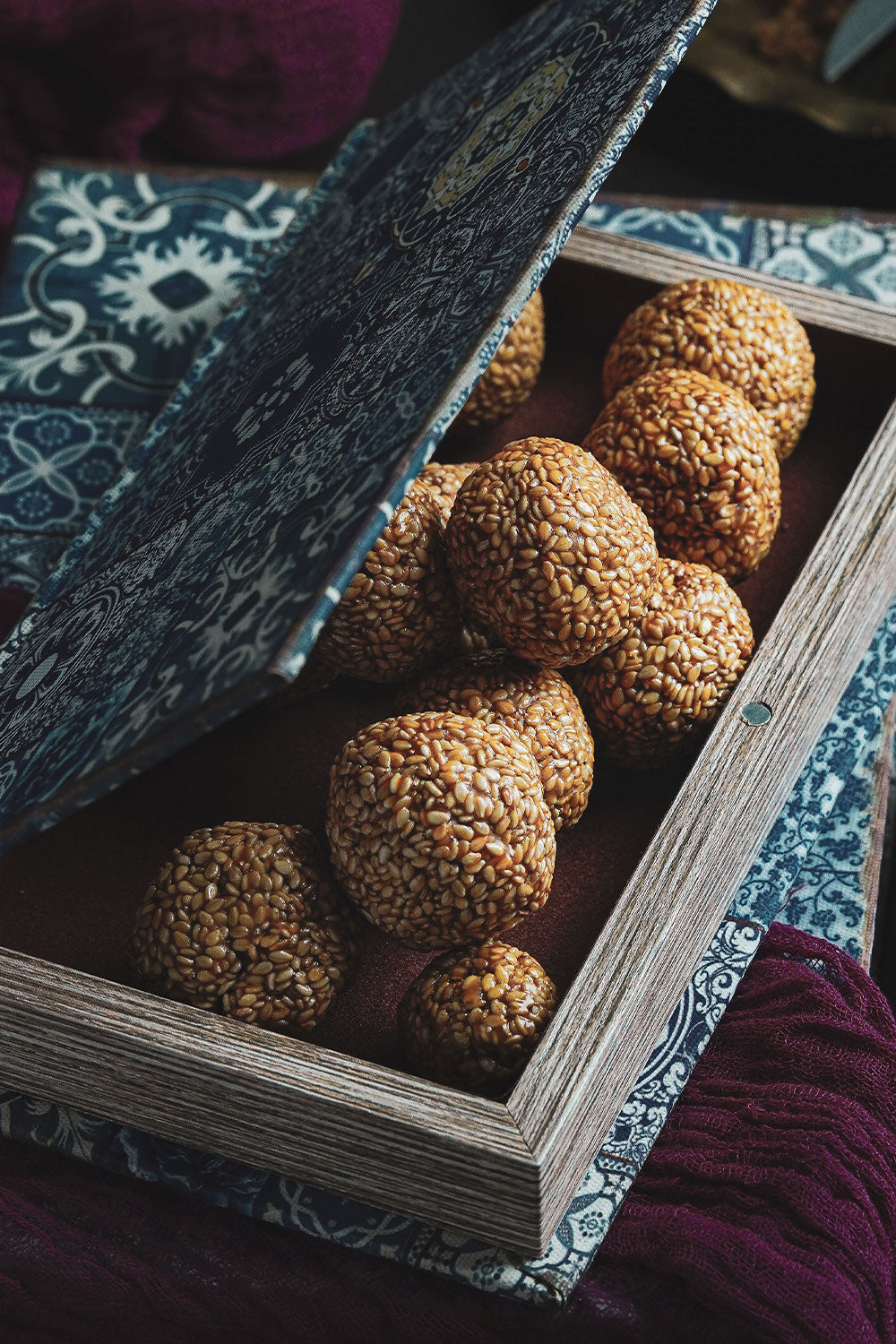
Recipe notes:
The recipe provided above is a traditional sesame ladoos recipe. But you can vary them to your liking! Here are some ideas that could adapt the recipe without straying too far from its essence:
-
Vary the nuts: Although peanuts are common, you could experiment with other nuts such as almonds, walnuts, or cashews to give different textures and flavors.
-
Adjust the amount of ghee: Ghee adds flavor and helps bind the ingredients, but you can adjust the amount based on the desired texture and dietary preferences.
-
Experiment with spices: Cardamom is typical, but you could also add a pinch of cinnamon or nutmeg to vary the flavor profile.
-
Use an alternative sweetener: If jaggery is not available or you prefer to experiment, panela or even brown sugar (though with a different flavor) could be viable substitutes.


Comments
Claudia&Julia said:
Hola Patricia Catalina,
¡Nos alegra mucho que te haya gustado la receta! Muchas gracias por comentar :)
¡Un saludo!
Patricia catalina said:
Esta muy buena la receta, me gusto mucho!
Claudia&Julia said:
Hola Laia,
¡Qué bien que te gusten tanto! Esperamos que pruebes la receta y te guste el resultado. Ya nos contarás qué tal te salen :)
¡Un saludo y gracias por comentar!
Laia said:
Oh, me encantan! Las probé hace tiempo y no recordaba su nombre, qué ganas de hacerla en casa. ¡Muchas gracias!