
No secret will be revealed to you by talking about the ingredients used to make the homemade leche merengada, an irresistible classic, refreshing and full of flavor. It is one of our most traditional drinks, along with the horchata`, the Valencian water or the lemon slushFor me, it's one of summer's pleasures; nice and cold and creamy, it goes down wonderfully and sweetens the afternoon like few things can.
As you probably know, the authentic leche merengada recipe is made with milk infused with cinnamon and lemon peel, sweetened with sugar, to which is addedegg whites beaten until stiff peaks form or meringue; hence its name. A delicious drink best served very cold. Some people even prefer to put it in the freezer for a few minutes or leave it in the fridge until it starts to get slushy.

What you may not know is that leche merengada has an almost identical "sister," the curdled milk, which is only missing the meringue. With the same ingredients, except for the whipped egg whites, leche rizada has a more icy texture and it has this name because it “curdles” when it is frozen and stirred, forming small crystals. So, when at home we sweeten and infuse milk with lemon peel and cinnamon, and serve it very cold, what we enjoy drinking is actually closer to curdled milk than to leche merengada.
Tips for a perfect homemade leche merengada
For you to be able to do a good homemade leche merengada, as tradition dictates, in addition to the recipe there are a few simple tricks which is worth keeping in mind:
- Steep the milk gently. Heat the milk over low heat with the cinnamon stick and the lemon peel, and let it cook little by little without coming to a strong boil to achieve a more aromatic flavor and prevent it from turning bitter.
- Avoid the white pith of the lemon peelThe white part, or albedo, is what will make it bitter, so the lemon should be peeled very thinly so that the peel does not have that layer. To do this, it is advisable to use a very sharp knife or a very precise fruit and vegetable peeler, such as the stainless steel peeler by Kuhn Rikon.
- Let the infused milk rest and cool thoroughly. Chilling intensifies the lemon and cinnamon aromas and makes the flavor more intense. Also, the colder the milk is before adding the meringue, the better the final result will be. The mixture becomes more stable and creamy.
- Mount the egg whites until stiff peaks form. At this point, you’ll see peaks form when lifting the beaters; the whipped egg whites hold their shape, and the texture is glossy and stable.
- Incorporate the meringue gently. To keep them from losing that airy texture, the whipped egg whites should be folded in little by little using gentle, enveloping motions.
- Finally, before serving the leche merengada, add a touch of ground cinnamon to enhance the drink’s aroma and flavor.
As in any recipe, in addition to Use the finest ingredients, one of the keys to a good result is patience. It is not an ingredient as such, but it is very important to keep it in mind. And to make good leche merengada, it is essential, both when simmering the milk and when letting it rest. You will see how the infusion gains in flavor and aroma.
Without further delay, here is the recipe for the Homemade leche merengada, an irresistible classic and incredibly refreshing.
Ingredients
- 1 liter of whole milk (fresh, if possible)
- 120-150 g of sugar
- 1 cinnamon stick
- The zest of 1 lemon
- 2 egg whites
Preparation
- Put the milk in a saucepan with the cinnamon stick and the lemon peel.
- Heat over low heat until it starts to boil.
- Take off the heat and add the sugar. Stir until it dissolves completely.
- Let the milk steep until lukewarm and put it in the fridge for a few hours so it fully absorbs the cinnamon and lemon flavor.
- When the milk is thoroughly chilled, strain it to remove the cinnamon stick, the lemon peel, and any impurities there may be. Put it back in the refrigerator.
- Mount the egg whites until stiff peaks form with a hand mixer, until they are stable and glossy.
- Incorporate the whipped egg whites into the cold milk. Do it little by little, using gentle folding motions.
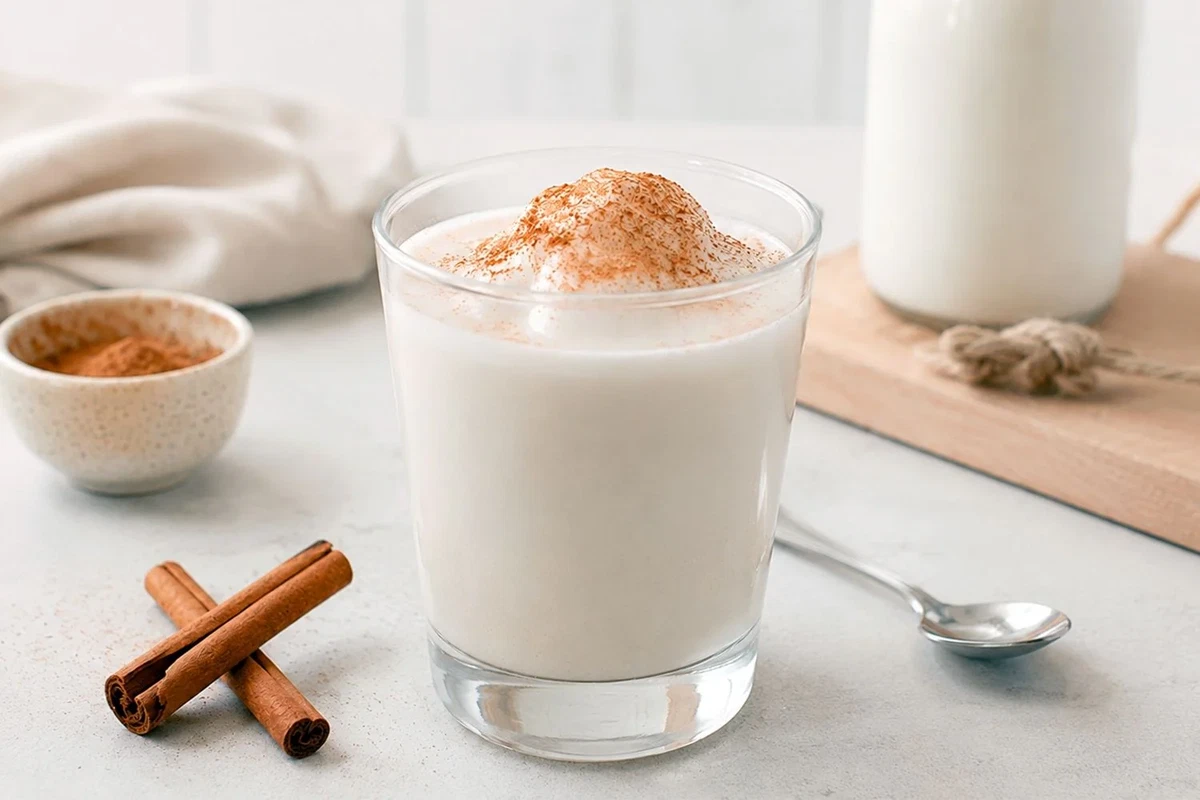
- Serve the leche merengada well chilled in glasses or goblets and sprinkle a little ground cinnamon on top. Enjoy every sip!



Comments
Pilar said:
Hola muchas gracias por vuestra contestación no lo había visto, ahora he vuelto a mirar la receta y he visto que está en el paso a paso, muchas gracias por vuestra paciencia
Claudia&Julia said:
Hola Juan,
Nosotras usamos huevos frescos y, una vez montado el merengue y añadido a la leche, la tomamos enseguida. Si lo prefieres, puedes usar claras pasteurizadas (las encuentras en la mayoría de supermercados).
¡Saludos!
Claudia&Julia said:
Hola Pilar,
El azúcar se añade en el paso 3, al retirar el cazo del fuego.
¡Saludos!
Juan said:
¿Cómo hacemos con la clara de los huevos para estar seguros que no hay contaminación bacteriana?
Pilar said:
Hola no veo cuando se añade el azúcar,puede ser con las claras?