
We couldn't let summer pass without the recipe for Valencian tiger nut horchata, the traditional recipe. Because if there's one thing we'll agree on, it's that horchata and summer go hand in hand. And making homemade horchata is so easy! With a few steps and 4 important tips to keep in mind, I bring you the top recipe to make it delicious.
At home I remember as if it were yesterday the summer snacks when we filled the ice cube tray with horchata to make horchata granitas on hot afternoons. So sweet and refreshing, I think horchata is the first thing that comes to mind when I have to put flavor to summer.
Making horchata at home is super easy. The only thing you need is a food processor or a blender powerful enough to grind the tiger nuts as much as possible. But even more important is a good strainer that lets no solids through and that will make the horchata smooth and completely liquid.
You should also bear in mind that it can't be prepared in a short time, but you have to soak the tiger nuts for at least 24 hours so they swell and soften. The softer the tiger nuts are, the easier it will be to extract all their flavor.
To finish it's important to store it in a bottle with a sealing cap that isolates the horchata from air, odors and flavors in the fridge. And I'm in love with this Luigi Bormioli airtight bottle of Italian glass that's always full in my fridge.

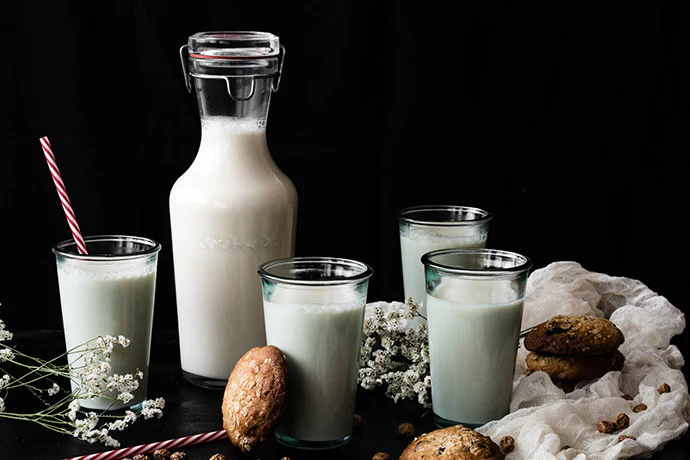
Luigi Bormioli glass airtight bottle and Mediterránea glass tumblers
Ingredients
- 500gr of tiger nuts*
- 2 liters of water
- 200gr of powdered sugar
*It is recommended that they are from Valencia, and if they have a designation of origin even better. That way you ensure great flavor thanks to a quality tiger nut (with dried tiger nuts you will never get the best result, despite giving them a good hydration).
Preparation
- Soak the tiger nuts in a large bowl. Cover with water and let rest 24 hours in the fridge. Change the water at least once.
- The next day, rinse and drain the tiger nuts. Put them in a food processor and grind with half of the water. You need to grind them well until they form a paste.
- Over a large bowl (I love using this recycled glass one from Mediterranea) we will place our Gefu cotton strainer. This strainer, besides helping to retain the residues very well, cleans up easily and makes squeezing very easy because it's very large and you can hold it securely even after adding a large amount of mixture.
- On the strainer, we will pour our ground tiger nuts and squeeze them. Gradually all the horchata will come out. Press firmly with your hands while rotating.
- When no more liquid comes out, return the ground tiger nuts to the blender, add the remaining water and repeat the process. With this repetition we get an extra flavor from the already ground tiger nuts.
- We repeat the process and squeeze well. When we're finished, discard the tiger nuts. Stir the horchata and add the powdered sugar. Mix well and transfer to a bottle. I have this one from Luigi Bormioli which is made of Italian glass and seals hermetically, making it perfect for storing the horchata, gazpacho or the juices we make at home*.
- Chill in the fridge for a few hours (the colder the horchata, the better it will be) and enjoy your homemade horchata!
*Although what's even better about the Luigi Bormioli bottles is that the airtight cap separates completely from the bottle, allowing you to serve at the table with great elegance and convenience.



Comments
Claudia&Julia said:
Hola Xavi,
Excelentes consejos, ¡muchas gracias por compartirlos! El tiempo de conservación de la horchata casera es menor, pero también es verdad que se acaba mucho antes, porque está muy rica ;)
¡Un saludo!
Claudia&Julia said:
Hola Charo,
¡Qué lástima! Tal como comenta Xavi cuanto más fría esté el agua, mucho mejor. La horchata casera está mucho más rica que la comercial, pero es cierto que dura menos tiempo, precisamente porque no lleva nada más que agua, chufas y azúcar. Asegúrate de llevarla a la nevera en cuanto la hayas hecho y de conservarla en una botella o recipiente que sea lo más hermético posible.
Nos alegrará que lo intentes de nuevo :)
¡Saludos!
Xavi B. said:
Charo! El agua con la que bates las chufas también fría, lo más fría posible. El calor de la batidora hace que ya se empiece a estropear la horchata y que no aguante apenas 24h en la nevera. Y la horchata hecha en casa no dura más de 48h.
Charo said:
A mi hija le encanta¡¡ pero las dos últimas veces que la hice se estropeó y era como una cola de carpintero, horrible¡¡ no sé porqué ocurre esto pero eran horchatas ecológicas, un trabajo grande… así que no he vuelto a hacerla.
Claudia said:
Gracias, Hermela! Me apunto a lo de acompañarlo con unos fartons, sin duda!! :) Saludos para ti también, y feliz verano!
Claudia said:
Hola Ana Belén, personalmente creo que es una agua que debe desecharse, ciertamente por las impurezas que acaba conteniendo, pero para regar plantas sí te valdrá,sin duda. Un saludo!
Claudia said:
Sin duda, Emma!! Galletas, bizcochos o incluso pan, sin duda alguna podéis aprovechar los restos de chufa, especialmente en todo tipo de recetas dulces (incluso lo he visto en turrón) :) Gracias por la aportación, Emma, un saludo!
Emma said:
Lo que se puede aprovechar son los restos de las chufas trituradas para hacer galletas.
Ana Belén said:
Qué bien! quería una alternativa a las comerciales, que saben demasiado dulces para mí… y no son de mucha calidad… sustituiré el azúcar por dos cucharadas soperas de miel de castaño eco.. seguro que el resultado es espectacular :). Una pregunta, el agua de remojo, no es aprovechable, no, porque tendrá polvo y cosas desechables? porque supongo que la chufa suelte algo en ella,… la puedo aprovechar para regar las plantas?
Hermela said:
Riquísima,y con acompañamiento de unos fartons artesanos una merienda para las tardes de verano,saludos desde Valencia