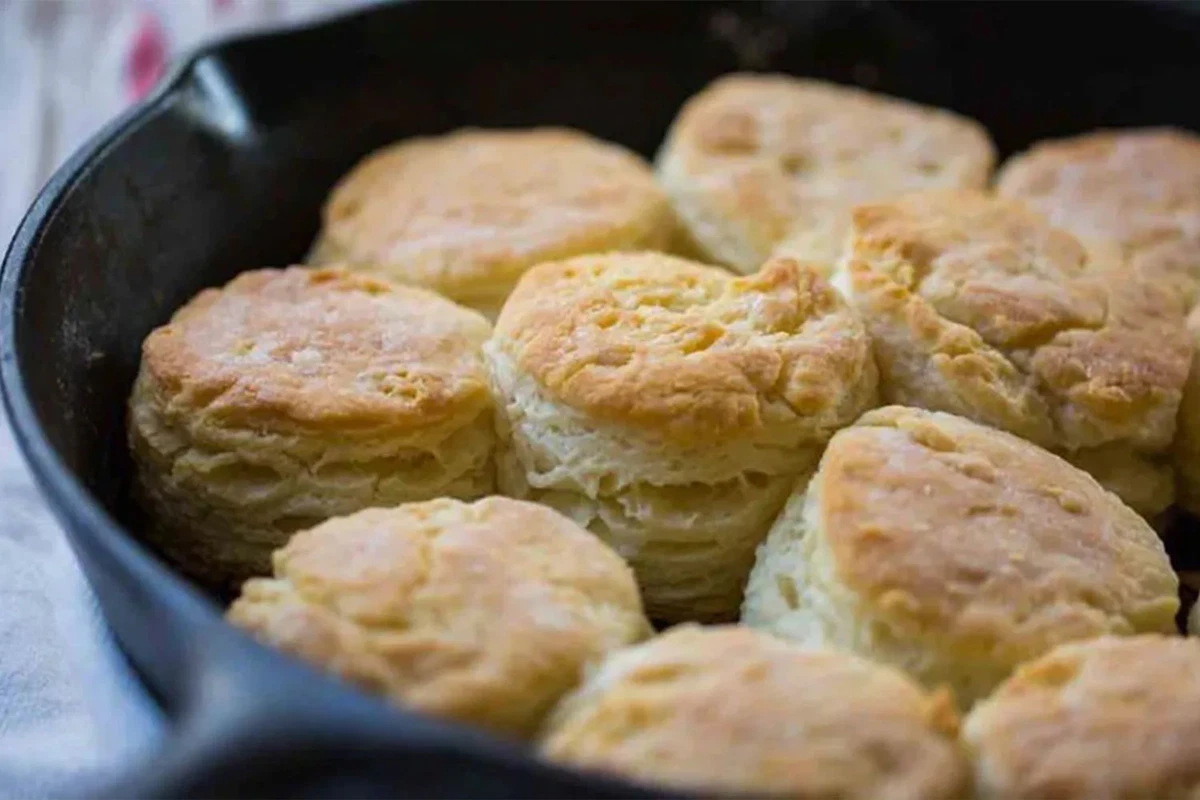
There are recipes that, when you try them for the first time, surprise you with how simple they are… and how good they taste. These buttermilk biscuits are exactly that: small pieces of dough, golden on the outside, tender and flaky on the inside, which are part of the most traditional cuisine in the United States.
Although at first glance they may remind you of scones, they are not the same. American biscuits are lighter, less sweet, and with a much flakier, more delicate texture. They don't crumble; instead, they split into soft layers, almost buttery, thanks to the combination of cold butter and minimal handling of the dough. They are the perfect middle ground between bread and pastry.
They also have a history. They are a Southern staple in the United States, where they are served at both breakfast and lunch: with butter and jam, with gravy, alongside savory dishes… or simply fresh from the oven, still warm, which is when they really shine.
And this is where the cast iron skillet comes in. Baking them in a Lodge cast iron skillet makes all the difference: the intense, even heat gives the base a slightly crisp finish, while the inside stays tender and layered. It's that contrast — golden outside, soft inside — that makes them so special.
They're the kind of recipe that makes you want to make them again. Because they don't require complicated technique, but the result… is one you always crave.

Ingredients
- 240 g self-rising flour, plus extra for dusting
- 115 g cold unsalted butter (1 stick), plus 2 additional tablespoons melted
- 180 ml buttermilk*
- 3 tablespoons melted shortening
You can find buttermilk in the refrigerated section of many regular supermarkets. But you can also easily make it at home. I encourage you to check out how to make buttermilk and its many uses in this post.
Preparation
- Preheat the oven to 230 ºC. Put a Lodge cast iron skillet of about 26 cm in the oven so it heats up.
- Place the flour in a large bowl.
- Grate the cold butter directly over the flour using a coarse grater. Working quickly, rub the butter into the flour with your fingers.
- Add the buttermilk and mix until just combined.
- Transfer the dough to a lightly floured surface and, using your hands, flatten it into a rectangle about 1–2 cm thick.
Lightly dust with flour and fold into thirds (like a letter). Repeat this rolling and folding process about 6–7 times (fewer if the dough starts to feel tight). - Finally, roll the dough out to a size slightly larger than your skillet. Cut out about 7 rounds with a cutter or glass. Gather the scraps to make one last piece.
- Carefully remove the hot skillet, add the melted shortening, and return it to the oven for a few minutes until melted.
- Place the biscuits in the skillet and turn them with a fork so they’re coated on both sides.
- Put the skillet in the oven and lower the temperature to 220 ºC. Bake for 12–18 minutes, until golden brown.
- Remove from the oven, brush the rolls with the melted butter, and serve warm.
Comments and tips
- The butter must be very cold: that’s what creates those characteristic flaky layers.
- Don’t overwork the dough: the less you handle it, the more tender they’ll be.
- Preheating the skillet is key: it helps create a golden, slightly crisp base.
- You can serve them sweet or savory: with butter and jam, honey, or even as a side for savory dishes.
- If you don't have buttermilk, you can make it at home by mixing milk with a few drops of lemon juice and letting it sit for a few minutes.