

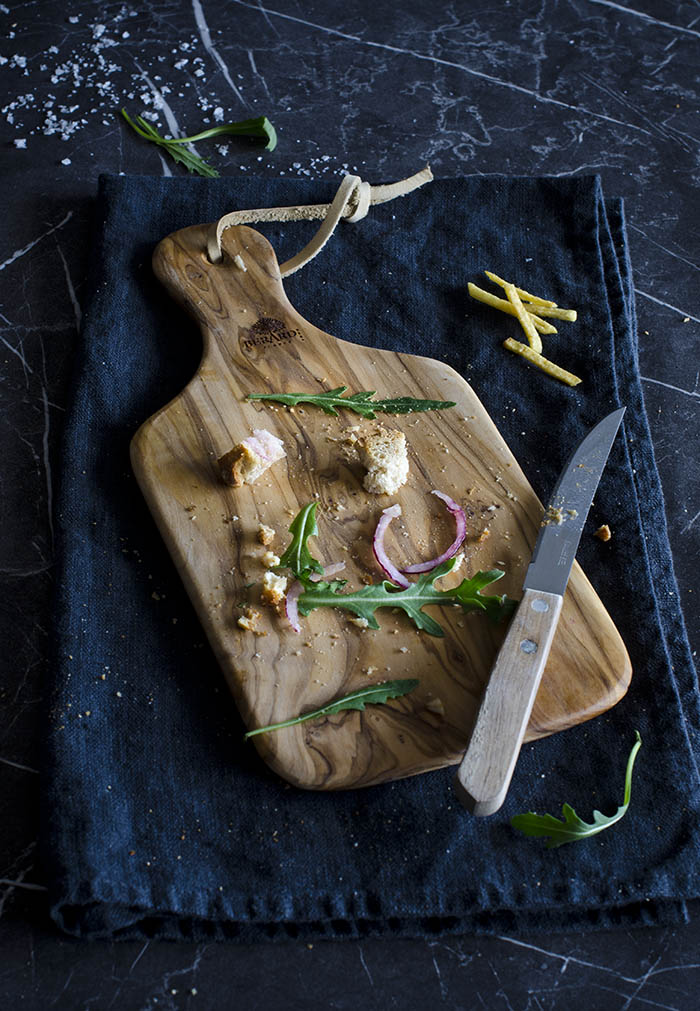
Not long ago Patri, author of Sabores y Momentos, got the cutting board made of Bérard olivewood. When she bought it, I told her she would notice the difference working with that board, because that wood has nothing to do with others. Its feel is much smoother, and its appearance is charming. But that wood has many other advantages that she has already discovered, and that I recommend you don't miss.
Today I bring you an interesting article about wooden boards for working in the kitchen with our ingredients. But not just any boards, rather olivewood ones. Among the characteristics of Olive wood, we find that it is one of the hardest and most compact species. And one fact that I found curious and that I didn't know is that, once the trunk is exhausted or sick, it emits new shoots that allow it to survive; for that reason, in antiquity it was considered an immortal tree — you didn't know that, did you???

Olivewood is considered one of the most beautiful, dense and durable woods. Of greenish ochre color with irregular brown veins that form very characteristic patterns, it is very attractive for its shapes, and its tone varies over time. It has a silky touch that makes it very pleasant to work on, it is long-lasting, and shows a certain pliability. In addition, its drying is not excessively long, which is why it is even used to make axe and hoe handles. The production of olivewood materials is very limited due to the difficulty of handling it because of the various factors mentioned above, such as its hardness, veining, drying… That is why the production of olivewood pieces remains very artisanal. Although it is true that more and more olivewood kitchen boards and other utensils are seen at markets, fairs and stores — the presence of these handcrafted products, made by hand by families who continue the tradition generation after generation, is growing.
As is the case with the French company Bérard, who have been making wooden utensils in Saint-Laurent-en-Royans since 1892, between the French Alps and the Côte d'Azur. Their manufacturing process is respectful of the forests and the environment. Each piece is made artisanally making the most of the available wood. No two pieces are the same. Also, everything is part of a sustainable process: leftover material is used to heat both the drying chamber and the facilities themselves, so there is no wood waste.
Making an artisanal olivewood piece is not work done lightly. It requires a very thorough preparation of the wood before the craftsman can begin to work it. Among these tasks we can highlight: felling, which is carried out at the end of the olive season and consists of cutting the unproductive or troublesome branches for olive harvesting. The selection of the most suitable branches by size. And the drying, which consists of burying and unearthing the selected branches for the different pieces and can even last a year. Once the wood is well dried, the eco-friendly wooden utensils are made. In this way we can find spoons, mortars, boards, olivewood plates as the most common artisanal objects made from olivewood.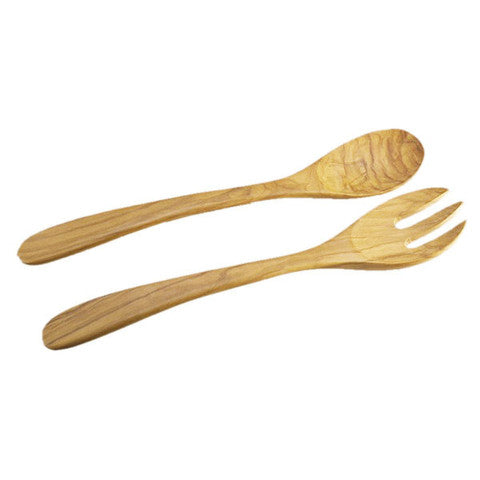
And now I'll tell you why I'm convinced this wood is the most suitable for making kitchen utensils! Olive is ideal for kitchen use since it has antibacterial properties and its wood is among the most resistant to stains, fungi and odors. Also, thanks to its low porosity, it does not absorb liquids or flavors, which makes it perfect for cutting fresh products. And don't forget the pleasure of cooking or eating with olivewood utensils — they are ideal for cooking with care!
Another of its virtues is that olivewood doesn't require special care; it's only advisable to apply a thin layer of oil from time to time to maintain its color. For daily maintenance, simply wash it by hand after use and dry it in a vertical position so the excess water drains.
After all I've told you, I'm clear: to work in the kitchen, always on an olivewood cutting board! Here are links to some of my latest recipes where you can see that the Bérard cutting board is my faithful companion!
- Cod, Onion and Leek Quiche {with homemade shortcrust pastry}
- Chocolate cake with coffee and Jerez Brandy
- Roast chicken and cheese sandwich {easy dinner recipe}
- Cauliflower and broccoli gratin with ham


Comments
Roberto said:
Me parece precioso y espectacular.
Quisiera probar a hacer una de estas tablas por mi cuenta.¿podríais decirme por favor, como tratar la madera , antes de trabajarla?.
Estoy sin trabajo , y me gustaría aprender por mi cuenta, aunque me cueste mucho empeño y sacrificio, para que me salgan medio bien.
Muchas gracias y saludos .