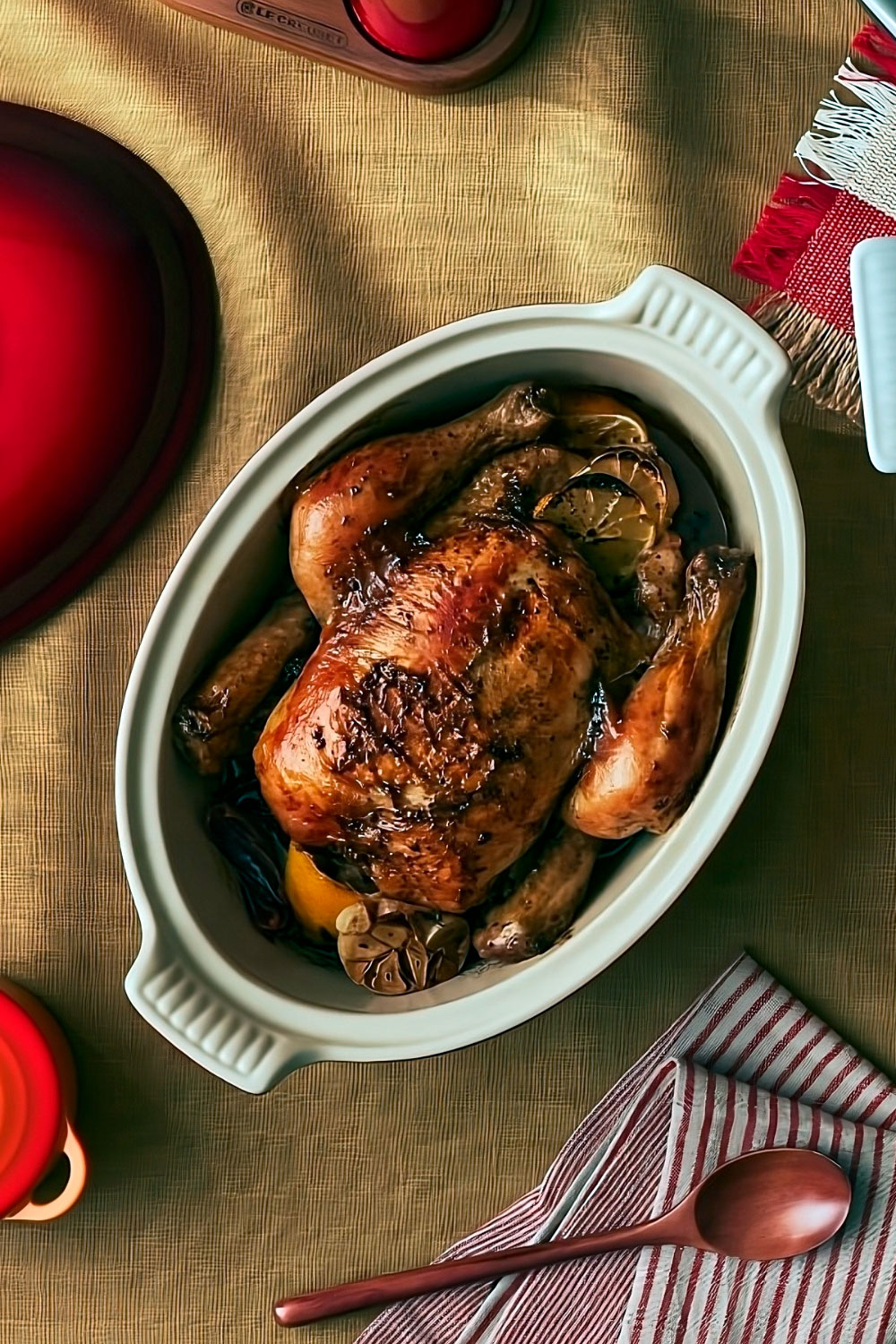
If you're looking for a simple recipe full of flavor, this oven-roasted chicken is the perfect choice. With a touch of garlic, lemon and sumac, this dish achieves a harmony of flavors that turns an ordinary chicken into a true delight. The freshness and acidity of the lemon and the softness of the garlic are a classic for roast chicken... And by brushing it with aromatic butter with a hint of sumac you'll see it take on an irresistible color and depth of flavor!
The process is as simple as it is effective: the chicken is roasted slowly, allowing the flavors to meld and intensify while the skin becomes golden and crispy. The meat, inside, remains juicy and tender, thanks to the mixture of ingredients that keep it moist and flavorful throughout the process. This dish is ideal for a comforting family meal or to surprise your guests with an easy-to-make recipe that's full of character.
Here you'll see the chicken prepared whole, but you'll also see in the post that you can make it perfectly with the chicken cut into quarters.
So if you want to make a delicious recipe without complications, this oven-roasted chicken is the perfect option for you!

Ingredients
- 1 small chicken (approximately 1.3 kg), whole or in quarters (depending on how you prefer to cook it)
- 2 lemons
- 1 head of garlic, halved
- 1 red onion
- A handful of parsley sprigs
- A handful of thyme sprigs
- A handful of tarragon sprigs
- 3 tablespoons of butter
- 2 teaspoons of ground sumac (see notes if you don't have it)
Preparation
Note: It's ideal if you prepare the chicken the night before to let it absorb the flavor of the garlic and lemon (first steps), but it's not essential. You can follow the recipe continuously on the same day.
- Preheat the oven to 220 °C.
- Cut one lemon in half and the other into thin slices.
- Clean the chicken and pat it dry with kitchen paper (if you wish, quickly pass a blowtorch to burn any remaining feathers on the edges and skin).
- Place the chicken (whole or all the quarters) on the Heritage Le Creuset roasting pan, and season generously all over with salt and pepper.
- Use the cut side of the lemon half to rub the salt and pepper all over the chicken (this also flavors it with the lemon juice).
- Place both lemon halves and distribute half the head of garlic in the pan around the chicken.
- If you're preparing it the day before, cover the pan with its lid and refrigerate overnight.
- Fill the cavity of the chicken with the herbs, lemon slices and the other half of the head of garlic. If you're cooking the chicken in quarters, simply distribute the herbs, garlic cloves and lemon around and under them.
- Peel the onion and cut it into large wedges. Arrange them under and around the chicken.
- In a skillet, melt the butter with the sumac (see notes for substitutions if you don't have it). Season lightly with salt and pepper.
- Pour the butter mixture over the chicken and spread it well over the entire surface (you can use a kitchen brush to help).
- Roast in the oven, uncovered, for 1 hour 15 minutes to 1 hour 30 minutes, or until the meat comes away easily from the bones (if you have a thermometer, insert it into the thigh without touching the bone; it should read about 74ºC internal meat temperature).
- Remember to baste the chicken several times during cooking with the juices and butter from the bottom of the pan (you can use a baster.
- Before serving, let the chicken rest for 10 minutes before serving it.

Notes
What is sumac and how to substitute it?
Sumac (also known as zumaque) is a spice that comes from the fruits of a shrub native to the Middle East. Its flavor is tart, slightly fruity and with a subtly bitter touch. Its characteristic dark red color makes it one of the most striking spices, and it is used both ground and as crushed dried berries. In countries like Turkey, Iran, Lebanon and Syria, sumac is highly valued for its ability to add a fresh, acidic note to dishes, similar to lemon or vinegar.
Where to find sumac?
You will find sumac in stores specializing in Middle Eastern products, and nowadays it can also be found in most supermarkets in the spice sections. If not, you can look in hypermarkets with international products.
How to substitute sumac in the recipe?
If you can't find sumac, there are alternatives you can use to replicate its flavor, although it won't be an exact reproduction. An easy and effective option is to substitute it with lemon and cumin.
To do this, use approximately 1 tablespoon of lemon zest and 2 tablespoons of its juice, adding 1 teaspoon of cumin. Sumac has an acidity similar to lemon, while cumin provides a spiced note that emulates the complexity of sumac. What I find important in the recipe is to heat the butter over low heat so that when you add the lemon it doesn't cause the butter to separate (another trick is to use clarified butter if not).