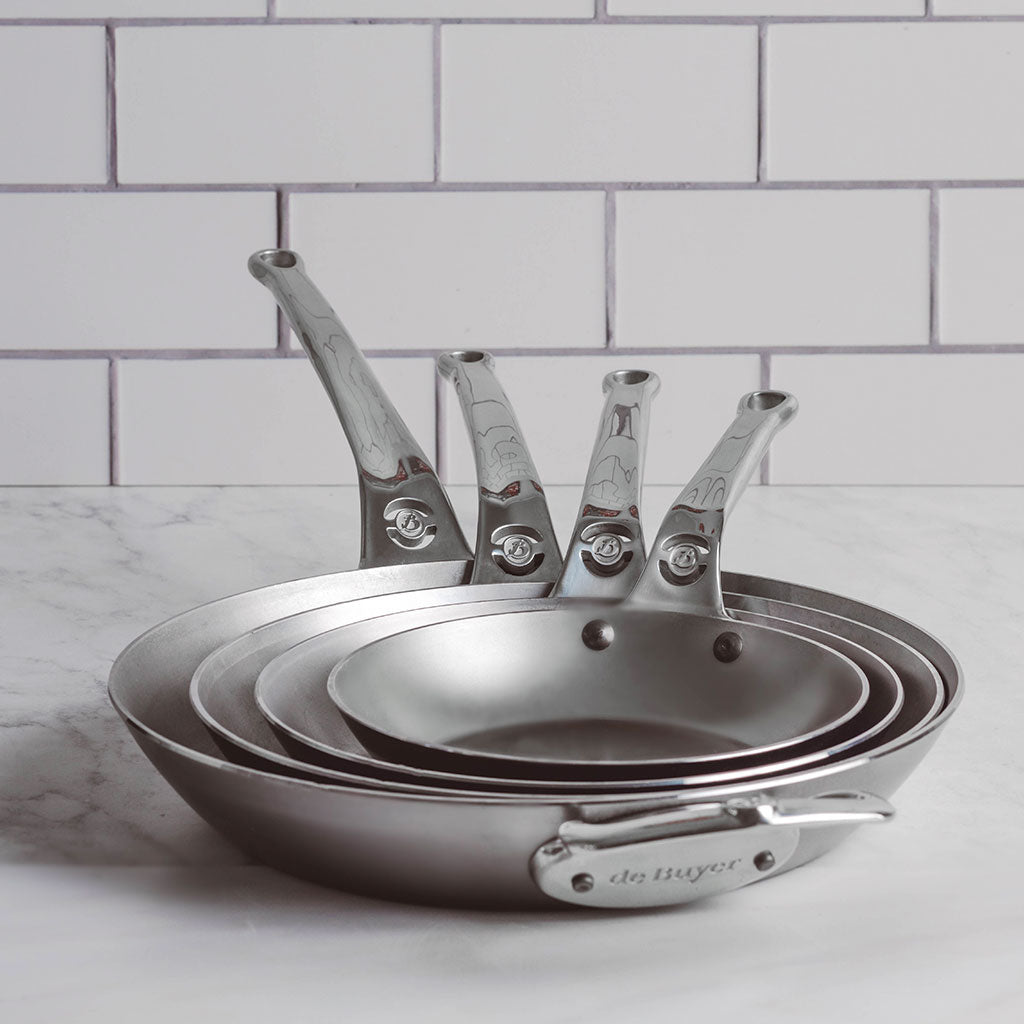
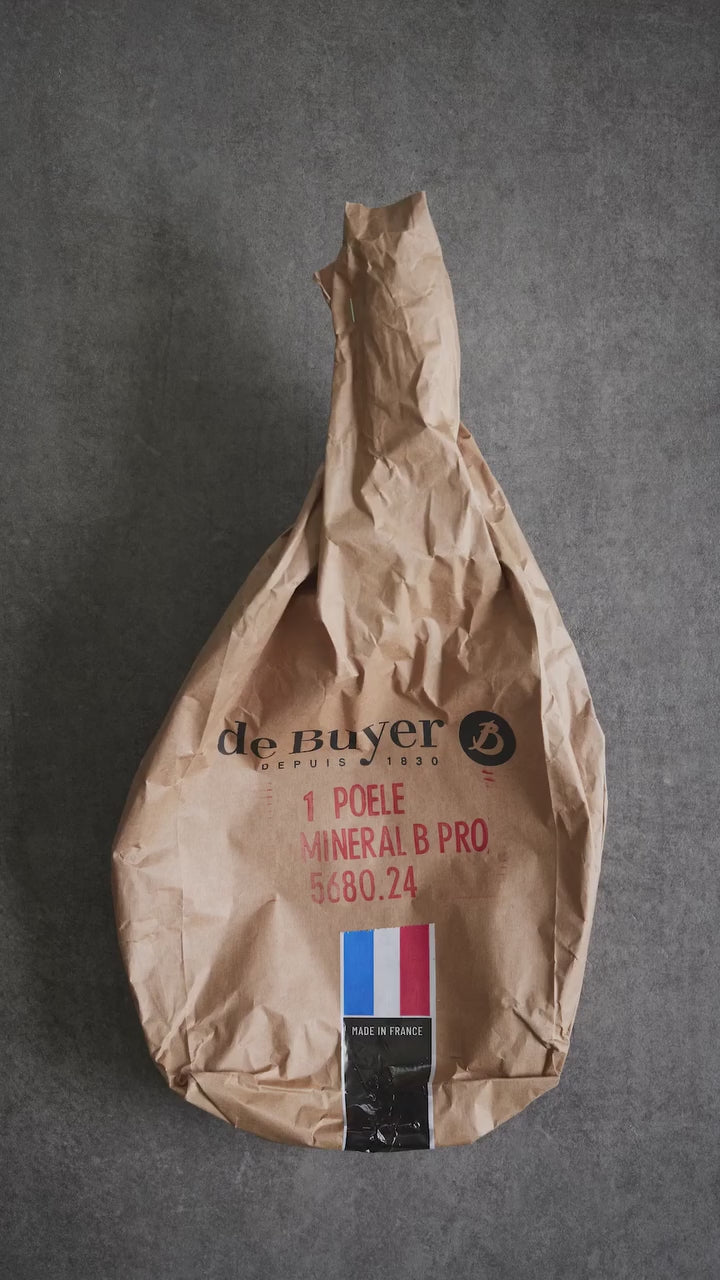
If you are looking for a cast iron skillet suitable for both stovetop and oven use, and with a handle that heats up less than that of a traditional pan, here it is: the Mineral B iron pan also with a stainless steel handle featuring a heat brake. It’s a fantastic skillet that lasts forever, more elegant than the traditional one and oven-safe!
You’ve been waiting for them. As French as Jules Verne, the Mineral B pans by De Buyer are exactly what you needed for healthy cooking at home.
- Handcrafted from iron.
- Without using chemicals or strange coatings nor heavy metals,
- They are treated with a natural beeswax layer that protects the skillet from the factory until it arrives at your home.
- With use, they develop a patina that makes them naturally non-stick.
-
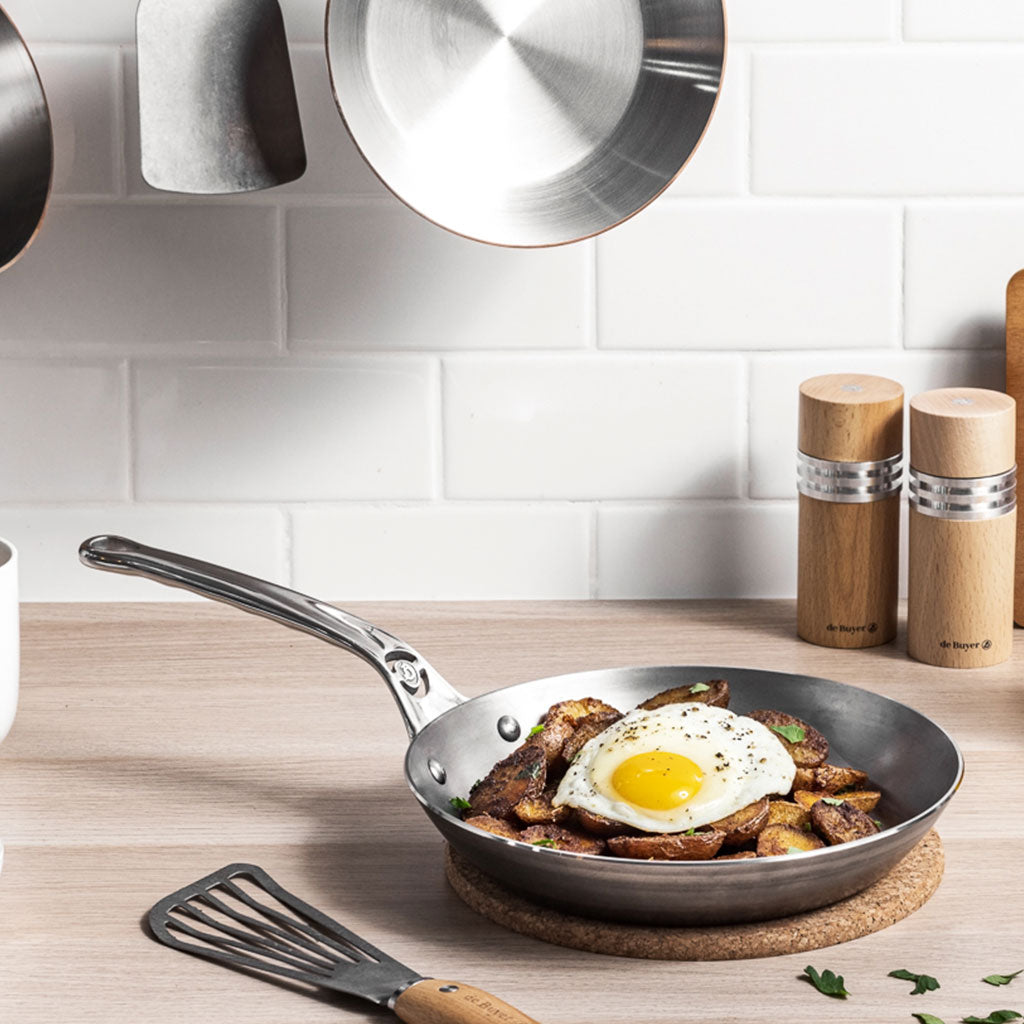
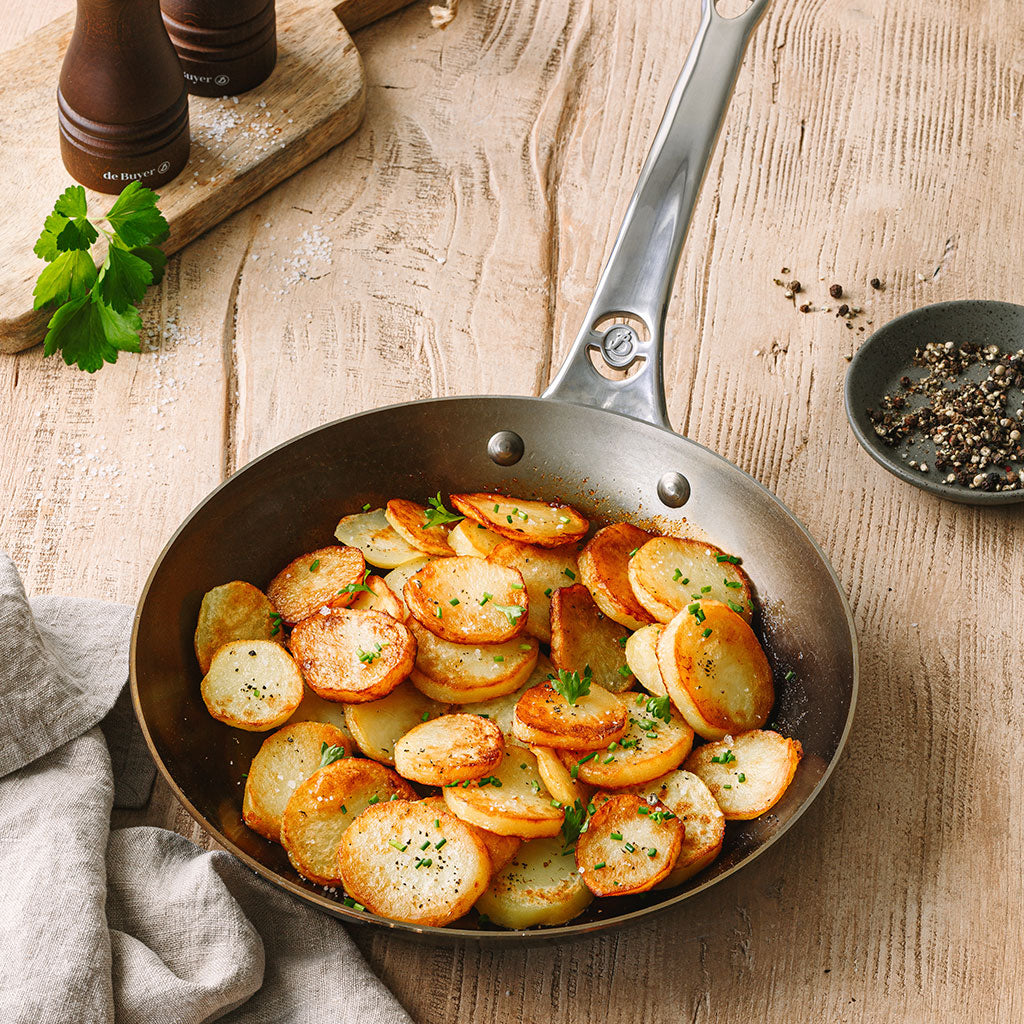
Extremely versatile, it’s an ideal skillet for both browning or roasting meats and sautéing vegetables or frying eggs.
- Since it can go in the oven, you can make a thousand and one wonders there! From lining it with a shortcrust pastry base to bake a tart in iron, to roasting your vegetables and meats in the oven.
- Suitable for all heat sources including induction.
- They can be placed in the oven.
This is the classic skillet, the grandmother’s cast iron skillet, which lets you recover those authentic and delicious flavors. It’s not a lightweight skillet, but it’s worth its weight in gold, and it will last you a lifetime at home!
Why we like the Mineral B iron pan with stainless steel handle
- Mineral iron distributes heat so well across the entire surface of the skillet that any food is perfectly cooked and evenly browned.
- And this mineral B skillet with a stainless steel handle also prevents the handle from getting too hot and burning you by accident.
- It’s oven-safe, not just for warming, but you can cook normally in the oven with it.
Things that are important to know about Mineral B iron pans
- De Buyer skillets are made in France, and the only ones with a certificate of iron purity over 99%. The best!
- They are iron skillets, so they can rust. How to avoid it? Avoid prolonged contact with water, don’t let them air dry: simply dry them with a cloth after washing. If you want, you can leave them on low heat for a few minutes to completely lose moisture while you finish cooking (a very easy and useful trick).
- If you’re going to leave them unused for many days, you can apply a little oil and spread it over the surface with a paper towel, but it’s not essential at all.
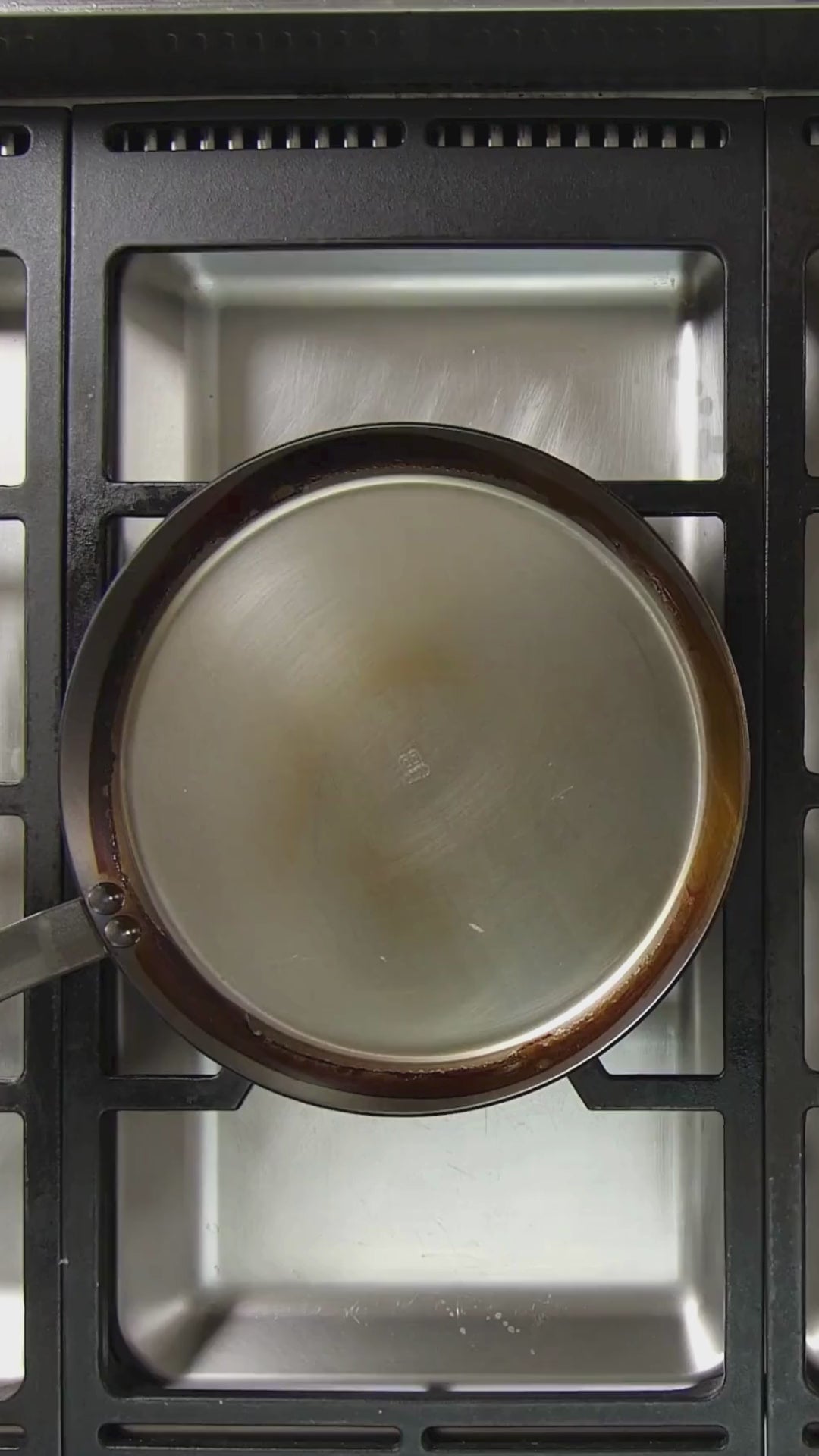
- Before first use, it’s very useful to season them. This seasoning makes them naturally more non-stick. Seasoning is super simple to do. Watch the video among the photos to learn how.
- You have a skillet for life! You can scrub it with a soft sponge, or wash it with steel wool if needed to remove stuck food, and nothing will happen to the skillet! (there’s no non-stick coating to damage). They can turn black, evenly or in patches. Don’t worry, the blacker they get, the better they perform.
- If rust spots appear, wipe with a paper towel and oil, and you’ll see it disappear like magic. If the rusted area is larger, use steel wool without fear. Nothing will happen; it’s a completely iron skillet: under the iron layer, there’s more iron.
- If you’ve had to scrub it with steel wool or just feel like it, you can season it again, but it’s not at all necessary to do it regularly.
| Diameter |
Base Diameter |
Height |
Weight |
| 20 cm |
13.5 cm |
3.3 cm |
1.09 Kg |
| 24 cm |
17.5 cm |
3.5 cm |
1.44 Kg |
| 28 cm |
20 cm |
4 cm |
2.17 Kg |
| 32 cm |
23 cm |
4.5 cm |
2.9 Kg |
The history of De Buyer
Founded in 1830 in Le Val d'Ajol (France), De Buyer is a family business dedicated to manufacturing kitchenware for professionals and fine dining restaurants worldwide. With over 180 years of experience in metalworking, it currently has more than 2000 products in its catalog and exports to 95 countries. With great influence in French cuisine (De Buyer is very well known in French gastronomic circles), De Buyer collaborates with prestigious culinary schools such as l’École Nationale de la Pâtisserie, l’École de Cuisine Alain Ducasse, and l’École Ferrandi.
You may also be interested in